
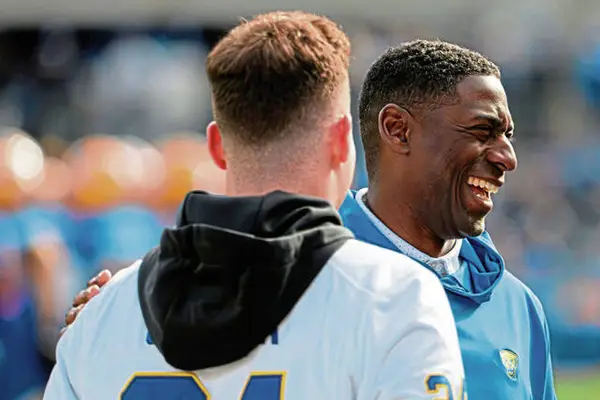
College coaches are cutting to the chase when courting student-athletes, centering their recruiting pitches around revenue-sharing compensation.
Behind the scenes, administrators scramble to ensure their institutions are competitively positioned to pay players, while those involved with sports other than football and men’s basketball ponder their place — and existence — within the continuously shifting terrain.
Such broad assumptions are understandably being made by many fans as tectonic changes have come to college sports, but the reality of how athletic departments are navigating the new world and its challenges is more nuanced.
To get a sense of how local Division I universities are doing so, TribLive spoke at length with officials and coaches from Pitt and Duquesne (a Robert Morris spokesperson declined on behalf of the Colonials to participate in this story).
From the football field and basketball court, to internal university meetings and discussions with donors, a combination of innovation, continuation of past practices and ongoing brainstorming is propelling the Panthers and Dukes in the ever-evolving landscape of collegiate athletics.
The dust settles
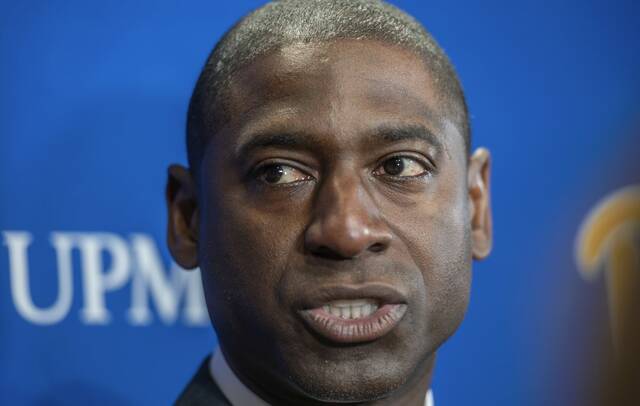
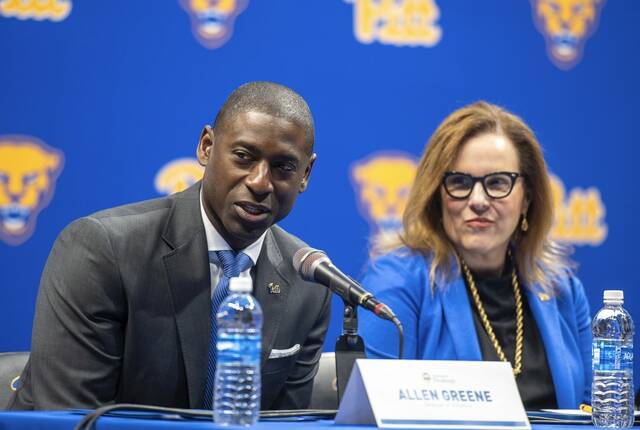
On Oct. 18, Allen Greene reached one year in the athletic director’s chair at Pitt.
Less than eight months into his tenure, the House v. NCAA class action lawsuit was settled, allowing for direct revenue-sharing between institutions and student- athletes.
Capped at $20.5 million per school for the 2025-26 academic year and expected to rise annually through 2035, the House settlement came on the heels of (but didn’t totally replace) the NIL (Name, Image and Likeness) era and established a formal revenue-sharing model opted into by the majority of Division I institutions.
The College Sports Commission (CSC), which was created to enforce a wide array of matters pertaining to revenue-sharing and NIL compliance, oversees this new system while scrutinizing NIL deals.
For athletic directors nationwide, the result of the House settlement was largely anticipated.
Through that wait-and-see process as well as all the new twists and turns within his world, Greene has lost the ability to be surprised at new developments.
“I don’t use the word ‘challenging’ anymore because that’s just our reality,” Greene told TribLive. “We are accustomed to the ever-changing landscape, as they say.”
While the June 6 ruling by U.S. District Judge Claudia Ann Wilken didn’t blindside Green or his peer at Duquesne, Dave Harper, both athletic directors have had to grapple with a daunting new reality.
In this era of revenue-sharing, well-positioned athletic departments will swim, while the less fortunate risk sinking under the waves.
Either way, the implications have the potential to be steep for universities.
“Division I athletics is obviously an important piece for an institution,” Harper told TribLive. “It’s oftentimes the biggest brand piece that you have out there and so to make sure you’re competitive. … It’s a very challenging time for a lot of institutions.”
Raising the revenue
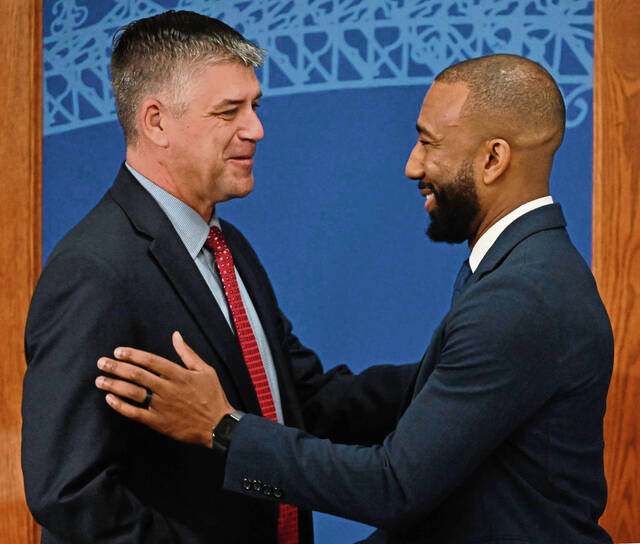
Greene and Harper oversee athletic departments with differing objectives and priorities. But both are faced with the same task: strategizing how to generate the necessary revenue that will be shared with student-athletes.
Strictly looking at the dollars, Greene has the heavier lifting as he aims to have every penny of the $20.5 million cap raised to share across Pitt athletics.
“I look at it as a line-item investment, no different than scholarships, salary for coaches and staff,” he said. “It’s an additional expense-line item that we have to figure out how to fund.”
Asked directly last summer if Pitt plans to spend up to the $20.5 million revenue-sharing cap, Greene responded:
“We’re committed to making sure Pitt is in the national spotlight competitively, no question.”
Then, in late January, Greene released a five-part strategic plan for Pitt Athletics, with “revenue generation and resource acquisition” a key pillar.
“Your investment in Pitt Athletics has never been more critical,” Greene wrote in an open letter to Panthers fans. “We’re also focused on maximizing revenue across all our programs to ensure we have the resources needed to compete at the highest level.”
Harper said many of the same revenue-generating methods that have historically been fruitful will continue to be utilized as it pertains to paying student-athletes.
“Certainly, all the traditional means are just put under more pressure,” Harper said. “To increase revenues, you have your standard cases like corporate sponsorships, ticket sales, donations, etc. But I think growing and expanding those markets is more important than ever, and also being creative with how you establish relationships with donors and everything else.
“The conversations are higher-level than just rev-share. It’s about sustainability for competitiveness, sustainability for academic performance — it’s a long-term focus but, obviously, in an ever-changing landscape.”
Greene largely concurred.
“One thing to keep in mind is, there is nothing new that we’re doing that we haven’t been doing for decades,” Greene said. “We have, for decades, worked to increase ticket donations or ticket prices, philanthropy and other revenue-generating ideas, corporate sponsorships. We’ve been doing all of it.
“I think people are more aware of these revenue drivers than perhaps they were before, but there aren’t new money trees that are necessarily popping up.”
View from the ground
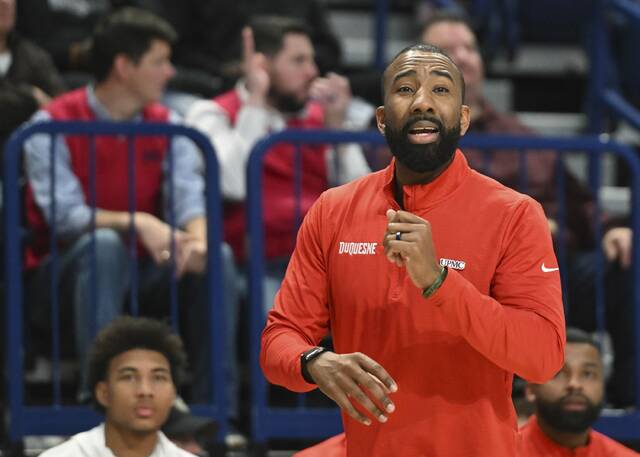
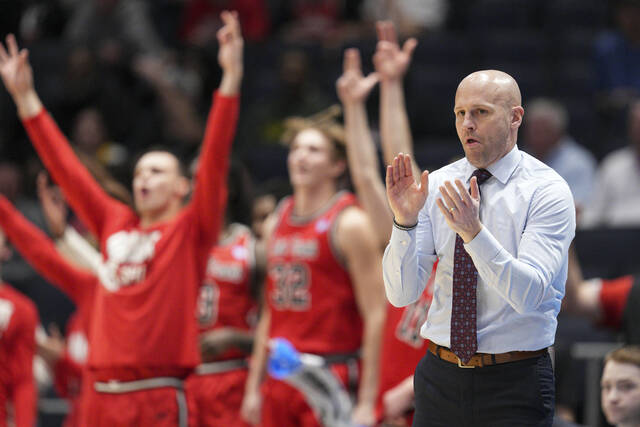
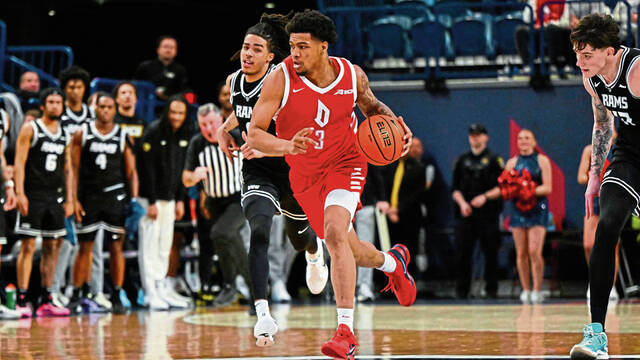
Duquesne men’s basketball coach Dru Joyce III has conversations with Harper about his budget so he can build a roster most conducive to winning the Atlantic 10 and earning a bid to the NCAA Tournament.
Joyce is neither naive or aloof enough to think that revenue-sharing won’t be considered when he’s making his case as to why players should come to Duquesne.
However, none of the changes to college athletics, nor the reality of his players being paid, has caused Joyce to alter how he recruits.
“I don’t think you have to necessarily stray from how things have been done in the past — building a relationship with the player, with the parents, being able to show what your campus lifestyle is,” Joyce said. “Those things still matter and if you treat them like they matter, then you give that player and that family an opportunity to treat them with regard, as well.
“If you just skip past it, then no, they shouldn’t be concerned with it. But part of that conversation does center about revenue and NIL. That’s just the nature of the environment we’re in.”
Within Pitt’s men’s basketball program, no one has more to do with the management of revenue-sharing and NIL efforts, as well as recruiting, than general manager Jay Kuntz.
Though the Panthers’ season derailed early before they rallied to qualify for the ACC Tournament, Kuntz has helped coach Jeff Capel land three four-star prospects for the 2026 recruiting cycle in guard Jermal Jones and forwards Chase Foster and Anthony Felesi.
“It’s something we’ve never had, and I think it’s something that you need now,” Capel said of the general manager role in college sports. “We need to be able to concentrate — especially during the season — on coaching and helping our guys get better. Jay’s done a great job. Not a good job, he’s done a great job.”
Did strong positioning from a revenue-sharing perspective factor into Kuntz and the Panthers landing those prospects?
Yes.
Were dollar signs solely responsible for Pitt crafting a recruiting class that’s ranked 12th nationally by 247Sports?
No.
Even in an era of professionalized college sports, connection with the players remains critical.
“We can’t lose development as human beings, as well,” Kuntz said. “Bringing these kids up as grown men, not babying them — we can’t lose track of our jobs to guide these people and putting these kids and young adults in position to have success, not only in the game of basketball but in the game of life afterwards. That can’t be lost.
“I know it’s certainly not lost on (Capel), for sure. It’s something that means very, very much to him. A lot of people have lost that.”
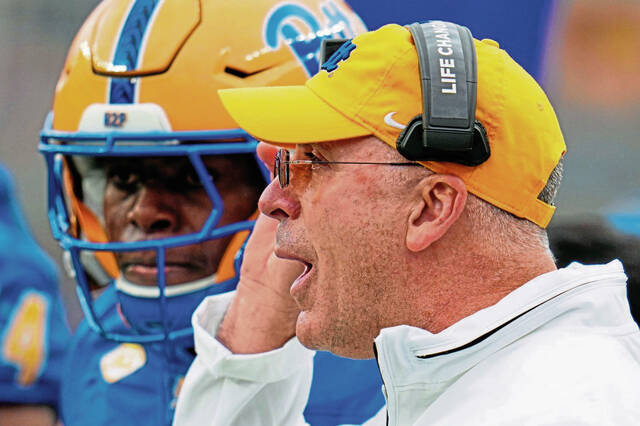
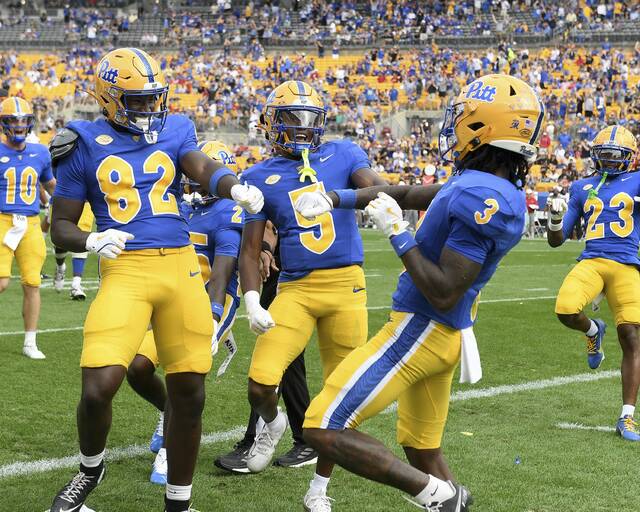
Whether he’s recruiting Pitt’s next wave of freshmen from the high school ranks, seeking transfer portal reinforcements or trying to retain key players from entering the portal, Pitt football coach Pat Narduzzi has a similar outlook.
“We’re going to take care of our guys,” Narduzzi said. “Loyalty means something, and I think relationships still matter. We can say money and all that stuff is driving it, but you lose when you make bad money decisions.
“It ain’t about the money. It’s about relationships, No. 1, and I think that’s what we have with our football team.”
Class of 2026 recruits were the first to commit and sign letters of intent at programs in the post-House world.
The nation’s top incoming athletes found themselves at the center of intense NIL/revenue-sharing bidding wars.
However, some prospects, such as new Pitt defensive lineman signee Lincoln Hoke (North Allegheny), didn’t place too much stock into those matters.
“NIL-wise, money-wise, honestly, that wasn’t a huge factor for me,” Hoke said. “I didn’t even know what money I was going to be getting, NIL, any of that until after I committed. None of that really went into my commitment to Pitt.”
Competitive positioning
Kuntz simply being hired in his position is an illustration of Greene recognizing the demands of the times.
On the South Side, Narduzzi also has been able to delegate matters of revenue-sharing and NIL to general manager Graham Wilbert, assistant general manager Adam Caltury and additional support staff.
Kuntz, still a relative newcomer to Pitt, has taken stock of the Panthers’ revenue-sharing approach.
“We have to continue to build our arsenal and resources,” Kuntz said. “You can’t have resources that you go to the same bank every time for the same thing. You have to expand it. This is a top-to-bottom change in how we do things. Allen and his team have done an incredible job in a short period of time.
“It takes time to get your legs under you, whether it be fundraising, who you want to be in your administration (or) your support team, and I think they’re doing as good of a job as anyone can do.”
If there are outside perceptions as to Pitt’s ability to rigorously compete in 2026 and beyond, they are not shared internally.
“We have full and complete university support for what we’re doing in the revenue-sharing space,” said Pat Bostick, now Pitt’s senior associate athletic director for NIL business development and strategic partnerships. “I think we have leadership in Allen Greene and his team — I know that we do — that is prioritizing this and it is integral to where we’re going. From a revenue-sharing perspective and within the constructs of the House settlement, we are competing 1:1 with our competition.”
Winning on the margins
Universities must adhere to the same $20.5 million revenue-sharing cap, but the landscape has the potential to still feature a blend of the rich and the poor, namely because of NIL opportunities.
Critically, per the House settlement, third-party NIL payments, including those arranged or facilitated by a school, will not count against the cap.
Student-athletes must report all third-party NIL deals worth $600 or more through the CSC’s NIL Go online portal, designed to evaluate compliance based on the associated status of a given deal sponsor, whether or not there is a valid business purpose for the deal, as well as range of compensation.
Those parameters are in place to ensure institutions with stronger NIL operations can’t circumvent the cap by throwing excess money at student-athletes; for example, paying a star quarterback $500,000 for a few in-person appearances and social media posts (which would clearly violate the CSC’s “valid business purpose” and “range of compensation” NIL evaluatory outlines).
Still, advantages remain for the most recognizable national programs that have the strongest NIL infrastructure.
“As we settle into the revenue-sharing reality, there are still national brands out there that have distinct competitive advantages when it comes to the visibility of their programs and the ability to monetize that for their athletes,” Bostick said.
“Some schools will have more money, some schools will have deeper pockets — it’ll take a full value proposition for us to compete, but I can say with great confidence that we are all in on revenue-sharing at the highest level and NIL itself.”
Greene is not oblivious to the reality that some programs, often boosted by mega-millionaire or billionaire donors, will have major advantages in funding their NIL apparatuses, which are the new separating factors in college sports.
Former Wake Forest coach Dave Clawson described NIL funds as a university’s “second bucket” when it comes to attracting and retaining top player talent.
Rapidly, generating the money allowed through the revenue-sharing cap has become a bare minimum for programs wanting to compete nationally.
“What was a ceiling for rev-share, at $20.5 million, is now a floor,” Greene said in January. “Any program who wants to compete at the national level has to secure above-the-cap NIL dollars. How that is playing out now is from the community. We have a distinct advantage in our community, in we have lots of local businesses who reside here in Pittsburgh.
“We have an opportunity — and this is why we set up a whole new vertical in our department, and Pat Bostick is helping run that — but their participation in this new world is vital to our success. We’re putting forth a strategy to engage that group and look forward to them talking about how they can help make a better Pittsburgh.”
Kuntz is familiar with going up against some of the biggest budgets in college basketball. Before arriving at Pitt, he spent 16 years in various capacities at West Virginia, including director of player personnel/recruiting (2022-24) and assistant to coach Bob Huggins (2017-22).
Over that span, Kuntz embraced having to roll up his sleeves and get assertive. Now, he aims to bring that same mentality to Pitt, helping the Panthers edge the ACC’s top dogs.
“We’re not Carolina and we’re not Duke,” Kuntz said. “But we can find our own niche. When I was at West Virginia, were we going to be Kansas? No. Were we going to be Texas? No. We had our own niche. Pitt is a great program — hard-nosed, blue-collar. We’re not backing down from anybody.”
Capel takes Kuntz at his word.
“Experience in putting together really good rosters is what he did at West Virginia,” Capel said. “Hopefully he can have some success with that with us.”
At Duquesne, Joyce recognizes that there will be circumstances where he’s simply outbid for a player. Pitt, having lost key football players to the transfer portal this offseason, is also far from impervious to that possibility.
Regardless of the revenue-sharing funds at his disposal, outrecruiting the competition has always been an aspect of Joyce’s approach when it comes to identifying talent. Accepting that there will be battles he loses is just part of coaching in 2026.
Joyce’s objective remains the same when it comes to roster construction as it was pre-revenue-sharing/NIL: create quality depth up and down the roster.
“I’m sure there are some schools who feel like they can throw whatever dollar sign around,” Joyce said. “We have to be very strategic. … There are going to be talented young men that I may say, ‘That’s not the best fit for us and what we want to accomplish. We have to walk away.’
“There’s some price tags that we have to understand, what fits our budget? Can I take this young man on at this price? Well, what do I do with the rest of my depth chart? How do I build it? … We have to balance the whole roster.”
As he’s sought to turn Capel’s recruiting goals into reality, Kuntz places a premium on bringing in young players who are ready to contribute, augmenting them and Pitt’s veterans with additions from the portal.
“It’s never going to be a perfect puzzle, but if you can build it up from within and jell it with certain important prize pieces, I think that’s the best way to have success and sustain success,” Kuntz said.
“We’re not looking for a one-hit wonder. We’re looking for this program to be a consistent, annual NCAA Tournament team, playing in the second weekend annually. That’s what (Capel) wants, that’s what this fan base wants and deserves, and that’s what we’re going to do.”
NIL’s place in 2026
NIL was introduced across collegiate athletics in 2021 as a result of another piece of litigation, NCAA vs. Alston, paving the way for student-athletes to profit from their name, image and likeness.
Third-party organizations called collectives, unaffiliated with universities, emerged as the primary facilitators of such opportunities for student-athletes and paid them directly.
At Pitt, mega-donor Chris Bickell’s Alliance412 handled NIL opportunities for Panthers student-athletes, helping the university stay competitive during a period of time (2021-25) that was considered to be the Wild West before regulations were in place.
Today, the framework under which collectives previously operated has been significantly altered. That largely led to Pitt bringing Alliance412 under the umbrella of the athletic department last September.
“Collectives (were) designed to help in a different world, although that different world was a year ago,” Greene said. “The new world is more about valid business purpose deals and being basically a marketing agency for our student-athletes. We felt that in talking to Chris, that we, (Pitt) athletics, were better equipped to manage that activity than Alliance412.”
Coinciding with the absorption of Alliance412 was the announcement of Bostick’s appointment to oversee all things NIL.
“You’re dealing with more rigor than what you were dealing with before, where all the athlete had to do was basically report the deal they got from the collective,” Bostick said. “There was no approval or denial. The collectives were free to award funds as they saw fit. This is more professionalized. The idea is to bring it in.
“It puts us in a position where we can centralize funds to help us revenue-share at the highest level, but also with the power of the Pitt brand, go out in the community and advocate for participation in NIL with our athletes above and beyond the $20.5 million cap to provide an advantage to our programs, but also to give athletes a chance to partner with the best and most visible companies here in our region.”
The aftermath of the 2025 football campaign offered clues as to the Panthers’ NIL positioning.
While factors other than money can’t be dismissed, losing star linebacker Rasheem Biles to Texas, receiver Kenny Johnson to Texas Tech, defensive lineman Francis Brewu to Notre Dame and kicker Trey Butkowski to Michigan suggested Pitt was outbid in the attempt to retain some of its top players.
That said, Narduzzi hung onto quarterback Mason Heintschel, linebackers Braylan Lovelace and Cam Lindsey, receiver Blue Hicks, several returning defensive linemen and others.
Pitt also acquired 16 transfers.
“Of the folks who we identified were priorities for us that we wanted to maintain, we only lost four of them,” Greene said. “That’s a really good job on our staff. We had one of the lowest departure rates in the ACC, and we got the guys who we wanted to get. Put all those things together with a good offseason — I’m excited to see what we have. … (But) we won’t know until it’s time to play.”
Spreading the wealth
An important order of business for both Greene and Harper is how to allocate their institution’s revenue-sharing funds across athletic programs.
Greene’s priority remains the football team, followed by men’s basketball.
That’s in recognition of those programs being the biggest producers of ticket sales, TV revenue, merchandise sales and more. As a result, they will receive the lion’s share of funds for revenue-sharing.
“Their success is vital to our success,” Greene said. “They are going to be the primary programs to get what they need. Strategically, our team sits and discusses how best we allocate resources to other programs. I would say women’s basketball and volleyball are our two priority women’s sports, so those four, in particular, and then we figure out how we divvy up the rest of it.”
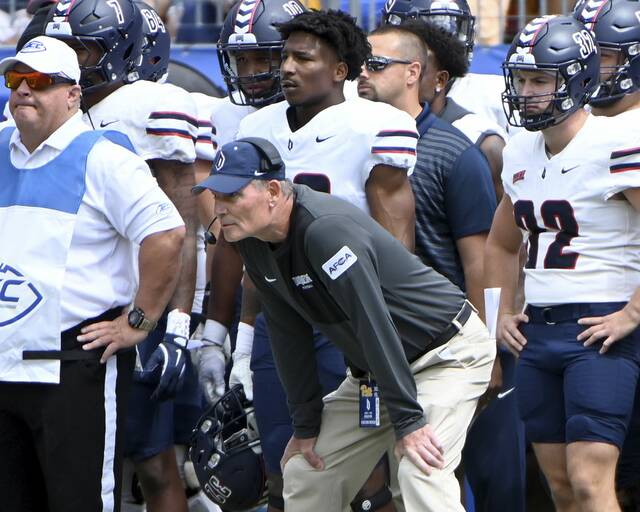
At Duquesne, where Jerry Schmitt’s football team competes at the FCS level, Harper’s priorities are different. As an athletics department and university, Duquesne has the most to gain financially from Joyce leading his men’s basketball team to the NCAA Tournament.
Conferences receive revenue from the NCAA based on the amount of games its teams played in the tournament. Per Sportico, the 2025 NCAA Tournament netted every conference $2 million per game played by its member institutions.
The Atlantic 10 Tournament winner receives an automatic invitation to the NCAA Tournament (as Duquesne did in 2024), and historically, top-of-the-league teams that haven’t won the tournament have been in the conversation for at-large bids.
With that objective at the forefront, Harper plots out how Duquesne will share its revenue with student-athletes.
“In a competitive subset that we’re in, obviously, we’re trying to compete for an at-large bid,” Harper said. “To do that, you have to look across all those schools that are realistically going after an at-large bid. The model of 75-15-5-5 at bigger schools — 75% going to football, 15% going to men’s basketball, 5% to women’s and 5% to others — that’s a pretty common theme out there.
“Doesn’t pertain to everybody, but if you take that 15% of the cap, then you have a number that you’ve got to probably be within range of to be competitive. That’s kind of how we look at it.”
Collateral damage?
Are Olympic college programs, historically lacking the revenue-generating punch of football or men’s basketball, doomed in the current landscape?
Universities have had to stare down the proposition of eliminating sports.
In the ACC, Virginia and N.C. State dropped their diving programs.
Saint Francis, after its men’s basketball squad qualified for the NCAA Tournament for only the second time in program history in 2025, announced a full athletics transition from Division I to non-revenue-sharing D-III.
Women’s beach volleyball at Utah, women’s tennis at Texas-El Paso and men’s volleyball at Grand Canyon were other notable varsity sports to be axed.
Is the elimination of any of Pitt’s 19 varsity sports on the table?
“Not at all,” Greene said.
Harper relayed the same message.
“Eliminating is not something that’s in our windshield at all going forward,” Harper said.
Ensuring the competitiveness of Duquesne’s 20 varsity sports, not just football and men’s basketball, remains an overarching priority for Harper, he said.
“It’s just our model to say, ‘OK, this is the mix that we think we can have to be competitive in our primary sports, but also make sure that we’re competitive across the board and not susceptible to poor results and having teams that are ill-equipped to go out there and win some games,’” Harper said. “It’s a delicate mix.”
Greene also doesn’t want any of Pitt’s coaches to feel as if they’ve been forgotten, regardless of the realities of the revenue-sharing topography. He emphasizes being able to outcoach and outplay the competition regardless of who spends more.
“I think it’s natural for coaches, for any leader, to have some concern when there’s uncertainty out there,” Greene said. “Some of that insecurity is a false sense of it, and I try to help our coaches remember that they are our secret sauce, not rev-share.
“They’re the ones that help get our student-athletes in position for success, and they need to continue to tap into their superpowers to help us be as competitive as we can be.”
Eyeing the competition
How are Pitt’s peers in the ACC, such as Virginia or Miami, strategizing their own approach to revenue-sharing distribution?
For Duquesne, what about Dayton or VCU?
Unsurprisingly, the answers are most often guarded secrets as universities seek to keep all cards close to the vest.
“We have a decent understanding and idea of, broadly speaking, what schools are doing,” Greene said. “I think we’re all broadly operating and doing the same things. Dollar amounts might be a bit different here and there, priority sports outside of football and men’s basketball (may differ) here and there, but by and large, we’re all doing basically the same stuff. I don’t get overly worked up.
“Eventually, I think we’re going to have a better understanding of what everybody’s doing, but until then, you’re doing what you think is best for your institution. We’re doing what we think is best for our institution.”
Some bread crumbs have emerged as to specific strategies.
The Knoxville News Sentinel reported that Tennessee uses the following breakdown for its athletic programs: $13.5 million (75%) to football; $2.7 million (15%) to men’s basketball; $900,000 (5%) to women’s basketball and $900,000 (5%) to other sports, $750,000 of that going to the baseball team.
VCU, which competes in the Atlantic 10, revealed it will allocate between $4 million and $5 million in revenue-sharing to its student-athletes.
Harper declined to go into specifics as to the level of Duquesne’s opt-in, but Joyce feels sufficiently supported.
“Dave is committed to winning and he’s competitive,” Joyce said. “I like that about him. He wants to find success and he’s trying to build a program that sustains winning year after year. When you have that push from your (athletic director), that suits my nature and the things that I stand for. It creates a really good dynamic within our administration.”
Time will tell
The 2025-26 academic year is only the beginning for revenue-sharing and universities’ attempts to handle its demands.
What hurdles will surface — financial, legal, logistical, etc. — remain to be seen.
But for Greene and Harper, their respective plans at Pitt and Duquesne have been put in motion.
“I think we’re going to find out a lot,” Harper said. “A lot of us think that we put good things into place in terms of the rev-share opportunities, recruiting, supporting programs — everything. But I think over this upcoming year we’re going to find out a lot about how we did with our investments.
“Does the additional investment pay off the way we would like it to? You’re only going to find out with the results on the scoreboard.”
Added Greene: “Our community has a tremendous amount of pride in the city of Pittsburgh and in Western Pennsylvania, and in fact, throughout the whole Commonwealth.
“That’s a distinct advantage to us. Our community is a sports town, and they love and expect a winner. It’s helpful when you have a community that expects success the way that you expect success. That helps drive us.”