
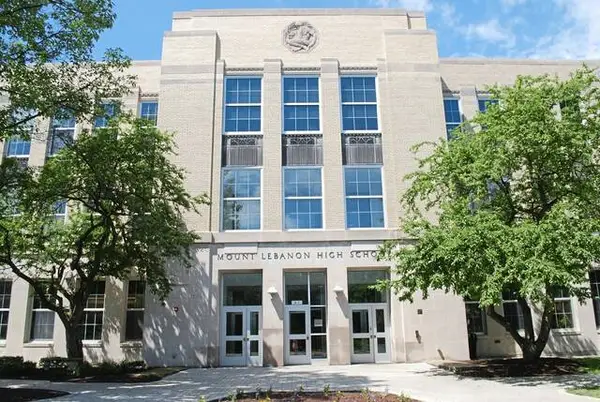
A projected $4.2 million deficit in Mt. Lebanon School District’s budget next school year has officials considering a property tax increase and a plan that, they say, would enable them to furlough staff if needed.
The school board Monday will consider a resolution that would allow administration to furlough up to 15 staff members next school year for economic reasons, although officials say they do not intend to furlough any staff.
Also Monday, district administrators will present a preliminary budget draft for next school year that includes a tax increase, said Superintendent Melissa Friez.
A budget vote wouldn’t take place until May 18. District officials would not yet disclose the projected tax increase, referring to the upcoming budget update scheduled for Monday’s meeting.
Mt. Lebanon School District’s millage rate this year is 30.95. A Mt. Lebanon homeowner whose property has the borough’s median assessed value of $191,300 pays $5,920 annually in school taxes.
The furlough of up to 15 professional staff member could result in a cost savings of up to $1.169 million, according to the draft resolution.
Friez told TribLive the resolution is a “proactive measure” to meet state budget timelines. She said Mt. Lebanon has passed similar resolutions for the last two years while avoiding furloughs.
“The proposed resolution is to help address a projected budget deficit and ensure long-term fiscal health without over-relying on the district’s fund balance,” Friez said. “While the resolution allows for furloughs, the district’s goal is to achieve a balanced budget through alternative methods, including reassigning staff, utilizing attrition to potentially reduce positions, implementing program modifications and evaluating the lifespan of equipment.”
At the board’s March 9 meeting, President Brenna Crable described the furlough resolution as a “fail-safe.”
“We do not have an intention to furlough any of our staff,” she said.
Friez said Mt. Lebanon, like many area school districts, faces several budgetary challenges this year.
The district had a lower Act 1 index at 4.1% this year, compared to last year’s 4.7%, Friez said. The Act 1 index is a yearly limit on how much a school district can raise property taxes without a voter referendum. It is designed to cap tax hikes in line with inflation.
The district also experienced the loss of special education exceptions from the state Department of Education, which in turn has reduced projected real estate revenue, Friez said.
The most significant factor impacting the district’s real estate tax revenue has been the use of the common level ratio ruling by property owners to reduce their assessed values, Friez said. Lower ratios can reduce revenues.
“To put this into perspective, a $1 million property that is reassessed using the common level ratio formula results in a new assessed value of $501,400,” Friez said. “These assessments come in throughout the year and can significantly impact anticipated revenue.”
Friez said that, while district staff has been supportive of cost-cutting measures and zero-based budgeting, the common level ratio ruling has had a negative impact on the school community.
“In order to balance the budget, the district has reduced the money allocated to supplies and services, revised programming to be more cost-effective, reduced the number of professional and paraprofessional staff and raised taxes,” she said.
The district is also experiencing an 8.3% increase in health care premiums and scheduled salary increases, as well as rising operational costs because of inflation, Friez said.
“The district remains committed to transparency, and regular budget updates are included on our website and in our weekly newsletter,” Friez said. “It’s the administration’s goal to present a final balanced budget that avoids both furloughs and the use of fund balances.”