
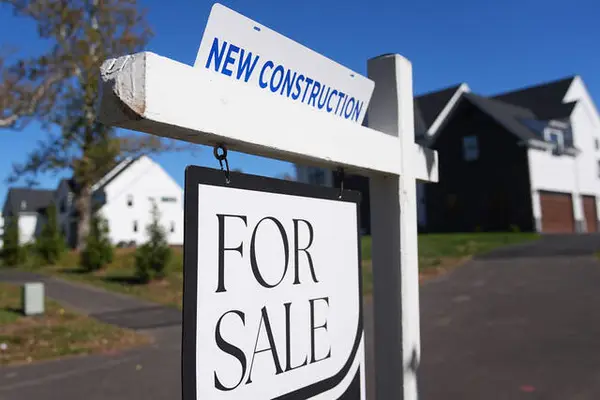
Mortgage rates in the United States are rising again, ending — for the time being — a decline that had offered hope to homebuyers struggling to afford housing.
The average 30-year fixed-rate mortgage rate in the United States rose to 6.11%, mortgage-financing giant Freddie Mac said Thursday, the second week in a row that rates have risen. The average had slipped below 6% for the first time in years in late February, raising confidence among buyers and sellers that the long-frozen market might finally begin to loosen.
Days later, the United States and Israel attacked Iran, setting off an energy crisis and raising new inflation concerns in financial markets. The result has been a jump in the yield on government bonds, and falling expectations for interest-rate cuts later this year. The yield on the 10-year Treasury note, which acts as a broad reference interest rate that underpins the U.S. mortgage market, climbed to 4.25% Thursday, up from below 4% before the war began.
Homebuyers have already been struggling with high prices, as well as rising insurance and property taxes. Mortgage rates were one source of relief, having fallen from much higher levels in recent years. Even at 6.11%, rates are well below their recent peak of 7.8% in October 2023, which was the highest level in decades. Back then the yield on the 10-year Treasury note was approaching 5%. But if the recent uptick continues, mortgage rates will add to a list of concerns that could keep homebuyers on the sidelines, said Hannah Jones, a senior economic research analyst at Realtor.com.
“Spring feels very uncertain,” Jones said. “This definitely feels like we’re back where we were a year ago: tariff uncertainty, economic uncertainty, geopolitical uncertainty. All of this is making the path ahead seem really unclear.”
The housing market has been stuck since the pandemic. Record-low interest rates during that period kicked off a buying frenzy that sent home prices soaring. Millions of homeowners refinanced their mortgages at those low rates — many below 4% or 5% — leaving them reluctant to sell and take on a new mortgage when rates later rose.
A recent New York Times/Siena poll found that a majority of Americans feel homeownership is out of reach. As a result, about 1 in 4 Americans are delaying major purchases like buying a home, according to a recent report by Redfin.
The strain in the housing market has become a key political issue, and President Donald Trump has raised a number of ideas for how to address the costs — like introducing 50-year mortgages, barring Wall Street investors from buying single-family homes and directing Fannie Mae and Freddie Mac to purchase $200 billion in mortgage-backed bonds. His administration has yet to follow through on most of them.
“If people are stepping back from buying because they’re discouraged or can’t afford what’s available, we’re not truly solving anything,” said Andrew Warren, head of community development lending at TD Bank. “It could even be a sign of deeper trouble.”
Housing sales remain uneven. Existing-home sales in February rose 1.7% from January, according to the National Association of Realtors, yet sales were down 1.4% from February of last year.
Home prices have also shown little growth. The national median existing home prices rose less than 1%, according to NAR. “Despite the modest gain in home sales, actual housing demand remains muted relative to wage growth and job gains,” Lawrence Yun, NAR’s chief economist, said in the report.
With borrowing costs elevated, the high prices are keeping middle- and low-income buyers on the sidelines while wealthier households and investors are playing a larger role in the market. Investors accounted for 30.2% of home purchases in 2025, nearly double their share at the start of the pandemic, according to data from Cotality. A report from Realtor.com found the change wasn’t because of a surge of investor activity, but rather a pullback from traditional buyers who could no longer afford today’s prices.
Higher mortgage rates could widen that gap even further, making it harder for many households; wealthier buyers and investors are more likely to pay in cash.
The geopolitical tensions driving energy prices higher are also complicating the outlook for interest rates. Expectations that the Federal Reserve might begin cutting rates have faded as markets worry inflation could stay higher for longer than anticipated.
“If the conflict in the Middle East drags on and oil prices remain high, the Federal Reserve will err on the side of caution,” said Jeff DerGurahian, chief investment officer and head economist at loanDepot, a mortgage lender and loan servicer. “It is roughly a coin flip.”