
Congressional earmarks have returned in a big way this fiscal year, with $15.7 billion tucked into non-defense appropriations bills to support more than 8,000 projects nationwide.
Western Pennsylvania’s congressional delegation has secured more than $406 million for nearly 200 government and nonprofit projects, records show. Those lawmakers have requested another $5.8 million in the Homeland Security appropriations bill, which has yet to be approved.
Two local lawmakers — U.S. Reps. Guy Reschenthaler and Chris Deluzio — ranked second and third, respectively, in the U.S. House for securing the most earmark funding.
Earmarks — formally known as community project funding in the House and congressionally directed spending in the Senate — have been heavily debated over the years. Long referred to as “pork” or “pork-barrel spending,” critics argue earmarks are examples of wasteful spending and invite corruption. Proponents say they enable lawmakers to directly support specific local projects and can help grease the legislative process, providing incentives for lawmakers from both parties to broker deals on appropriations bills.
“This money would have been spent by those in Washington, D.C., regardless. My goal is to steer these tax dollars home to worthy projects rather than leave these decisions to unelected bureaucrats,” U.S. Sen. Dave McCormick, R-Pittsburgh, said in a statement to TribLive.
U.S. Sen. John Fetterman, D-Braddock, led Western Pennsylvania’s delegation by securing $289.1 million for 121 projects. McCormick followed close behind with $275.8 million for 61 projects.
House members can request funding for up to 15 projects. Reschenthaler, R-Peters, led the pack with $214 million for 15 projects, followed by Deluzio, D-Fox Chapel, ($193.5 million for 14 projects) and fellow U.S. Reps. Mike Kelly, R-Butler, ($27.1 million for 14 projects) and Summer Lee, D-Swissvale, ($14.1 million for 15 projects).
Sounding a warning
Congress placed a moratorium on earmarks in 2011 following a push by House Republicans and President Barack Obama to curb wasteful spending and reduce the deficit.
In the three years prior to the moratorium, spending on earmarked projects averaged $30.5 billion a year, according to the Congressional Research Service.
The $15.7 billion approved so far this fiscal year is the largest total since earmarks returned in the 2022 fiscal year, Government Accountability Office records show.
“The snowball just keeps getting bigger,” said Sean Kennedy, director of policy and research at the Washington-based watchdog group Citizens Against Government Waste. “Every year, more members of Congress are engaging in the process. The momentum seems to be going in the opposite direction (from the 10-year moratorium). I think it would take another scandal for that to change.”
Lawmakers didn’t secure any earmarks during the 2025 fiscal year because of budget battles on Capitol Hill. Instead of passing appropriations bills with earmarks tucked into them, lawmakers adopted continuing resolutions that essentially kept the government running at previous-year spending levels and removed all new funding like earmarks.
Many earmarks benefit worthy projects, but the potential for abuse remains, Kennedy said.
“I’d much prefer to see the spending occur through the normal competitive bidding process. Every earmark circumvents that process,” he said.
Who is getting what?
Multiple lawmakers from the Western Pennsylvania delegation teamed up to request funding — even with members from across the aisle — for about a quarter of the 187 projects. Such collaboration can strengthen requests, government watchdog groups say.
This year, earmarks are directing money toward local infrastructure projects like improving locks and dams, highways, bridges, water and sewage systems, and airports. Money also is going toward projects for affordable housing, public safety, workforce training, education, health care, scientific research, libraries, military and government facilities, and blight removal.
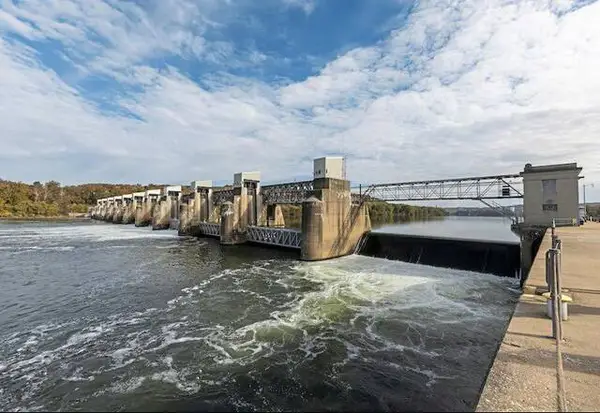
Fetterman, McCormick, Reschenthaler and Deluzio partnered to secure $183.8 million for the Army Corps of Engineers to upgrade the 90-year-old Montgomery Locks and Dam on the Ohio River in Beaver County. It was far and away the largest earmark secured by Western Pennsylvania’s delegation and the third-largest earmark in all of Congress for the 2026 fiscal year that runs through Sept. 30.
Montgomery, designed to last 50 years when it opened in 1936, has undergone significant renovations over the years to remain operational. But its lock chambers are among the smallest on the Ohio River navigation system, often leading to bottlenecks, according to the Army Corps. Work will include replacing the existing auxiliary lock chamber with one about three times its size, the Army Corps said.
The earmark represents a fraction of the project’s projected $1.6 billion price tag. The federal government budgeted $857 million for the project in 2021, while there was still a moratorium on earmarks. It also received additional budget allocations of $103 million in 2024 and $44 million in 2025. An initial $770 million construction contract was awarded in late 2024. Work is expected to continue through 2033.
“As a lifelong Pennsylvanian, I understand the needs of our region far better than liberal Washington bureaucrats, and I’m proud to fight to bring our hard-earned taxpayer dollars back home to my congressional district,” Reschenthaler, a member of the powerful House Appropriations Committee that drafts spending legislation, said in a statement.
Although Montgomery is outside of Reschenthaler’s congressional district, he added, “I also serve on the Appropriations Subcommittee on Energy and Water, where I work to secure funding for critical Army Corps projects like the Lower Monongahela River and Montgomery Locks and Dam projects that keep our regional economy moving and transport materials like coal, steel and iron.”
Deluzio, whose district includes part of Allegheny County and all of Beaver County, said that funding for the Montgomery project “will keep commerce flowing and create tens of thousands of solid, union construction jobs and thousands of long-term jobs.”
Other notable recipients of earmark funding included the Battle of Homestead Foundation ($174,000) to help digitize its labor history archives, the African American Museum in Philadelphia ($415,000) to expand its programs and exhibitions, and Tree of Life Inc. in Pittsburgh ($1.2 million) to support educational programming on antisemitism and identity-based hate. Fetterman secured those three earmarks.
Tree of Life CEO Carole Zawatsky said the funding “will play a pivotal role in helping take the story of The Tree of Life and the inspiring communal response to our tragedy to new communities across the country.”
Eleven people were killed in an Oct. 27, 2018, shooting at the Tree of Life synagogue in Squirrel Hill that also was home to the New Light and Dor Hadash congregations. It is the deadliest antisemitic attack in United States history. A museum is being developed on the site of the former synagogue.
“Amid the historic levels of antisemitism in our country, we are truly thankful for this meaningful and concrete commitment to building compassionate communities rooted in our shared humanity,” Zawatsky said in a statement.
How we got here
The use of earmarks exploded in the 2000s, quintupling to more than 15,000 a year between 1996 and 2005, according to the Washington-based watchdog group Taxpayers for Common Sense.
Some earmarks drew intense public criticism. In 2005, Alaska lawmakers secured a $223 million earmark for the proposed Gravina Island Bridge, which became known as the “Bridge to Nowhere” because it would have connected Ketchikan, a town of about 8,000 people, and Gravina Island, home to an airport and about 50 people. The bridge was designed to replace a short ferry ride between the areas. Following public outcry, earmark funding for that project was later rescinded and the bridge was never built.
There also were several high-profile scandals. Among them, former U.S. Rep. Duke Cunningham, R-Calif., pleaded guilty in 2005 to accepting at least $2.4 million in bribes from defense contractors in exchange for steering earmarks and government contracts their way. Cunningham, who died last year, served more than seven years in prison.
“It was the perfect storm that brought everything crashing down,” Stephen Ellis, president of Taxpayers for Common Sense, said of the controversies surrounding earmarks in the 2000s.
Congress made a series of reforms to the earmarks process in the latter part of the decade such as requiring lawmakers requesting funding to publicly disclose their name, the name of the would-be recipient, the nature of the project and the amount of money being requested.
“Certainly a good project can be funded by an earmark, but that doesn’t mean all earmarks are good. Even a stopped clock is right twice a day,” Ellis added.
Here’s a look at the top three earmarks secured by each Western Pennsylvania lawmaker:
Fetterman
• $183.8 million for upgrades to Montgomery Locks and Dam in Industry, Beaver County. Partnered with McCormick, Deluzio and Reschenthaler.
• $7 million for improvements to Route 228 in Buffalo and Clinton townships. Partnered with Kelly.
• $6.5 million for designing a new readiness center for the Pennsylvania National Guard.
McCormick
• $183.8 million for upgrades to Montgomery Locks and Dam in Industry, Beaver County. Partnered with Fetterman, Deluzio and Reschenthaler.
• $15 million for the Machinery Control Development Center in Cumberland County, supporting the mission of the Naval Supply Systems Command.
• $12 million for the Army Corps to upgrade storm and wastewaster infrastructure in Allegheny County.
Deluzio
• $183.8 million for upgrades to Montgomery Locks and Dam in Industry, Beaver County. Partnered with Fetterman, McCormick and Reschenthaler.
• $2 million for Aspinwall to realign the intersection at Brilliant Avenue and Freeport Road and the entrance to Allegheny RiverTrail Park.
• $1.339 million for a Crafton streetscaping and pedestrian safety project along Crafton Boulevard between Noble Avenue and Baldwick Road.
Kelly
• $7 million for improvements to Route 228 in Buffalo and Clinton townships. Partnered with Fetterman.
• $3 million for improvements to Route 422 in Lawrence County between Business Route 422 and the Butler County line. Partnered with Fetterman.
• $3 million toward a new industrial park in Erie County’s McKean Township.
Lee
• $3 million to acquire and build 50 new affordable housing units across Allegheny County, geared toward people exiting homelessness. Partnered with Fetterman.
• $1.2 million for the removal of blighted, hazardous properties in the Mon Valley. Partnered with Fetterman and McCormick.
• $1.1 million to replace aging water distribution lines in Monroeville.
Reschenthaler
• $183.8 million for upgrades to Montgomery Locks and Dam in Industry, Beaver County. Partnered with Fetterman, McCormick and Deluzio.
• $7.4 million for operations and maintenance on the Lower Monongahela River Locks and Dams 2, 3 and 4.
• $7 million for the Thompson’s Crossing Business Park in Fayette County.
To look up all earmarks approved so far this year, go to the Senate Appropriations Committee’s website: https://www.appropriations.senate.gov/fy-2026-congressionally-directed-spending.