
In Pittsburgh, “One for the Thumb” was never just a slogan. It was a declaration — that toughness, discipline and hard work could earn something lasting. When the Steelers chased a fifth Lombardi Trophy in the 1980s, the city wasn’t bragging. It was acknowledging a standard.
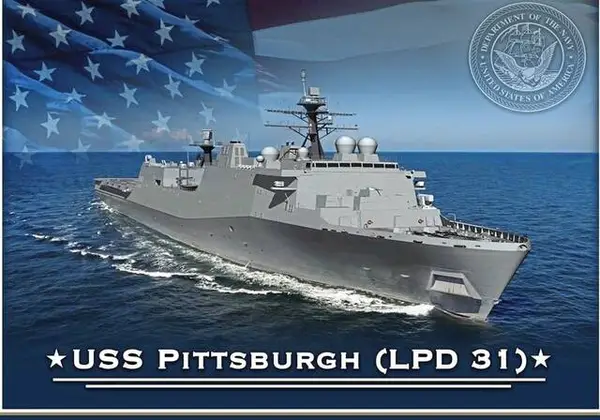
Today, that same spirit lives again as the United States Navy builds USS Pittsburgh (LPD-31), the fifth warship to carry our city’s name.
LPD-31 will not be commissioned for several years. That matters. Ships are not defined on commissioning day. They are shaped long before — in design reviews, steel cuts, equipment installation and testing. The build period is where standards are set, culture is formed and pride is embedded. A namesake city’s engagement during those years is not ceremonial. It is foundational.
A ship’s name is a promise. When the Navy names a ship after a city, it binds the crew, the shipbuilders and the mission to that city’s identity. Few cities understand that responsibility better than Pittsburgh.
I write this as both a naval officer and a native son. I had the privilege of serving as the final commanding officer of USS Pittsburgh (SSN-720). I grew up shaped by this city — by its neighborhoods, its people and its expectations. During my command, the support my crew received from Pittsburgh was steady and meaningful. Letters from schoolchildren, encouragement from veterans groups and civic leaders who showed up reminded sailors thousands of miles from home that the name stitched on their uniforms mattered to the people back home. On difficult days at sea, that connection made a difference.
That bond is rooted in who we are.
Pittsburgh was forged by steel, rivers and industry. Long before “industrial base” became a policy phrase, this city understood what it meant to build something that had to work — every time. The men and women who poured steel, ran mills and kept production moving weren’t chasing applause. They were chasing reliability and pride in workmanship. They were the people who ate an Isaly’s chipped-ham sandwich for lunch and got back to work without fanfare.
My own family lived that ethic. My grandfather, a World War II veteran, served as a Carnegie firefighter for three decades. My father devoted more than 25 years to public education in South Fayette. Like so many Pittsburgh families, ours believed in service, steady effort and doing the job right whether anyone noticed or not.
That mindset is exactly what shipbuilding demands today.
LPD-31 is being constructed at a moment when America’s maritime industrial base faces real strain. Skilled labor shortages, supply-chain fragility and aging infrastructure all threaten the pace and quality of ship construction. Overcoming those challenges requires more than funding lines and schedules. It requires culture. It requires communities that respect skilled labor and understand that national security depends on getting complex work right.
Pittsburgh brings that culture.
From legacy industrial leaders like Westinghouse, U.S. Steel and Curtiss-Wright to advanced innovators in robotics, advanced manufacturing and digital engineering, this region continues to shape the future of American production. Initiatives like Neighborhood 91 show how Pittsburgh blends blue-collar heritage with cutting-edge capability. That combination — tradition anchored by innovation — is not nostalgic. It is strategic.
Our city’s grit is a competitive advantage. It shows up in accountability, in craftsmanship and in the expectation that difficult jobs will be done well. It shows up on fall Sundays when towels whirl not because victory is guaranteed, but because loyalty runs deep. It shows up when the Penguins grind through overtime, when the Pirates raise the Jolly Roger, and when Black and Gold means resilience more than flash.
We celebrate preparation. We celebrate team success. We celebrate earning it.
Naval service and ship construction operate the same way. Excellence is not improvised. It is built — deliberately, collectively, over time.
The years between now and LPD-31’s commissioning are decisive. This is when her reputation will take shape — long before a sailor or Marine steps aboard. Civic engagement, workforce development, educational partnerships and visible pride from Pittsburgh can signal to her builders and future crew that the name “Pittsburgh” carries expectations.
“One for the Thumb” is not about counting ships. It is about continuity of character. It is about ensuring that when USS Pittsburgh joins the fleet, she does so backed by a city that understands responsibility, values craftsmanship and believes that hard work still matters.
Ships carry our name into the world. It is up to us to make sure it means something.
U.S. Navy Capt. Jason M. Deichler was a commanding officer on the USS Pittsburgh from 2018-20.