
There are things you think about a college student needing to pay for at school.
The obvious cost is the tuition. The average cost of two semesters at a Pennsylvania State System of Higher Education school — the most affordable four-year institutions in the state — comes in at just under $8,000 per year.
And yet that is not the actual price tag. It’s not even half.
Various fees come in at about $4,000. Housing? You’re looking at another $7,000. Books tip the scales at more than $1,200.
That’s $20,000 for just one year — and that’s without taking a bite.
A meal plan at college is one of the places a student can skimp. It might cost $5,000 for every meal every day every week. But you can also take a plan with fewer meals. At some schools, you might forgo it altogether — especially if you opt to live off campus or commute.
That is how the most-stretched students end up hungry.
The costs of an education include the costs of basic living while being educated. The two pressures make up a vice gripping students who may be adults on paper but are still not considered real grown-ups when it comes to things like drinking or renting a car.
That hunger is not rare.
Nationwide, 41% of college students report food insecurity, according to Temple University’s Hope Center for Basic Student Needs
We know it happens in our region — including at those affordable State System schools. It also happens at private universities like Point Park and Chatham.
It even happens at Carnegie Mellon, one of the most expensive universities in the nation.
“College is expensive, and people don’t realize that students — especially at private schools — can struggle to afford basic necessities,” said Heather Starr Fiedler, managing director of Point Park University’s Center for Civic and Community Engagement.
At Point Park, 56% of students experience one form of basic need insecurity and 43% experience food insecurity, Fiedler said.
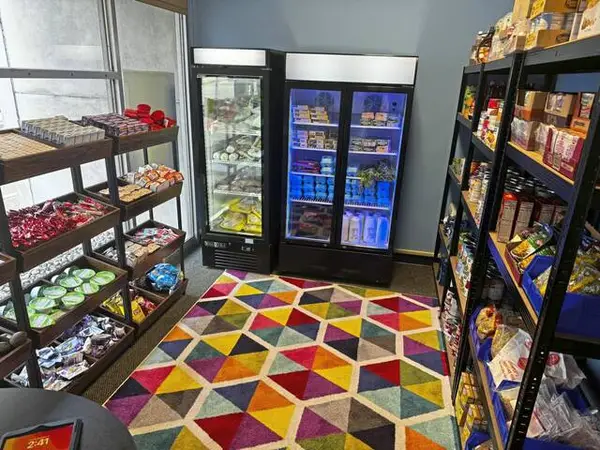
Programs have sprung up to help address hunger the same way communities do everywhere else. There are food shelves and food banks and opportunities to help those who are struggling the most.
That is good. We should be filling the bowls of the hungriest.
But filling this gap with ramen and canned goods doesn’t change the real problem. College tuition is not always the most expensive part of attending college.
The cost of college is criticized often and loudly. So is the crushing weight of student debt. Those are broken places in the chain of education that need to be fixed.
But the focus cannot remain only on tuition and loans when students are starving to put themselves through school.
College is supposed to challenge students intellectually. It should not require them to navigate hunger while doing it. When the cost of getting an education leaves students worrying about their next meal, the vice gripping them has tightened far beyond tuition and loans.
An education should stretch a student’s mind, not their ability to eat.