
During the entire month of April, downtown Latrobe will once again be bursting at the seams with poetry.
As part of National Poetry Month, Latrobe resident Bobbie Hineline and Saint Vincent College professor Jeannine Pitas organized Latrobe Poetry Neighborhood last year, putting together poetry readings, workshops and other events, and soliciting original poems to display on placards throughout the city.
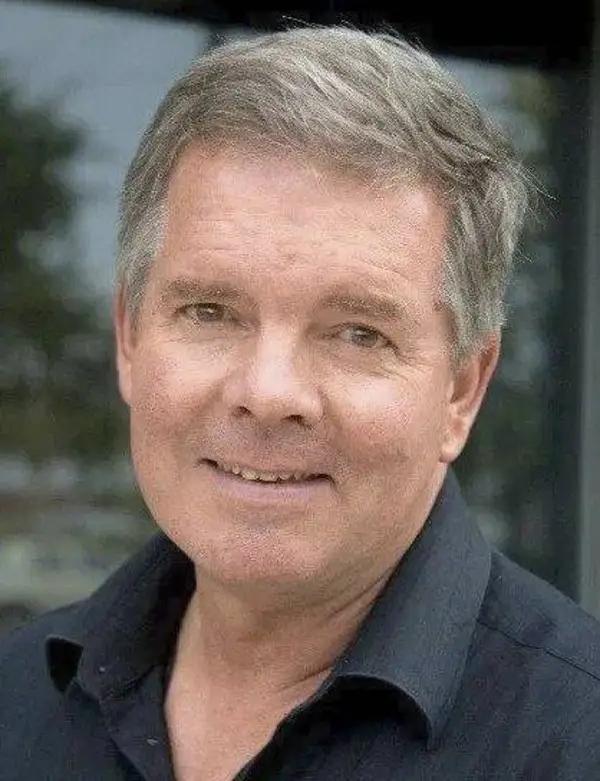
Among the many events scheduled for this year is a poetry reading by nationally recognized poet George Bilgere. He will host the reading from 5-7 p.m. April 17 at the Latrobe Art Center, along with a workshop the following day.
Bilgere, 74, was a Fulbright scholar in Spain, was named a Witter Bynner Fellow through the Library of Congress by U.S. Poet Laureate Billy Collins and teaches at John Carroll University. A Cleveland resident, he spoke with TribLive about the importance of poetry and about his creative process.
Q: What initially attracted you to poetry, and was there a moment when you decided, “This is something I want to do as part of my career”?
A: I went to college intending to study medicine. Everything was going fine, until I came to basic chemistry. I was failing the course, and my advisor suggested I drop it and take it again the next term, along with just one other class in order to be able to focus on chemistry. I took an elective called creative writing. The class started with poetry. The first poem we read was by the great Ohio poet James Wright. It was called “A Blessing,” about an ordinary encounter between the speaker and a horse. I read that poem, and something clicked inside me. I thought, “This is what I want to do.” And that was the end of my medical studies!
Q: How does the average poem start to take shape for you? Is it a particular turn of phrase, a general idea you want to expand on, an image that you can’t shake?
A: It almost always starts with an image, something I see that for some reason stays with me and seems to require that I write about it. The other day, for instance, I went to the drugstore to pick up some flu medicine. On the sidewalk in front of the store was a dead sparrow. People were stepping over it in order to go inside. I thought, how strange. You have to step over a dead bird in order to go into a store full of medicine. And that image ended up becoming a poem. I carry a little pocket notebook around with me, and whenever I see something like that dead bird I quickly jot down a note. In the morning at my writing desk I look at that notebook — and I have something to consider writing about.
Q: What is a good entry point into this type of art, for someone who hasn’t been exposed to much poetry in their life?
A: A good entry point for poetry for someone who hasn’t read much of it is to get a good anthology of contemporary poetry. “Poetry 180,” edited by Billy Collins, is a fine place to start. Or “How to Love the World,” edited by James Crews. I curate an online, poem-a-day newsletter called Poetry Town. You can go to my website at GeorgeBilgere.com and sign up for free. I feature a poem I particularly like every day. People seem to enjoy it!
Q: What, for you, is the value of poetry and how has it come to help define who you are as an artist?
A: Writing poetry is important to me because, to start with, it’s one of the few things I’m any good at. I can’t play an instrument. I’m terrible at painting and drawing. I’m the world’s worst dancer. I’m a lousy cook. But I’ve had a fair amount of luck writing poems, and I’m grateful for having that one way of expressing myself, of adding my two cents to the ongoing conversation about the mystery of being human.
Q: Are there any particular poems you are planning to highlight at your workshop?
A: I’ll be reading and discussing a handful of my own poems, but I’ll also talk about poems by Tony Hoagland, Billy Collins, Mark Halliday and Denise DuHamel. It should be fun.
For more on Latrobe Poetry Neighborhood, see LatrobeArtCenter.org.