
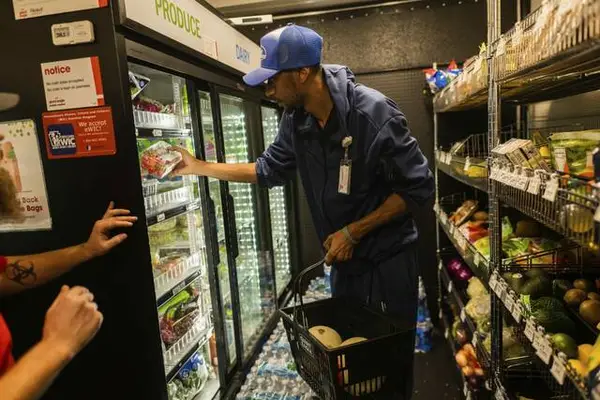
For more than 40 years the Shop ‘n Save on Brownsville Road was more than a business. It was a community fabric for the Carrick neighborhood. When Shop ‘n Save announced its closure, Carrick tipped toward being a food desert, joining roughly one-quarter of Pittsburgh neighborhoods already struggling with access.
Citywide, about one in five residents experiences food insecurity; among Black residents the rate is about one in three. Grocery access in Pittsburgh lags behind the commonwealth. The city has about 1.72 grocery stores per 10,000 residents, compared with 2.14 statewide. For a dense urban community in a largely rural state, that statistic is disappointing and a warning sign that something in our local food ecosystem is broken.
Why are supermarket chains hard to come by?
Why do large chains hesitate to site stores inside our city limits? First, grocery margins are razor thin, often 1%-3%. Chains need predictable volume: a trade area with enough households spending steadily. That math works better for the suburbs than current city demography.
Second, modern supermarkets demand specific real-estate footprints (40,000-70,000 sqare feet), ample parking and loading docks. Finding that combination in an urban parcel is expensive and politically fraught.
Third, operating costs in cities, a combination of higher property taxes, unionization dynamics for some chains, and sometimes higher insurance or loss-prevention costs tied to theft, raise the break-even bar.
Fourth, logistics matter: Distribution networks and fresh-product chains prefer sites near existing distribution chains with faster, easier access; suburbs often win on those efficiencies.
Add to that the magnetism of red-hot neighborhoods like the Strip District and East Liberty where new stores chase higher margins, and we have a structural tilt away from many Pittsburgh communities.
A path forward: How the city can build micro-markets and support vendors
While more population growth and economic expansions can reverse this tide in the long term, there is a more immediate response that is within the city’s reach. Pittsburgh has already taken a step in the right direction with its new mobile vending program designed to streamline licensing and expand opportunities for small vendors. If implemented thoughtfully, that initiative could become far more than a regulatory reform. It could become a cornerstone of the city’s food access strategy.
One practical path forward is a vendor-forward network of year-round micro-markets operating out of existing public spaces. Recreation centers, senior centers, vacant city lots, underused parking garages and other municipal facilities could host small clusters of vendors selling fresh produce and staple groceries in neighborhoods that currently lack access. By leveraging spaces the city already owns, the barriers to entry for small food entrepreneurs drop dramatically while bringing healthy food directly into the communities that need it most.
But for such a model to succeed, it must be supported by real infrastructure. Small vendors often struggle to compete with supermarkets because they cannot access wholesale pricing or refrigerated distribution. The city can help bridge that gap by supporting a cooperative purchasing network. Even something modest like shared cold storage and coordinated deliveries can allow vendors to buy produce in bulk and distribute it across neighborhood markets.
There should be a payment system that seamlessly processes SNAP and EBT benefits, which would ensure residents relying on food assistance can also shop easily.
The program should also reward vendors who deliver real value to neighborhoods. Reduced permit fees, discounted leases for city space or utility assistance could be tied to clear benchmarks: maintaining a strong selection of fresh produce, accepting SNAP benefits and operating hours that work for working families, including evenings and weekends. If clusters of vendors prove successful in certain neighborhoods, the city could then help them transition toward permanent storefronts through technical assistance and small-business financing.
Year-round reliability must be part of the equation. Pittsburgh’s farmers markets play a vital role, but they are often seasonal. A neighborhood cannot rely on fresh food only when the weather cooperates. Investments in refrigerated storage, small delivery vehicles or partnerships with regional distributors would ensure these micro-markets continue operating through the winter months. Local health systems and philanthropic organizations could play a valuable role as well. The health industry already recognizes that diet-related illness drives health care costs, and programs that encourage healthy food access align directly with their public-health and charity mission.
Safety and security of the spaces are just as important as the foods it is selling. These places should feel safe, welcoming and dignified. Simple improvements such as lighting, security cameras and regular maintenance can make a significant difference, while community stewardship programs can ensure that markets remain neighborhood assets rather than temporary pop-ups.
Engaging residents directly in planning through advisory boards or neighborhood meetings would also help vendors understand the cultural preferences, pricing expectations, and shopping habits of the communities they serve.
Like any good policy experiment, the model should begin with a pilot. Neighborhoods such as the Hill District and Carrick would be natural places to start, given their recent grocery challenges. Tracking simple metrics like the amount of fresh produce sold, SNAP transactions, vendor stability and resident satisfaction would allow the city to refine the program before expanding it citywide.
Healthy food is a matter of human dignity
Above all, any solution must place equity at its center. Prioritizing legal immigrants, small and minority-owned food businesses, encouraging cooperative ownership models, and providing technical assistance to local entrepreneurs can ensure that the economic benefits stay in the neighborhoods that need them most. Food justice cannot be an afterthought. It must be the lens through which Pittsburgh approaches both public health and neighborhood revitalization.
A city cannot call itself first choice for families if they have to choose suburbs not because they prefer malls or schools, but because they cannot reliably buy fresh vegetables within walking distance. Nourishment is not a luxury; it is the basic currency of daily life and human dignity. When children grow up thinking good food requires a car or a two-hour round trip, we have ceded a core responsibility of civic life. If we want our neighborhoods to be places where families choose to stay, raise children, and age in place, we must make fresh food more available.
Panini A. Chowdhury is a professional planner specializing in infrastructure planning. He also serves as a gubernatorial appointee to the Pennsylvania Pedalcycle & Pedestrian Advisory Committee.