
Fifty years ago, a signup sheet was posted in Krebs Hall at the University of Pittsburgh’s Johnstown campus, asking Jewish students to kindly provide their names.
A friend of mine was a recent arrival at the campus. She saw the sheet and phoned home to Wilkes-Barre. She told her mother about it. Together, they speculated as to what it could mean. It was the mid-’70s. They decided this was no time for Jews to be signing lists. It never led to anything good.
This story came to mind last week when I read a headline in The New York Times: “Judge Is Skeptical of Penn’s Argument Against Trump Demand for List of Jews.”
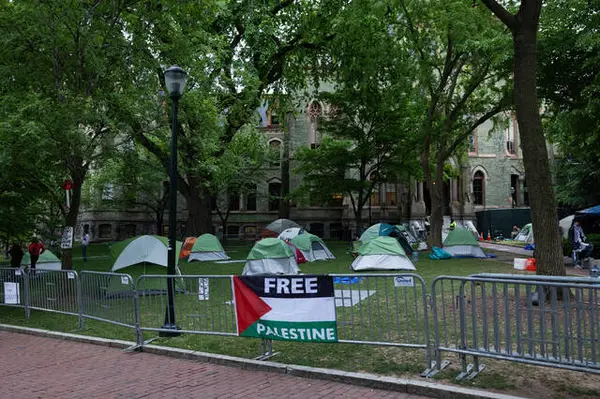
The Trump administration had sought a list of Jewish faculty and staff employed at the University of Pennsylvania. The demand is part of a government investigation into allegations of antisemitism on college campuses. Trump has been at war with academia, especially the Ivies. They gave him an opening during the war in Gaza.
One would be hard-pressed to disagree that antisemitism abounds at colleges under the mask of sympathy for the Palestinian people. Many protesters replaced “Jew” with “Zionist” as cover for their bloody-minded disdain for an entire people. Some used terms such as “genocide,” and applied it to Israel, possibly ignorant of the grotesque mockery they were employing. The word was coined to describe the Holocaust. Israel’s establishment in 1947 was precisely because Jews need a homeland. Fifteen-hundred years of inquisitions, purges and pogroms taught them as much.
Yet, at Penn it is the Jewish faculty and students who are resisting the compilation of a list. If lists were a genre of literature, “Lists of Jews” would be found in the history section next to Third Reich memoirs.
Part of the disquiet might stem from disagreement among Jewish Americans over who is right in the Gaza conflict. College is where such arguments are loudest. Yet, in this case, both sides appear to agree on something: unhappiness over who’s doing the asking and what might come of it.
Donald Trump is, if nothing else, an ally of Israel. His daughter is Jewish and his Jewish son-in-law has been dispatched on important diplomatic missions. That, though, masks a troubling underside. Trump’s inability to tell the truth and his unmasked disdain for minorities of color reflect not just Donald Trump, but Donald Trump’s enablers. They include an unsavory swath of homegrown fascists of the sort that chanted “Jews will not replace us,” while ostensibly defending a statue of Robert E. Lee in Charlottesville, Va., in 2017. These were Trump’s “many good people” and it’s a fair bet that a few of them joined in the siege of the Capitol on Jan. 6.
They are the bridge between Trump’s population of MAGA Christian immigrant-baiters and old-fashioned Jew-haters. Trump’s orbit employs, or has hosted, enough of them for any careful observer to dislike the demand for this list at this time by this administration. Jewish students and faculty at Penn are right to be nervous, but this time the fault lies with the same left that is home base to Trump’s biggest critics.
The judge hearing this case is Gerald J. Pappert, a Republican appointed to the federal bench by Barack Obama. His career has been a study in restraint and fairness and, most of all, respect for process. The Equal Employment Opportunity Commission is conducting a workplace discrimination investigation, and enough of Penn’s protesters crossed the line needed for a closer look. It is one of the many ways the political left has made things worse for their cause. Pappert understands that the EEOC can’t conduct discrimination investigations without the names of those who might have been discriminated against. To weaken its powers to gather information would weaken a system designed to do good, even though it is currently under the thumb of an arguably bad man.
There is, though, the question of why the University of Pennsylvania, or any institution of that sort, would have such a list to hand over. I do not recall any academic employment forms that request an applicant’s religion. Other than guessing by name, how precisely would the administrators at Penn know? Will they request that Jewish employees self-report? The options sound uglier by the moment.
Pappert made it clear: his role is not to decide the case but rule on whether the government has brought one. It has. Nobody has to like it, but the government has brought a case and the law gives the EEOC the right to subpoena evidence. It will be entirely something else for the government to prove that Penn discriminated against those employees because student demonstrators behaved like jerks.
Oh, about that list from 50 years ago: a Jewish psychology professor and advisor to the campus Hillel Society was hosting Rosh Hashana for students who couldn’t get home for the high holidays. He didn’t want to overlook anyone. It seems a bit silly in retrospect. It seems an entirely other thing when the federal government is asking for names on behalf of a president whose movement has welcomed Tiki Torch fascists into its ranks.
Dennis Roddy is a retired journalist and consultant.