
There are some injuries where you have to wait to respond.
You can’t put a cast on a leg before it breaks. You can’t give chemotherapy before someone has cancer. Taking out an appendix proactively is not only useless, but it’s also wrong.
Then there are the ones that require intervention before the problem occurs.
Suicide — especially among teenagers — can’t wait for the break to happen first.
The problem is the “break” doesn’t look like a crisis at all. It looks like normal teenage behavior — until it doesn’t.
That can leave shattered families trying to reassemble the pieces, looking for clues.
Parents such as Jeremy Foltz can feel blindsided — not only by the loss of a child but also by the circumstances.
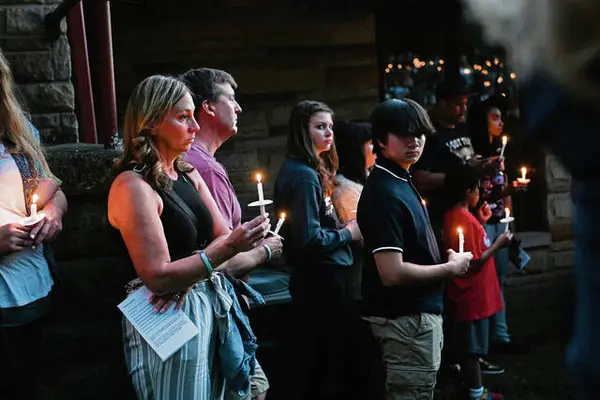
When his son Tayson, 18, died by suicide in September, it wasn’t expected. Tayson seemed happy. He was a pole vaulter on the track team. He was in the marching band. He was a senior in high school — a time when everything is supposed to feel open to possibility.
In retrospect, any parent would see things that might have been missed or dismissed as typical adolescent behavior. Foltz is no different, running over the changes in his son — walking away from his sport and music — after a pole vaulting concussion.
It’s natural. But it also invites blame, which doesn’t help anyone.
What is necessary is prioritizing mental health holistically alongside physical health. Kids who have a problem with their bodily health — a break, a disease, a surgery — are not just given a phone number and told to reach out if they need help.
The help is offered and followed up automatically. If you were given a prescription, the process would be automatic. There would be subsequent appointments and refills, if needed.
Mental health should be no different.
That’s not on parents alone. It’s not on the medical community or schools or government alone. Everyone has to work together.
And it could be lifesaving.
Suicide is the third-leading cause of death for people 15 to 19, behind accidents and homicide. It is three times as high for boys as it is for girls. For people 10 to 14, it is the second-leading cause, right after unintentional injuries such as car accidents.
If someone were in a crash, the response would be immediate. Injuries would be triaged and treated quickly, with an eye not only toward survival but also long-term health. Teams from different specialties would be involved — emergency medicine, surgery, orthopedics, neurology. No one would question whether physical therapy was really necessary. There would be no stigma to a crutch.
How many lives could be saved if mental health received that kind of priority?
What if we approached depression, anxiety and all of the other facets in the kaleidoscope of mental health in the most proactive ways? What if we kept as close a watch on a child’s emotional well-being as we did on his or her height and weight? What if we checked a child’s psychological state the way we do vision and hearing?
We passionately advocate for other interventions such as screenings and treatments. And we should. That is why meningitis or diabetes isn’t at the top of the list of things claiming adolescent lives.
Suicide shouldn’t be, either.