
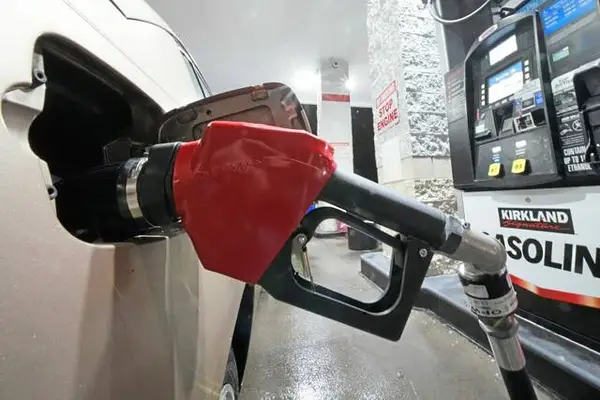
With average gas prices hovering around $4 a gallon, and diesel prices nearly $2 a gallon higher, some Pennsylvania lawmakers are exploring temporarily suspending the state’s taxes on both.
“Everybody is talking about affordability, but what are we doing about it? I think we can do something,” state Sen. Lisa Boscola, D-Bethlehem, said in a phone interview.
“We can help ease the financial burden on Pennsylvania families in these difficult times,” added state Rep. Abby Major, R-Ford City.
Boscola and Major say they plan to introduce legislation in their respective chambers to target the state’s gas and diesel taxes. Both chambers are on recess until next month, with the House scheduled to return to session on April 13 and the Senate on April 20.
Earlier this month, Boscola put out legislative memos indicating she planned to introduce bills to suspend the gas and diesel taxes for 60 days.
Global disruptions in oil markets, driven largely by war in the Middle East, have sent prices at the pump soaring.
Major released a memo Wednesday calling for a six-month “state gas and diesel tax holiday,” starting June 1.
AAA reported Thursday that average prices for regular unleaded gasoline in the Pittsburgh region sat at $3.965 a gallon, up from $3.243 a month ago just before the United States and Israel launched military strikes against Iran on Feb. 28.
Diesel prices in the Pittsburgh region averaged $5.868 a gallon Wednesday, up from $4.164 a month ago, AAA said.
Pennsylvania imposes some of the highest taxes on gasoline and diesel fuel in the nation. Pennsylvania’s gas tax stands at 57.6 cents a gallon, which as of January was the fourth highest in the nation, while its diesel tax of 74.1 cents a gallon ranked second highest, according to the U.S. Energy Information Administration.
PennDOT spokeswoman Alexis Campbell said the taxes generated about $3.5 billion for the state last fiscal year. About three-quarters of that money went toward maintaining state-owned roads and bridges, while smaller shares went to local governments to help them maintain locally owned roads and bridges, state police, the Pennsylvania Turnpike and other agencies, according to PennDOT.
Boscola estimated that suspending the gas tax for 60 days could save motorists $435 million, while suspending the diesel tax could save $197 million over the same span.
She said the state could issue bonds “so state police and infrastructure would not be adversely affected” during the 60-day period.
PennDOT’s Campbell said it’s hard to predict how much of an impact suspending the state gas taxes would have at the pumps.
“It’s important to note that Pennsylvania’s state gas tax is assessed at the wholesale level, not at the pump. Gas prices are set by the industry, and how or whether taxes are passed on is their decision,” Campbell said. “This is why you can drive a short distance and find varied prices at different stations.”
Major said her plan would require fuel retailers to reduce pump prices by the full amount of the state fuel tax.
“This proposal would use money from the Rainy Day Fund (reserves) to make up the difference,” Major said.
“As much as I don’t want to spend it and would prefer the government tighten their belts like every Pennsylvanian is doing to make ends meet, House Democrats and Gov. Shapiro seem hell bent on spending it with their irresponsible budgets. I would rather see the money returned to the taxpayers,” she added.
Last week, Georgia passed legislation to suspend collecting its gas taxes until May 19. The state also suspended collections for periods when prices skyrocketed in 2022, 2023 and 2024. Several other states are considering similar moves.
State Sen. Doug Mastriano, R-Franklin County, wrote an op-ed this week supporting a suspension of the state fuel taxes. The op-ed didn’t offer specifics on how long the suspension could last or what the state could do to plug any revenue holes.
“Suspending the state gas tax — temporarily and responsibly — would provide immediate breathing room to families already stretched thin by inflation,” wrote Mastriano, who didn’t respond to requests for comment from TribLive.
“It would help stabilize small businesses facing rising transportation costs. It would support farmers working to sustain food production and truckers working to keep supply chains moving,” he added.
“Every delay costs Pennsylvania more money they cannot afford to lose,” Mastriano said. “Every week without relief tightens the financial strain on house already stretched to their limits.”