
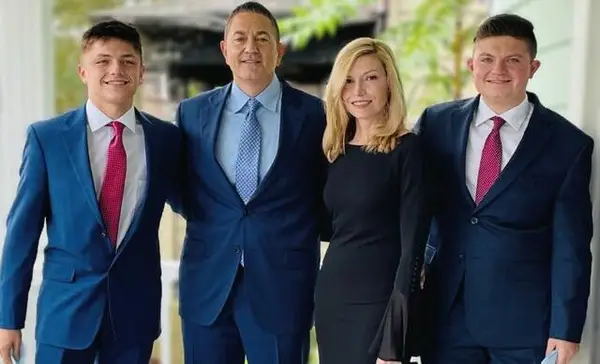
When my son Gus was diagnosed with autism, my wife saw it first.
I did not.
Like many fathers, I resisted the diagnosis with a stubborn optimism that masked something deeper: fear.
Michelle noticed the early signs — the speech delays, the social struggles, the subtle differences that began to separate our son from other children his age. She began researching therapies and evaluations. I told myself he would grow out of it. Boys develop slower, I said. Everything will be fine.
Denial can be a powerful shield. It can also be a dangerous one.
For months, Michelle pushed for answers while I clung to the belief that nothing was wrong. Looking back now, I realize she was carrying the emotional weight of the diagnosis largely alone while I stood on the sidelines, hoping reality would somehow change. I wasn’t trying to be distant. I simply wasn’t ready to face what the diagnosis might mean for my son — or for our family.
Then came the moment that broke through my denial.
Gus was invited to a birthday party. While the other children ran around easily together, laughing and playing games, my son stood apart. He didn’t quite know how to join in. He hovered at the edges of the room, trying to find his place in a world that seemed to come naturally to the other children.
Watching him struggle to connect felt like a punch to the chest.
That day I made a decision — not just to accept the diagnosis, but to fully engage in the fight for my son’s future.
Seventeen years later, I have come to understand something that many families confronting autism experience but rarely talk about openly: Fathers often process the diagnosis very differently than mothers.
Many fathers retreat inward. Some throw themselves deeper into work. Others go silent, absorbing the shock privately. What can look like indifference is often something else entirely — grief, fear and the overwhelming feeling that we are supposed to fix something we do not know how to fix.
But autism cannot be solved through denial. It requires partnership.
Once Michelle and I began working as a team, everything changed. Instead of resisting the diagnosis, we focused on what we could do each day to help our son move forward. The shift was subtle but profound. We stopped asking why this happened and began asking, What can we do next?
I began thinking about our journey in two ways: sight and vision.
Sight means focusing on small daily improvements. What can we do today to help our child grow? Maybe it is introducing a new food, practicing a social skill or helping him master an activity of daily living. Each improvement may seem small in isolation, but those incremental steps can build into meaningful progress over time.
Vision means imagining the long-term possibilities. When Gus was young, we did not know what the future might hold. Would he live independently? Would he go to college? Would he find meaningful work? Would he build relationships and friendships of his own? Those questions can feel overwhelming for any parent of a child on the spectrum. For a while, they haunted me. I worried about what would happen when Michelle and I were no longer around to guide him.
Today, Gus is a senior at Kent State University studying exercise physiology and considering a career in physical or occupational therapy. College has not always been easy — academically or socially — but he is navigating the experience with determination and resilience.
The future that once felt uncertain is now unfolding step by step.
Autism forces families to rethink expectations and redefine success. It teaches patience, humility and resilience.
Most importantly, it reminds us that showing up matters more than fixing everything.
And sometimes the most powerful thing a father can do is simply say: I’m all in.