
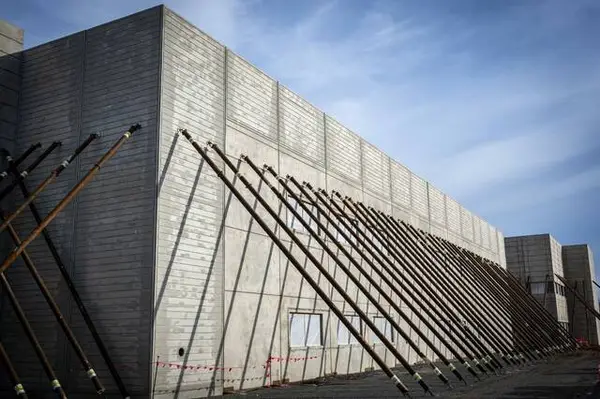
Pick up your smartphone and look at your apps — banking, health care, social media, even your morning coffee order. The server holding that data and performing those actions isn’t in your hand; it’s in a data center.
From personal lives to global commerce, data centers are the backbone of the modern economy. They are not merely “warehouses for the internet.” These hyperscale facilities are foundational infrastructure, supporting the cloud services and AI workloads that thousands of U.S. businesses and residents rely on daily.
In Southwestern Pennsylvania, the rapid expansion of AI is driving an unprecedented demand for data centers. In turn, these facilities drive demand for electrical equipment, cooling systems and specialized construction. Because these sites are energy-intensive, they require proactive grid planning.
Our region’s industrial legacy provides a unique edge: Our brownfields often possess high-voltage grid connections that developers crave, significantly slashing the time needed for permitting and approvals.
To ensure our leaders are prepared, our organizations recently led a delegation of county commissioners and economic development professionals from nine counties to Loudoun County, Va., home to “Data Center Alley.” We went to gain a firsthand look at the logistics, economic impact and community integration of the world’s largest data center hub.
We didn’t visit Virginia just to see buildings; we went to see a roadmap. Loudoun County manages a market with over 4,900 megawatts of inventory. Their officials offered a candid look at the realities of being a host. The message was clear: Every county, even those without a facility, must address the data center question within the next three to five years. Impacts on energy transmission and infrastructure extend far beyond county borders. Regional relevance now requires a deep understanding of the digital grid.
Virginia experts also shared their growing pains. As land prices in Loudoun spiked by 45% in a single year, the county had to proactively ensure small businesses weren’t priced out, approving developments that included competitive spaces for entrepreneurs. We also discussed “impact fees” — tools local governments can use to support infrastructure and community needs, much like the fees generated by Marcellus Shale development here in Pennsylvania.
We addressed community concerns head-on. Modern data centers are evolving; the “water-guzzling” facilities of the past are being replaced by closed-loop recapture systems and advanced refrigeration that minimize environmental footprints. By implementing “data center overlay districts” in zoning codes, our counties can direct development away from schools and residential areas while setting high standards for noise mitigation and facade design. During our tour, we found the noise from adjacent traffic was louder than the facility’s fans and generators.
On-site power generation is also becoming a necessity. Virginia officials noted that our region’s “all of the above” energy approach is a massive draw for developers. We are already innovators in this space: Pittsburgh International Airport is the first in the world powered by a microgrid. Fueled by the airport’s own natural gas and the solar array, the microgrid generates, stores and distributes energy on the airport’s campus. It also enhances energy resilience and is a model that perfectly aligns with data center needs. The airport produces its own energy, just the way a data center would.
While these facilities have a smaller permanent headcount than a traditional factory, they are massive capital investments that anchor entire ecosystems. They generate thousands of high-quality construction jobs and long-term roles in facility and property management. More importantly, they connect our region to broader global supply chains.
By 2030, Southwestern Pennsylvania has the potential to unlock 4.6 GW of capacity, driving billions in GDP impact. But to realize this, we must act as a unified region. We need predictable permitting, strategic site selection and rock-solid alignment between state strategy and local planning.
Southwestern Pennsylvania’s path forward is defined by our ability to evolve as a premier laboratory for modern energy and digital infrastructure. By aligning our industrial legacy and brownfield assets with the requirements of the digital age, we do more than just host servers; we pioneer the “all of the above” energy models and microgrid resilience that the rest of the world is still studying.