
Think of my Casualty List as a court of appeals for innocent stocks that have been unjustly punished.
Well, maybe not completely innocent. But punished too much, in my view.
In the first quarter this year, marked by armed hostilities between the U.S. and Iran, the Standard & Poor’s 500 Total Return Index fell 4.3%. For the Casualty List, I looked for stocks that had dropped 20% or more.
Here are five that I think can revive and thrive.
Humana
Health insurance organizations are about as popular as the mumps. But they serve a useful function. Much as we all complain about insurance premiums, paying for doctors and hospitals without insurance could be a lot worse.
Humana Inc. (HUM) is one of the largest health insurers in the U.S., and specializes in Medicare, Medicaid and military patients. Since Uncle Sam is trying to reduce health outlays, these programs have gotten stingier in what they pay.
That’s why Humana shares have fallen a sickening 57% in the past five years, including 32% in the latest quarter. But I suspect the damage is mostly done. The stock seems attractive to me at 0.17 times revenue and 1.2 times book value (corporate net worth).
Cognizant
Lots of companies want to outsource their information-technology operations. Companies that want to do so cheaply may prefer to outsource them to India. That’s the idea behind Cognizant Technology Solutions Corp. (CTSH). Originally based in India, it moved its headquarters to Teaneck, N.J., in 1997.
Last year, Cognizant’s revenue increased more than 8%, and profits were up 11%. Both figures are a little above the company’s 10-year average. The stock, however, fell 26% in the first quarter as investors fretted that artificial intelligence will upend traditional information-technology operations.
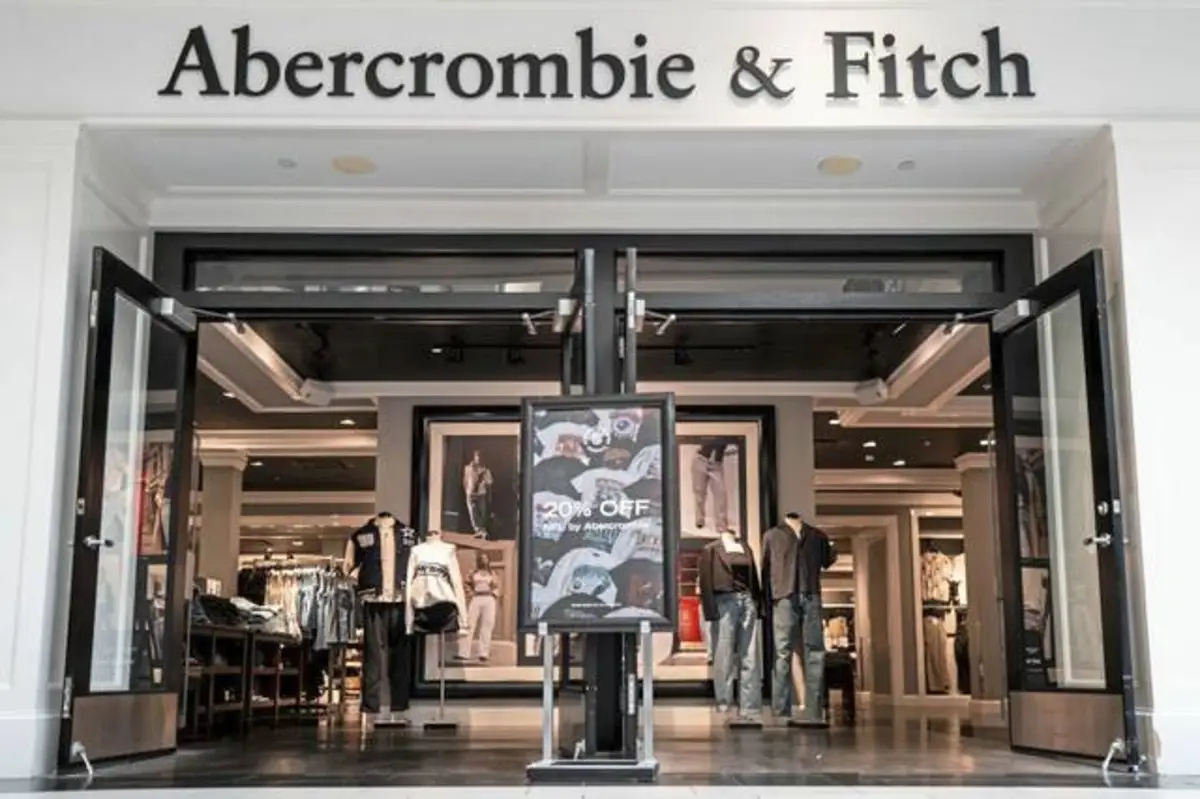
Abercrombie
Abercrombie & Fitch Co. (ANF) sells clothing, mainly for young adults. Though its stock has more than tripled in the past three years, it dropped 27% in the first quarter. One reason is much of its clothing is imported and is hurt by the Trump administration’s tariffs.
Holiday sales in 2025 were disappointing, and I suspect one reason for that (which I haven’t seen in brokerage-house reports) is people in their 20s have had to resume payment on their student loans.
The stock sells for about nine times earnings. In my view, that’s too low for a company that earned a 38% return on stockholders’ equity in the past four quarters.
Harmony Biosciences
Harmony Biosciences Holdings Inc. (HRMY) surrendered 25% of its value in the first quarter. The company, based in Plymouth Meeting, Pa., is working on drugs for rare neurological diseases. It is approaching $1 billion in annual revenue, but so far it is heavily dependent on one drug, Wakix.
That drug is scheduled to lose patent protection in 2030 and might lose it even sooner, if court cases go the wrong way. The stock is speculative, but at 10 times earnings, I like the risk/reward picture.
Thor
I’m nervous about my final pick — Thor Industries Inc. (THO), a leading maker of motor homes. It’s no mystery why the stock fell 22% in the first quarter. The price of gasoline soared with the Iran war.
Fuel prices may stay high for quite a while, but my contrarian instincts tell me this is a good time to bottom-fish in Thor shares. The balance sheet is strong, and several valuation measures are near 10-year lows.
Performance
The Casualty List from a year ago worked out particularly well, with a 91% average return for five stocks. It was helped considerably by a 230% gain in Peabody Energy Corp. (BTU).
Also notable were an 87% return on Dillard’s Inc. (DDS), a 56% return on Steven Madden Ltd. (SHOO) and a 55% return in Synchrony Financial (SYF). Bringing up the rear was a 27% return on Abercrombie & Fitch Co., which I’m recommending again today.
By comparison, the Standard & Poor’s 500 Total Return Index returned 31.7%.
Bear in mind that my column results are hypothetical and shouldn’t be confused with results I obtain for clients. Also, past performance doesn’t predict the future.
Of course, not every Casualty List does as well as the one from last April. I’ve compiled 92 lists, and one-year returns can be calculated for 88 of them. Only 41 of the lists have beaten the S&P 500 total return.
But when they win, they often win by a considerable margin. As a result, the average one-year return for all 88 lists has been 15.7%, versus 11.9% for the index.
Disclosure: I don’t own the stocks discussed in today’s column, personally or for clients.