
Carrie Grecich’s children are heavily involved in sports at the youth level.
Her son plays travel baseball and her daughter is in club volleyball. They’re sophomores at Chartiers Valley.
Grecich, a Scott Township resident, is concerned with how the cost of youth sports is pricing families out of being able to give their kids the opportunity to take part in the sports they love.
She said she always wanted to be a gymnast as a child, but since there were no community programs in that sport, she never got the chance. She played softball — “the love-of-my-life sport” — as well as basketball and volleyball in high school. In hindsight, she’s grateful for how it worked out.
“There’s no way my parents could put me in any sport today,” Grecich said. “I signed up my son for Pony League last summer, and it was $200. Again, not something I can’t take on, but I think that in the community, there are many people who can’t put $200 up for a rec baseball program.
“So those kids, who would’ve been me as a young child, don’t get to play because they can’t afford it.
“I just hate that some kids are completely being left out, not just out of club or travel but out of rec, and then, consequently, out of high school sports, as well.”
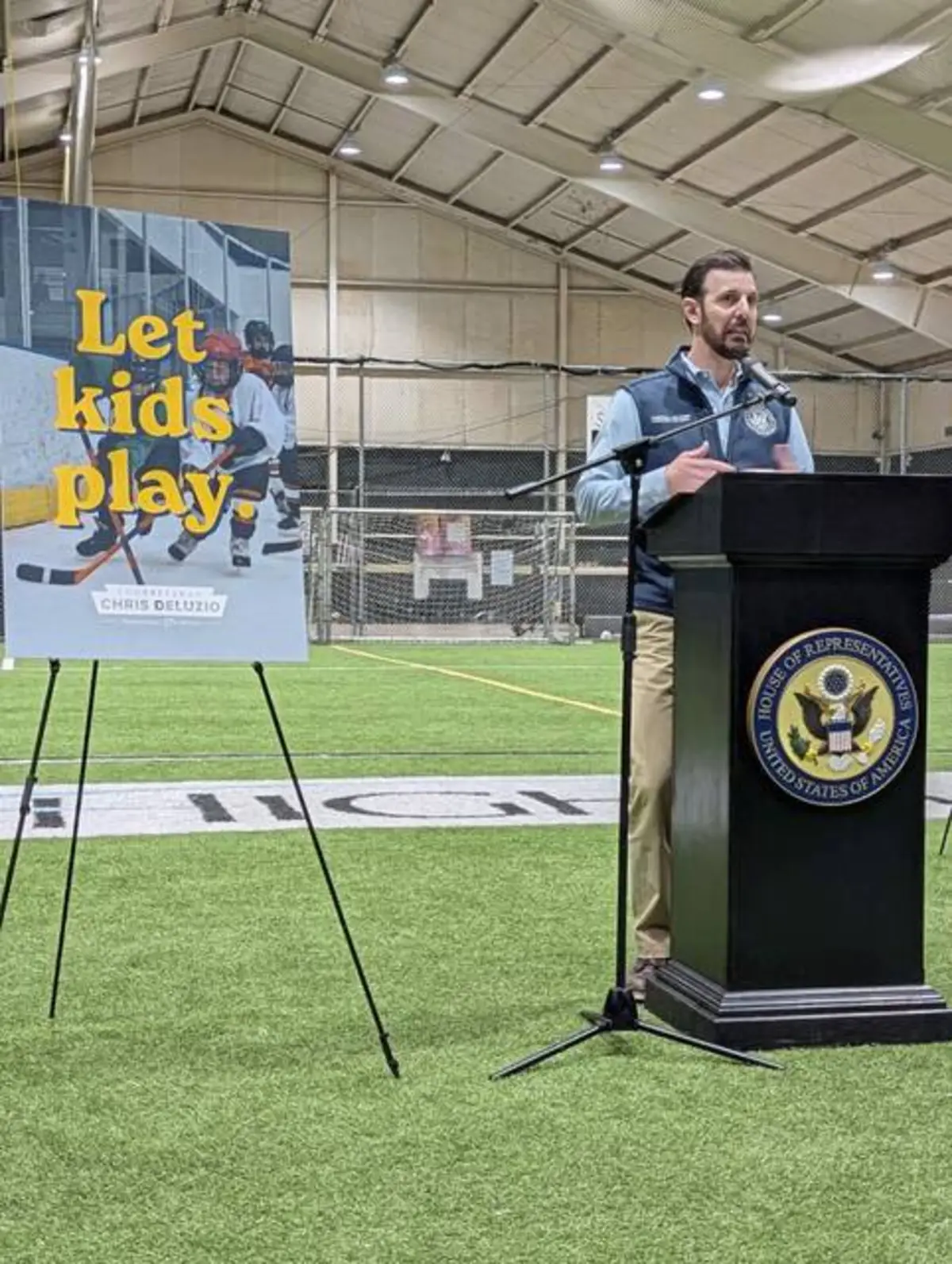
Grecich was one of several residents who shared their testimony on the hot-button issue Tuesday afternoon as U.S. Rep. Chris Deluzio, D-Fox Chapel, brought local political figures, community members, coaches, parents, athletes and others together to discuss the origins and impact of those rising costs and what can be done to solve the issues.
“Youth sports should not be a luxury good,” said Deluzio, who held the “Let Kids Play” event at the Green Tree Sports Complex as a field hearing for the Monopoly Busters Caucus that he co-chairs in Congress. This was caucus’ second field hearing.
“It should be something every kid can do,” Deluzio said. “What we are trying to do in the caucus is take on the problem of corporate power and consolidation that has affected so much of our lives and what are kids want to do in the field.”
Deluzio wants Congress to help lessen the burden for families in multiple ways:
• heighten scrutiny for all youth sports mergers and acquisitions
• ensure transparency regarding executive pay, debt dividends and fees charged to families
• investigate what he called anti-competitive and deceptive practices of profit-driven companies
• restore pubic investment in community and school programs so local youth sports are available and competitive.
Youth sports is a $40 billion industry with costs increasing 46% in five years. The average annual cost per child per family was $5,000, with a participation gap two times higher for high-income families versus kids from low-income families, according to the American Economic Liberties Project.
Marty Langford runs the West End Mustangs youth football organization and oversees the opportunity for more than 240 children age 5-13.
He sees money as a big issue. Even though the league got a Stop the Violence grant from the City of Pittsburgh, the organization still spent almost $30,000 for equipment last year.
“The first year, I bought equipment for 100-some kids, and I might have spent $10,000.”
Jeremiah Dugan, a teacher in Brookline and a youth soccer coach for 26 years, also expressed his frustration with the rising costs.
“I have witnessed, firsthand, the steady erosion of accessible, community-based athletic opportunity and the very real consequences that erosion has for young people in the communities they grow up in,” Dugan said.
“A generation ago, youth sports was largely organized and sustained by community recreation leagues staffed by parent volunteers.” Dugan said. “These leagues provided low-cost, neighborhood-based opportunities for children to learn the fundamentals of sports along with their friends and classmates.
“Today, many of these leagues are gone or on the verge of collapse, displaced by a professional club model which demands a significant financial investment from families with multiple uniforms, specialized equipment and travel schedules that would’ve seemed extraordinary even for minor league athletes not long ago.”
Deluzio said this issue goes beyond polarized politics.
“I am not naïve about the environment in Washington,” he asid, “but this is a place where we can actually get something done for kids in this country.”