
Financial pressure on families from inflation, government shutdowns and the Iran war is apparent at area food banks, where some say demand is outstripping even what they saw during the covid-19 pandemic.
From July 2024 to July 2025, the Greater Pittsburgh Community Food Bank distributed 5 million more meals than the previous year, jumping from 48 million to 53 million in that period.
During the height of the pandemic in 2020, the food bank distributed 40 million meals.
That equates to a 32.5% jump in five years.
And that food bank isn’t alone.
In the first three months this year, the Westmoreland County Food Bank saw a 14% increase in the number of people in need of help compared with the same time in 2025.
That comes while navigating an 18% decrease in the amount of food donated to the group.
For recipients — including more than 1,500 new clients — it sometimes means less food each week, according to Director of Development Lauren Hill.
Increasing prices throughout the economy means not only more people are relying on the food bank’s services but cash-strapped benefactors are less likely to donate, she said.
“The rising costs of goods — food, gas, utilities — is taking a toll on our families,” Hill said.
Food prices rose 3.1% from February 2025 to this February, while utility costs soared by 6.3%, according to the Consumer Price Index.
Gas prices fell during that same period, but the recent U.S.-Israeli attacks on Iran have caused prices to skyrocket in the weeks since. In Southwestern Pennsylvania, prices are hovering around $4.20 per gallon, according to AAA.
The most recent spike in consumer prices, however, is part of a broader, yearslong inflationary trend.
Hill said the 14% jump in the first three months of 2026 is on top of a 20% increase in clients it had already borne last year.
That tracks with Deborah Thackrah’s numbers.
She’s the executive director of Greensburg-based nonprofit Feeding the Spirit, which works to help those facing food insecurity and homelessness.
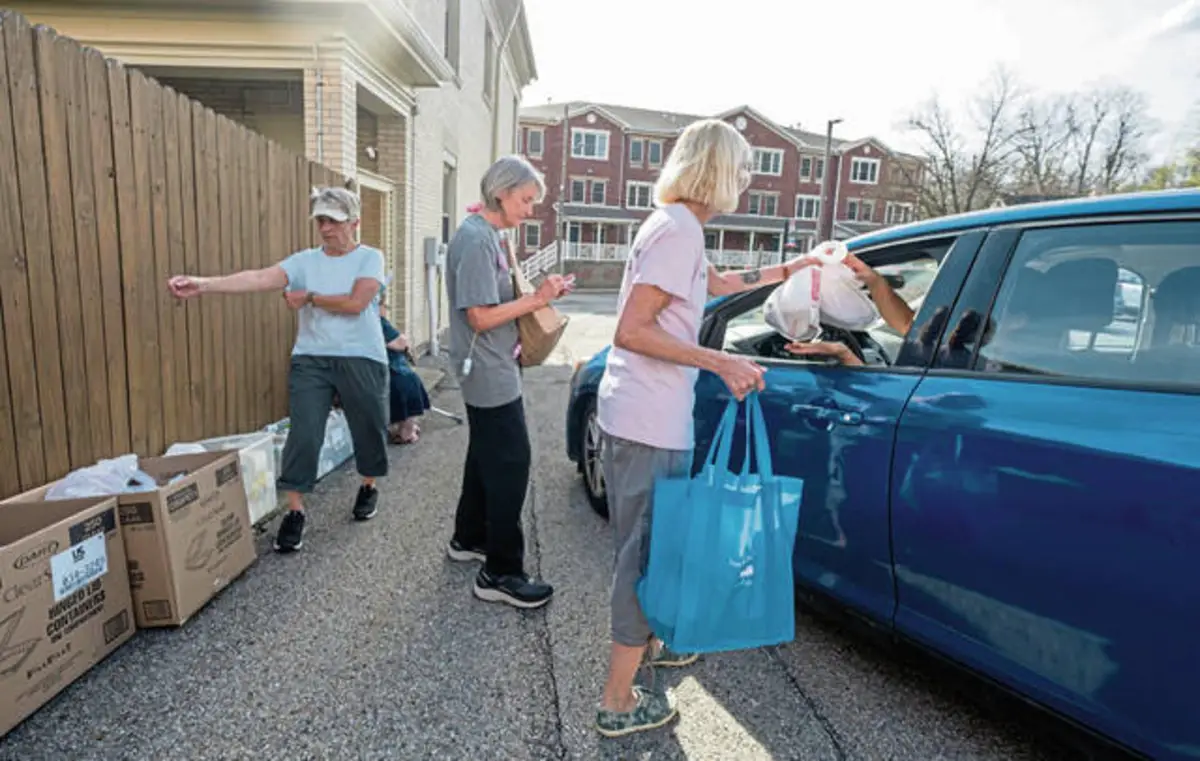
In the first three months of this year, Thackrah said, the group provided about twice as many meals during its weekly pickups as it did the same time last year. Volunteers now hand out 350 to 400 meals each week, she said.
“We were very worried when we saw the increase,” Thackrah said.
Elderly clients on fixed incomes, she said, are particularly struggling.
To meet the higher demand, she said, the nonprofit has been seeking grants.
“Every story is different, but they’re all tragic,” Thackrah said.
A silver lining: The surge in need also has yielded a surge in volunteers and helpers with “big hearts,” she said. Several people have called asking how they can help the food bank or sponsor a meal.
“I think we’re learning how vulnerable our neighbors are,” Erin Kelly said.
Kelly, a director at the Greater Pittsburgh Community Food Bank, said many of the people seeking help this year are doing so for the first time in their lives.
The food bank, which serves 11 counties in Southwestern Pennsylvania, has seen a 9.2% increase in families and a 14% increase in individuals seeking assistance since July 2025.
The recent jump, Kelly said, is the result of “compounding” issues.
Last fall’s government shutdown and the resulting halt in benefit programs such as SNAP, a harsh winter with high utility bills and the general upward trend of prices have made it harder for people to keep their heads above water, she said.
“We’re seeing more and more of our neighbors in need of food assistance programs” Kelly said.
But the Greater Pittsburgh Community Food Bank — backed by government funds and corporate and private donations — has been meeting increased demand for years, she said.
Despite the loss of U.S. Department of Agriculture funding for local farmers last year, Kelly said, the food bank is well positioned to continue to handle the spiking need.
“Our biggest concern is that people know we’re here,” she said.
In addition to its own pantries and distributions, the Greater Pittsburgh Community Food Bank operates through a system of local partnerships.
Among those partners is the Harrison-based Allegheny Valley Association of Churches.
Jayne Bakos, the association’s food bank coordinator, said AVAC serves a mix of seniors, families and single people.
Some also rely on programs like SNAP, but she said many others don’t qualify for benefits yet still struggle to make ends meet.
The food bank’s demand spiked last year in the wake of the government shutdown and the winter holidays, but it has settled down to levels similar to last summer’s, Bakos said.
For the association, that means serving about 100 people per week.
The association sees many people who fluctuate month to month, coming to the food bank when they need extra help and steering clear when they can make ends meet, according to AVAC Executive Director Karen Snair.
“The prices keep going up, but the income doesn’t,” Snair said.