
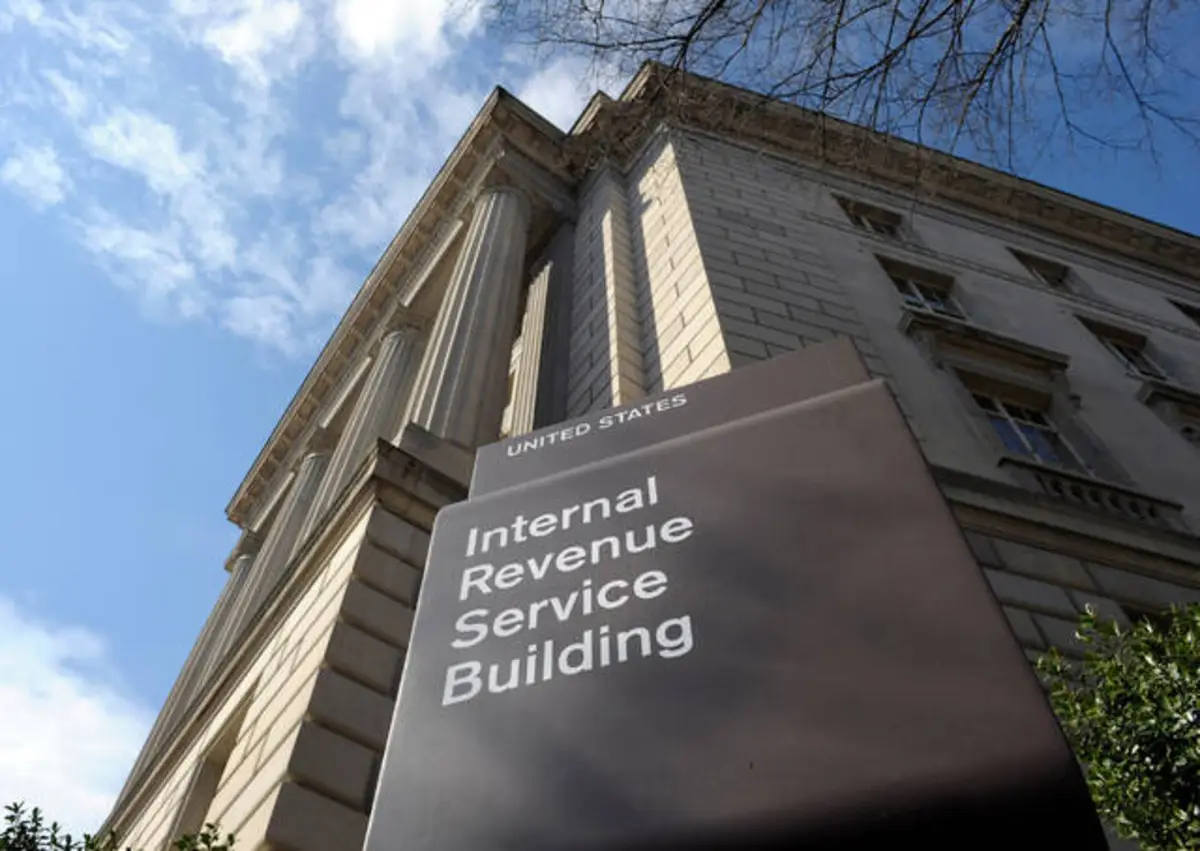
With the IRS expecting 164 million individual income tax returns this year, there’s a common conception that rich people pay less tax in the U.S. than what many would consider fair.
It’s a sentiment that shows up in polling on Americans’ attitudes about the federal tax system and animates a great deal of political discourse. A bill introduced in Congress last month by Sen. Bernie Sanders, D-Vt., and Rep. Ro Khanna, D-Calif., looks to collect billions of dollars in additional taxes from the ultra-rich.
“We can no longer tolerate a corrupt tax code that enables billionaires to pay a lower tax rate than the average worker,” Sanders said in a release announcing the proposal.
A recent study out of the University of California, Berkeley, found the 400 wealthiest Americans owe a smaller percentage of their earnings to the federal government than everyone else.
For the most part, high earners don’t have to rely on accounting acrobatics to keep their tax payments low. Basic elements of the U.S. tax code disproportionately benefit wealthy households, according to experts.
“It’s not necessarily like there’s a secret line on the form that says ‘loophole’ and allows people to claim extra deductions,” said Joseph Rosenberg, a senior fellow at the Urban-Brookings Tax Policy Center in Washington, D.C.
Here are three of the major strategies used by rich Americans to minimize their tax burden. Some can be mimicked by ordinary people. Others depend on having wealth in the first place.
The deadline to file a 2025 return is Wednesday, though taxpayers can request an extension.
Buy, borrow, die
Income gets taxed. Money made from selling assets gets taxed. But unrealized capital gains — profits on paper — are shielded from the IRS, the federal agency of about 75,000 employees that processes tax filings and enforces tax laws.
Say a wealthy investor buys $1 million in Apple stock. Perhaps the tech giant launches a successful new product and its shares double in value. Suddenly, the $1 million investment is worth $2 million. The increase counts as unrealized capital gains and can’t be touched by the federal government until the shares are sold.
There may be little pressure to sell. An investor who needs cash can take out a loan with the stock as collateral.
And when the investor dies, the shares can go to their kids with the capital gains slate wiped clean, experts said. The new base value is $2 million. Put another way, the family just made $1 million without paying a penny in taxes.
This is such a common and lucrative strategy it’s earned a name: “buy, borrow, die.”
Oracle co-founder Larry Ellison has used the first two steps of this method to fund major purchases, like a $300 million Hawaiian island, without giving up assets or triggering taxes.
In general, assets are treated more favorably than income under U.S. tax law. The top federal income tax rate is 37%. On investments held for more than a year, the rate generally tops out at 20%. The exact rates have fluctuated over time, but the bias toward assets is a core characteristic of U.S. tax law.
“That’s been a feature of our system for a very very long time,” Anthony Infanti, a University of Pittsburgh law professor who studies taxation, said Tuesday. “You do not work, you invest — you pay taxes at a lesser rate than if you go out in the labor force.”
Working- and middle-class Americans tend to make most or all of their money through their paychecks. Less so for the wealthy. Several of the country’s billionaires, including Mark Zuckerberg, the co-founder of Facebook, famously take $1 annual salaries.
Loss harvesting
When the time does come to offload stock, real estate and other major assets, a practice known as loss harvesting is a popular way the rich reduce their tax burden.
Selling assets at a loss generally produces a write-off, which can be used to cancel out taxes on gains reaped through other investments. Investors often “harvest” their losses in November or December to offset profits accrued during the rest of the year.
It’s illegal to manufacture losses on traditional securities by selling them at a loss, claiming the tax benefit and then quickly buying them back. This rule doesn’t apply to cryptocurrency, though, and some tax gurus are urging ordinary people to take advantage of this opportunity.
Not Kelly Erb, a tax attorney and senior writer at Forbes. She’s concerned this maneuver could still run afoul of the law if done too egregiously. Rich people have the benefit of financial advisers that can help them stop just short of what might catch the attention of IRS auditors.
“This is how rich people stay rich,” Erb said. “Because they can afford to pay advisers that are looking out for them with these rules.”
Tax-advantaged accounts
About six in 10 Americans told pollster Gallup last year they have some kind of tax-advantaged retirement account. One of the most common is a 401(k), an employer-sponsored account that allows workers to invest money while deferring tax payments until its time to withdraw.
Roth IRAs are also popular, allowing after-tax income to be invested and taken out down the road with no taxes.
These are among the largest and most widely accessible tax breaks. But they depend on having extra income to set aside.
“The wealthy find it easy to take advantage of them, but it’s not exclusive to them,” Infanti said.