

Maybe you don’t think about the number “21” outside of reflecting on Roberto Clemente. Neither did I until a few weeks ago.
Turns out there’s a ton of 21 out there. All you have to do is look.
For starters, we are living in the 21st century, which is either good or bad, depending on your perspective. The minimum drinking age is 21 in most states, although that wouldn’t matter without the 21st amendment, which in 1933 reversed a nationwide ban on alcohol (not that anyone was abiding by it).
Surely, you have played blackjack, also known as “21” or “veinte y uno” in Spain, where the game was invented way back in Aaron Rodgers’ rookie season of 1611.
You’re likely familiar with a 21-gun salute but likely not familiar with the 21st president of the United States, Chester Arthur (Shamefully, I’d never heard of him).
Twenty-one also marks the number of shillings in a guinea, and I don’t even know what that means. But that won’t stop me. We’re just getting started here.
The topic arises because the Steelers are drafting 21st in the first NFL Draft in Pittsburgh since 1947. This will be their seventh time in that slot — more than any team — and second in a row.
When the Steelers picked 21st in 1974 as part of the greatest draft class in sports history, they chose Southern Cal wide receiver Lynn Swann, who became a Super Bowl MVP and Hall of Famer.
It’s not a bad spot to take a receiver, I might add, which some expect the Steelers to do. The Minnesota Vikings picked Randy Moss 21st in 1998.
But the first important thing to know, if you’re visiting, is that the number “21” is magical in Pittsburgh because of Clemente. He is on everybody’s Mt. Rushmore of all-time Pittsburgh sports figures (along with Mario Lemieux, Joe Greene and Sidney Crosby, if you ask me).
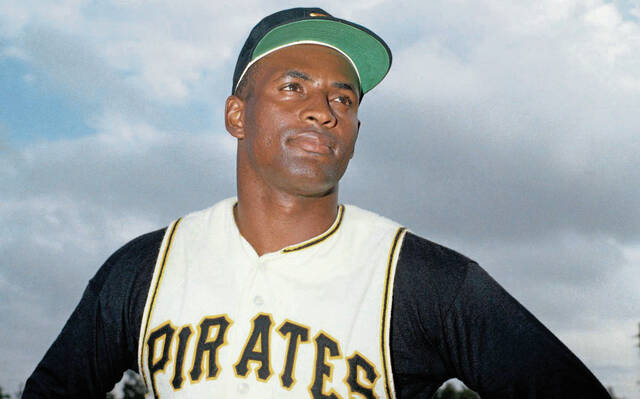
Clemente died in a New Year’s Eve plane crash in 1972, at age 38, attempting to deliver emergency relief supplies to earthquake survivors in Nicaragua. You will see his statue on the North Shore.
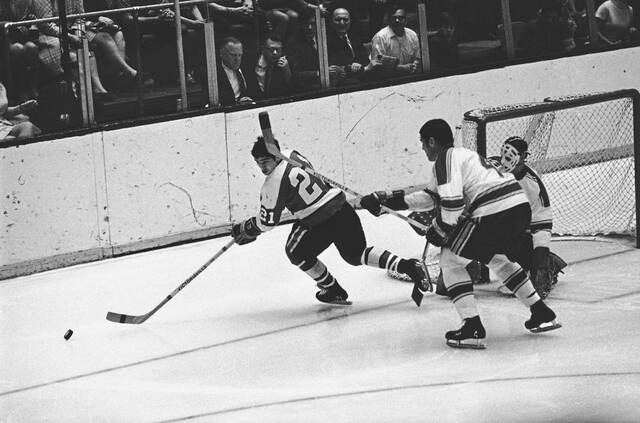
The number 21 is special to our hockey team, as well. The Penguins have retired just three numbers — Lemieux’s 66, Jaromir Jagr’s 68 and the late Michel Briere’s 21. Briere also died young — at age 21 — because of injuries suffered in an automobile accident after his rookie season.
The Steelers haven’t had many notable 21s, but the 26 players who’ve worn it included Tony Dungy (who played defensive back in 1978 and intercepted six passes for a Super Bowl champion team), Joe Haden, Deon Figures and Jim (“Don’t Call Me Terry”) Bradshaw, a safety who returned two fumbles for touchdowns in 1964, when the average NFL salary happened to be $21,000.
Oh, and my personal favorite: Amos Zereoué, who after breaking 100 yards precisely 21 times at West Virginia, had a decent NFL career as Jerome Bettis’ sidekick.
The Steelers’ pattern of drafting 21st began at the first draft, back in 1936 at the Philadelphia Ritz-Carlton, when they chose third and 21st. There was no Combine or Mel Kiper then. The draft as we know it did not exist. Neither did the Steelers, at least by name. They were called the Pirates.
There were only nine NFL teams at the time. Team owners sat next to sportswriters in a smoke-filled ballroom, picked players based on magazine articles and scribbled their picks on a chalkboard.
Oh, and many of the star players never suited up because pro football did not pay enough.
With the third pick, the Steelers chose a Notre Dame running back unbelievably named William Shakespeare — a headline writer’s dream. They called him “The Merchant of Menace” back at Notre Dame, and when the Irish took on Northwestern star Henry Longfellow, it was “Shakespeare Meets Longfellow.”
Shakespeare never played a pro down. He took a sales job with Thor Power Tool, which paid twice as much as the Steelers (Pirates) would have. He later became a World War II hero.
The Steelers’ — er, Pirates’ — luck did not change with the 21st pick, either. They used it on dashing Stanford running back Bobby Grayson, but he also found a more lucrative job, also served in the military and also avoided the NFL altogether.
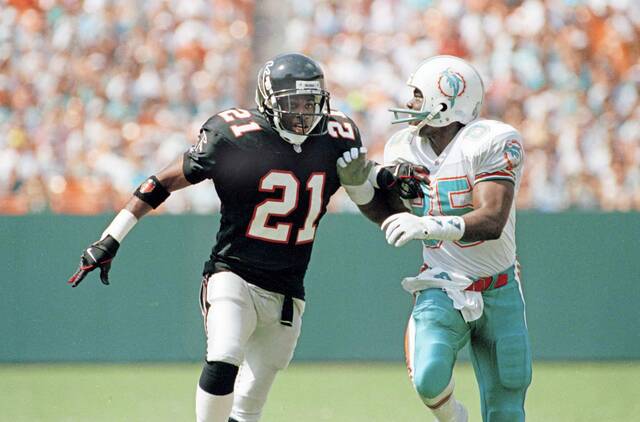
The five greatest No. 21s in sports history, in my not-so-humble opinion, are Clemente, Deion Sanders, Tim Duncan, Dominique Wilkins and Charles Woodson.
My personal favorites, after Clemente, are longtime NBA gunner World B. Free — Billy Shakespeare has nothing on him in the name game — and Eric “Sleepy” Floyd, a one-time Georgetown basketball star who later played for the Golden State Warriors and lit up the Showtime Lakers for an NBA playoff- record 29 points in a quarter.
In his best season, Floyd averaged — you guessed it — 21 points.
But getting back to the 21st pick of the NFL Draft, know this: The bust rate is higher than the Pro Bowl rate, at least in the 21st century.
Roto Wire performed a recent study of each pick in the first round and found that from 2000-24, 24% of the 21st picks have made the Pro Bowl whereas 30% are busts. At least that’s better than picks 22 through 26, where the study found the highest bust rate of the entire first round — 57%.
Finally, I present everything you ever (and maybe never) wanted to know about the history of the 21st pick dating to 1936, a history that includes every single Tom, Dick and Ha Ha ever taken, the latter being Alabama safety Ha Ha Clinton-Dix, drafted 21st by the Green Bay Packers in 2014:
• Most popular name: Bobby (nine times).
• Hall of Famers: Two (Moss and Swann).
• Quarterbacks taken: One. The Chicago Bears took Tulane quarterback Richie Petitbon 21st in 1959. He never threw an NFL pass but became an All-Pro safety and later a three-time Super Bowl champ as Washington’s defensive coordinator under Joe Gibbs.
• Most popular position: Wide receiver (18), followed by running back (14) and cornerback (13).
• Most popular school: Southern Cal and Ohio State, with five players each.
• Most anonymous school: Hamline (Minn.), a small liberal arts school that produced wide receiver Dick Donlin for the 1956 Baltimore Colts.
The Colts thought they’d outsmarted everybody. They did not. Donlin was cut before the first game.