
Anyone who has given birth or received other medical care in a hospital knows that time with their nurses is critical. When patients have more time with nurses, they not only get the safest, highest quality care, but are also fully supported emotionally and empowered to make informed decisions.
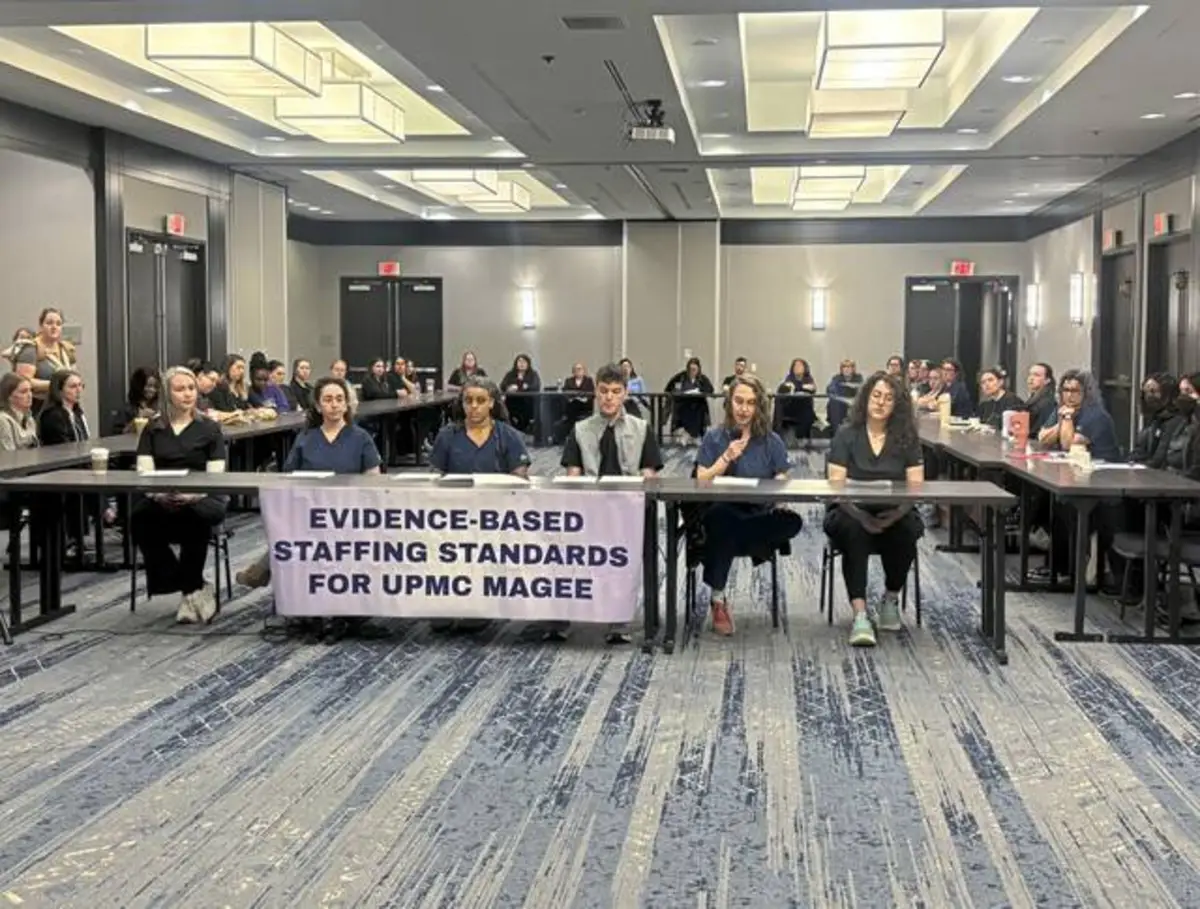
That is the goal of the nurses and advanced practitioners at Magee-Womens Hospital in our first-ever union contract negotiations. Because we’re negotiating on behalf of everyone in our community, we’ve been distributing a community survey to gather input from the public, and a clear need has shone through from the over 800 responses so far: Patients want more time with us, and we want more time with them. We are using the responses to shape our contract negotiations moving forward in order to elevate women’s and family health throughout our region.
I’ve worked at Magee for over 15 years, first as a registered nurse in labor and delivery and now as a nurse practitioner, because I believe deeply in our hospital’s mission. From when I was a little girl, I always wanted to be an obstetrics nurse to help new moms and babies have the best start on their journey together. But in my decade and a half in the healthcare system, I’ve seen so many negative changes which have driven nurses away from the bedside and hurt our ability to do our jobs.
Nowadays, we see experienced nurses exiting in droves and an endless cycle of new nurse grads coming in, then burning out within the first couple years. This has caused a nursing crisis of 20,000 unfilled positions in our state, the worst in the entire nation.
Nurses are leaving because increasingly higher workloads and more duties have been piled onto us, cutting down on the time and personal attention we’re able to give each patient. That leads to constant exhaustion and a sense of moral injury when we can’t provide the kind of care we were trained for and believe in. A lack of professional benefits and compensation also pushes nurses out of the field.
At the same time, our patient population is sicker, struggling with chronic disease, and needs more care than ever before. Allegheny County has higher rates of preterm births, low birth weights and cancer for women than the state average. Rates of Severe Maternal Morbidity, or unexpected, serious complications, have risen dramatically in recent years in our state. There are also alarming racial and class disparities. Black mothers suffer from severe maternal morbidity at more than twice the rate of white women. Allegheny County’s infant mortality is worse than the state average, and Black babies are more than twice as likely to die than white infants.
That’s why in our contract negotiations, we have proposed solutions aimed at addressing the crisis facing women’s and family health. For the first time, we have proposed establishing evidence-based national staffing standards throughout all units at Magee. These are minimum staffing levels that take patient acuity into account and that clinical studies prove are required to protect patient safety and quality of care.
For example, we are proposing one nurse to one woman who is in active labor or being induced, which is the standard set by the Association of Women’s Health, Obstetric and Neonatal Nurses. Having a dedicated nurse at your side when you or your spouse is giving birth is essential for the best outcome, and to ensure you can completely understand and participate in the decision making about your birthing experience.
For years, union nurses at West Penn and Allegheny General hospitals have had these standards in their union contracts. Unfortunately, more often than not, Magee does not follow these national staffing standards.
Now we want to bring one-to-one birthing standards to everyone in our region.
In addition to improved staffing, we are proposing a set of benefit and compensation standards that value and retain experienced nurses, rather than penalizing us. It is a sad irony that we dedicate our lives to providing health care to others, and we work for our insurer, yet we have to pay thousands of dollars a year for our health insurance. It also doesn’t make sense that pay for veteran nurses is capped, actually disincentivizing retention of their invaluable knowledge, skills and mentorship. And parental leave is an issue that is particularly close to my heart. Although we work for the major birthing hospital in Southwest Pennsylvania, we only receive two weeks of paid family leave. When I had my daughter, I had to completely drain my paid time off, causing my family financial strain.
In order to address the serious challenges facing women’s and family health, we have to elevate care standards at Magee, our region’s preeminent women’s care provider. And in order to address the problems plaguing nursing, we need to elevate nursing standards at UPMC, our commonwealth’s largest healthcare system and private employer. UPMC has the resources to be a leader and invest in solving these crises, with $643 million in profits last year.
Ultimately, our contract negotiations have the same urgent objective that motivated us to form our union in the first place — putting the humanity back into health care. That means nurses must have more time with our patients to be fully present with them during some of the most important moments of their lives. Working together with our community and UPMC, we can ensure nurses have lifelong, sustainable careers at Magee so we can continue to fulfill our hospital’s vital mission.
Erica Winger is a nurse practitioner who has worked at Magee-Womens Hospital for over 15 years. She is active on the contract negotiating committee of her union, SEIU Healthcare Pennsylvania. Community members can take the nurses’ survey about women’s and family health at ElevatingPGHHealth.org.