
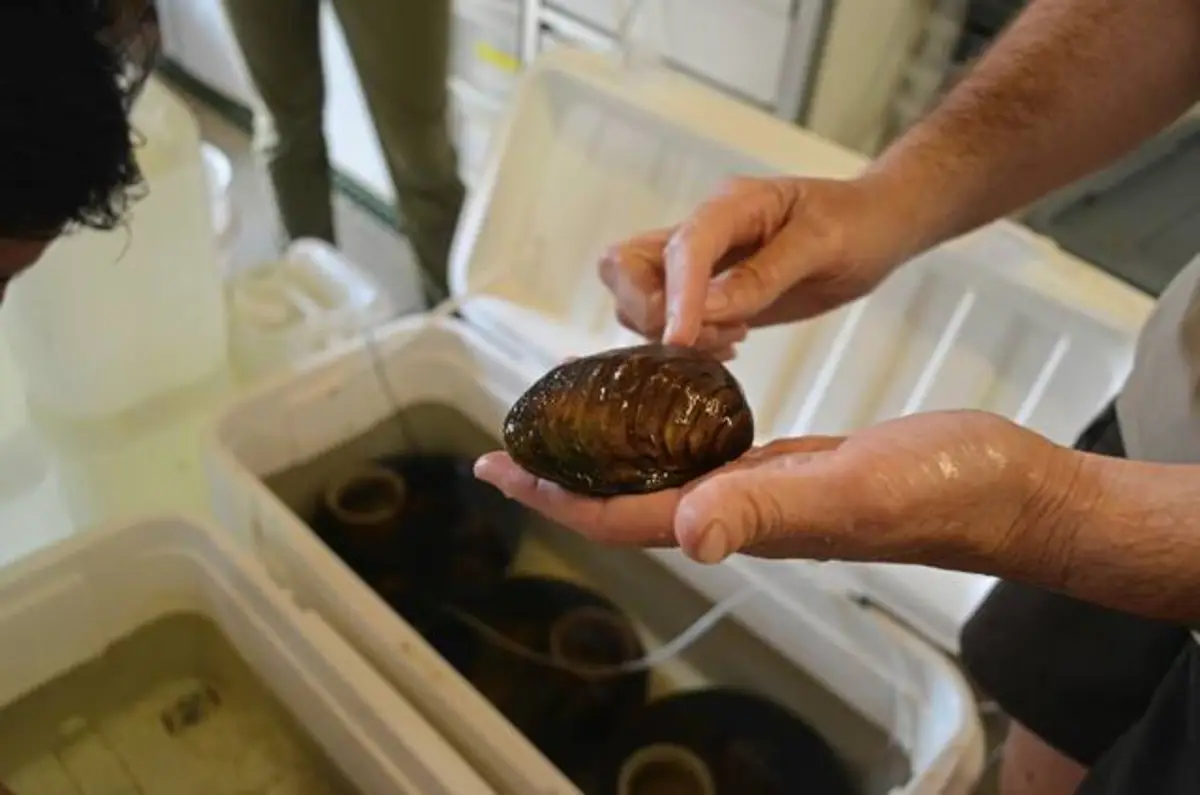
Beneath the surface of the Allegheny River, some of the region’s most endangered creatures are quietly disappearing.
Freshwater mussels — small, often overlooked creatures buried in the riverbed — are in steep decline across Western Pennsylvania, according to the U.S. Fish and Wildlife Service. While largely unseen, the species are indicators of healthy aquatic ecosystems.
The Allegheny River is home to three rare species: the snuffbox, sheepnose and rayed bean mussels. All have seen significant population declines in recent decades.
Last month, the Fish and Wildlife Service designated about 3,800 miles of rivers and streams across 17 states as critical habitat for endangered mussels, a move aimed at protecting the species from further decline. In Western Pennsylvania, the designation includes waterways close to Pittsburgh, such as French Creek, Oil Creek, the Shenango River and sections of the Allegheny River and its tributaries.
“Getting critical habitat protected, we can keep the mussels going because it’s nice to have another animal in our water, and they really help clean up our water,” said Rick Spear, aquatic biologist supervisor for the Pennsylvania Department for Environmental Protection’s southwest regional office.
“They’re important for not only the cycle of life and as food for other animals and fish, but also as helping to clean up our pollution and our sewage.”
Within the Allegheny River and French Creek watersheds, the rayed bean and snuffbox mussels both had three areas identified as critical habitat, while the sheepnose had one designated area.
Critical habitat is defined in the Endangered Species Act as an area that contains habitat features that are essential for the survival and recovery of a listed species, and which may require special management considerations or protections.
It helps guide federal agencies and requires consultation with the U.S. Fish and Wildlife Service if an action may “destroy or adversely modify” critical habitat for listed species, the agency’s website said.
Species in sharp decline
In the 1700s, the Pittsburgh area had over 150 species of mussels. Now it has 55, Spear said.
The problem is mussels are sensitive to pollution and need fish to reproduce.
“They also have a parasitic life stage, so they need fish to be able to survive. They have to lure the fish in some way so that their young, which are called glochidia, can infect the gills of fish,” Spear said.
Rayed bean and snuffbox mussels are small. The rayed bean measures only about 1.5 inches and lives for up to 15 years. Snuffbox mussels grow to be 3 inches in length and live up to 20 years.
The sheepnose mussel can grow up to 5.5 inches long and live as long as 30 years.
Historically, rayed bean mussels had been found in at least 115 streams, rivers, and other water bodies; today, they are found in only 37 streams.
The sheepnose mussel, once widespread across 79 streams, rivers and a canal, is found in only 22 waterways. Snuffbox mussels inhabited more than 210 streams, rivers and other waterways, but now occupy only 85.
A fourth species of mussel – the spectaclecase — was on the list but is uncommon in Pennsylvania.
Spectaclecase mussels can grow up to 9 inches long and live for more than a century. Their habitat has declined from 61 rivers and streams to about 40.
“Some mussels are only unique — one fish species that’s their host. If something happens to that fish species, then the mussels are done for,” Spear said.
In the Allegheny River’s case, mussels are impacted by river habitats due to dam construction, pollution and competition from invasive species.
“We’ve lost a lot of mussels over the years,” Spear said.
The Western Pennsylvania Conservancy, a Pittsburgh area-based nonprofit that studies freshwater mussels, did not make someone available for comment Monday.
All four mussel species have been on the endangered list since 2012; however, it takes much longer to get critical habitat approved at the federal level, Spear said.
The critical habitat designation will go into effect May 27, according to the Federal Register.