
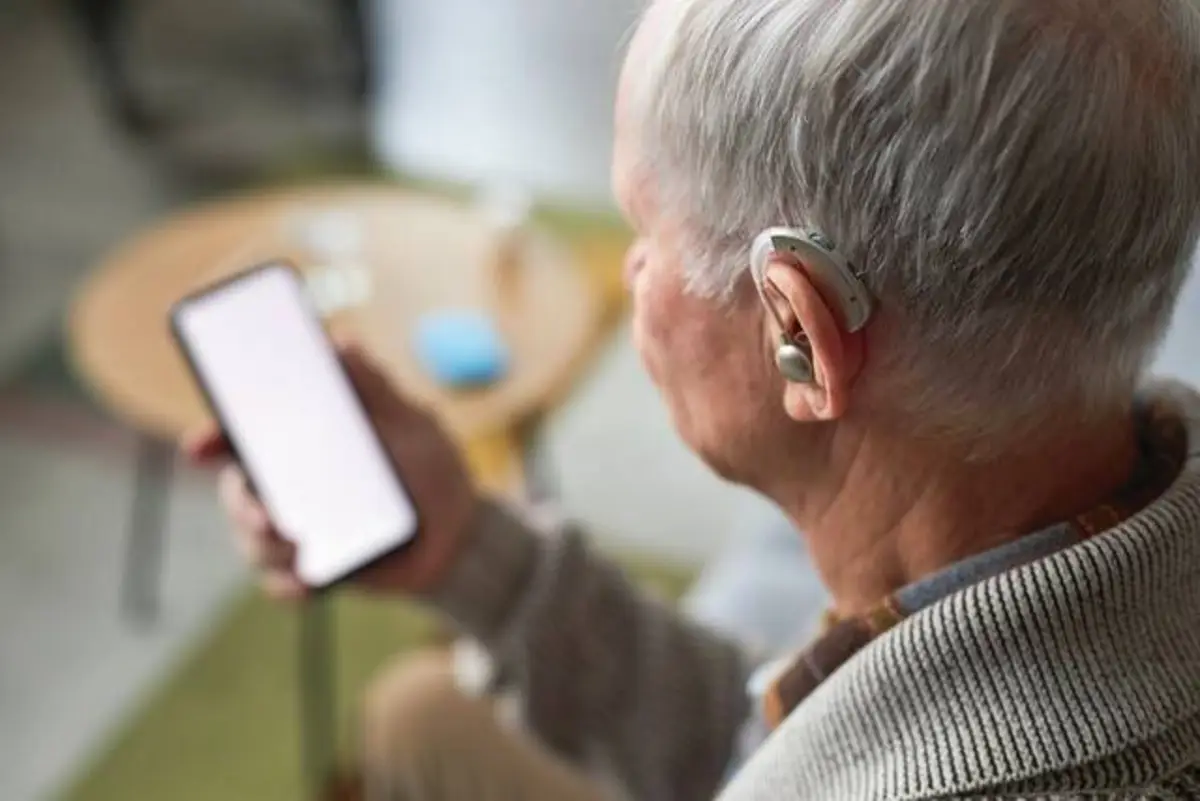
Summer will soon arrive, and people will take advantage of warmer weather and more outdoor events. Indeed, our highly connected digital economy places a premium on getting things done fast. That is why smartphones are the primary tool many use to plan and interact, with texting the preferred method of communication.
Digital connectivity has also facilitated something that has now become the norm for many professional, administrative and management jobs: remote work. Some argue remote work offers numerous advantages, such as eliminating the need (and time used) to commute and providing greater schedule flexibility, effectively exploiting the technologies available in a highly connected digital economy.
Clearly, doing more in less time is the mantra in many businesses. Given the idiom “time is money,” every minute saved is perceived to yield more revenue, more profits and in general, more value.
Yet in any complex system, there are always unintended consequences that may be difficult to forecast, some of which have deleterious effects on our lives.
One example of this is how we use transportation.
Getting from Point A to Point B in the quickest possible way typically means driving a personal vehicle or using a ride service like Uber or Lyft. Slower modes of transportation, like walking, cycling or public transportation, are only considered if they offer time or economic advantages. For example, when parking space is at a premium in large urban areas, and congested roadways make automobile travel slow or inconvenient, subways offer a convenient and desirable transportation alternative.
Washington, D.C., provides a superb example, with a large and expansive public transportation system that is frequently a better choice when traveling around the nation’s capital. New York City’s subway system is also viewed as a good alternative to driving, given the use of congestion pricing to discourage unnecessary vehicles around Manhattan even with the president’s past efforts to close it down. Boston’s MTBA public transit system is also one of the most used in the nation.
However, by relying on personal vehicles or ride services, we physically expend less energy. The outcome of such choices is an accumulation of excess calories, or what we all know as weight gain.
The nation is struggling with an obesity epidemic that places people at risk for numerous health issues, including Type II diabetes, hypertension and some types of cancer. It is also raises costs for the nation’s already strained health care system.
The delicate balance between the food people consume and the energy people expend has been lost by choices driven by getting somewhere faster or getting more done in less time.
To further complicate the matter, food choices when we rush to get more done in less time may be driven by convenience rather than quality. It is often far easier and quicker to grab fast-food on-the-go than find more wholesome and healthier food items.
In an ideal world, we would all have the luxury to “smell the roses.” This may be unrealistic for some, depending on their economic and social environment. Yet time is an asset that can easily be undervalued, particularly when survival is the driving objective. This also explains why causes and effects are so difficult to assess and predict in complex systems.
As our economy continues to become more digitized, and artificial intelligence continues to grow its footprint of influence, more of what we need is pushed upon each of us. This has created a self-service overload, forcing each of us to assume more responsibility to manage every aspect of our lives. We order food, pay our bills and manage our schedules all using our smartphones. What may appear as a pathway for efficiency may unknowingly create a personal time sink, driving stress, anxiety and frustration.
Visits to bricks-and-mortar retail outlets have been replaced by online shopping and e-tail consumption. Yet any time saved has been consumed by even more digital activities and less direct human connections and interactions.
Perhaps when we strive to get more done in less time, we may end up taking too much time to accomplish less. Though our “need for speed” may be driving us to do more, are we really getting more done?
Indeed, whether we take the time to smell the roses this summer, the roses are there to be smelled. And by taking the time to smell them, we may discover the time spent is not lost, but gained in the pleasure of the moment. This in turn may permit us to accomplish something even better than we had planned, namely, a human (not digital) experience.
Sheldon H. Jacobson is a computer science professor at the University of Illinois.