
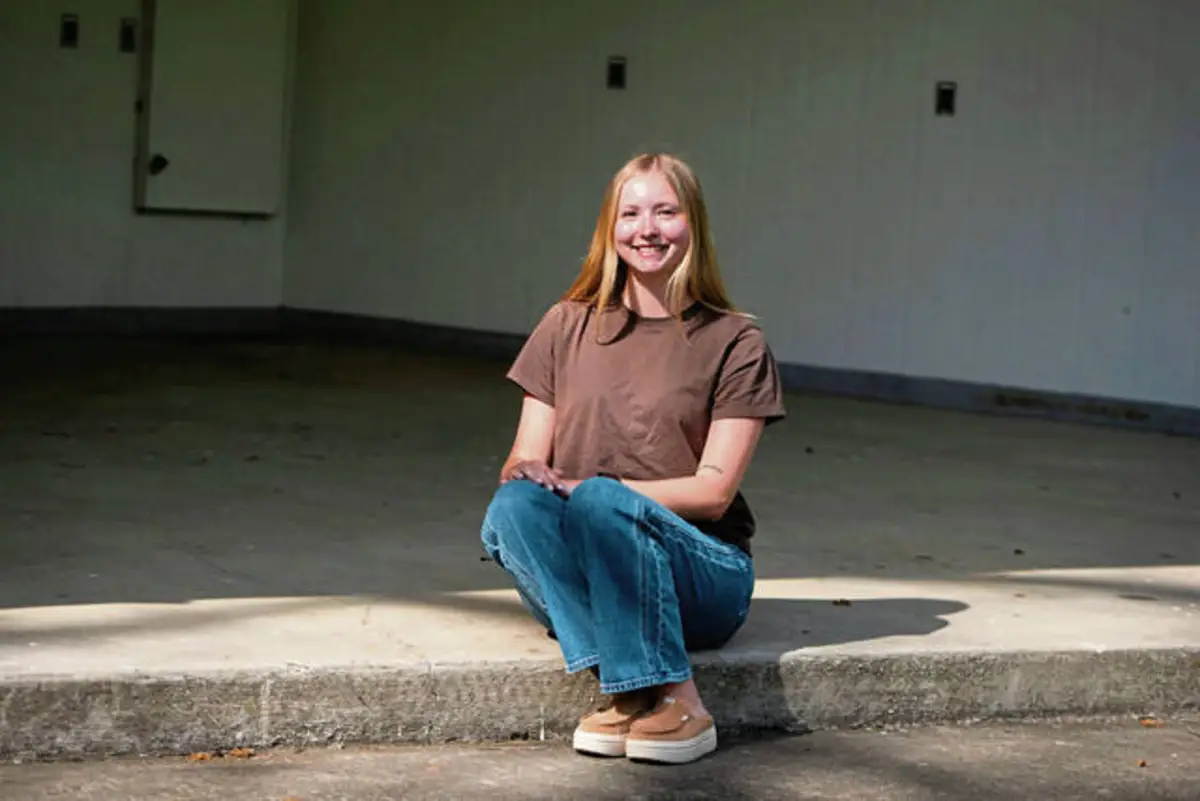
Greater Latrobe graduate Daisy Wishard began picking up American Sign Language when she was 9 months old — before she learned spoken English.
Born to two deaf parents, Wishard became proficient in sign language by age 5, helping her mother and father order food at restaurants, navigate grocery stores and communicate with staff at the DMV. She kept a careful ear to the smoke detectors in her childhood home, alerting her parents if she heard a chirp indicating the batteries needed to be replaced.
Now 23, Wishard of Latrobe is coming up on one year of working as an American Sign Language interpreter — helping address what some experts are calling a shortage in the industry.
“It was just a part of my life, and it felt natural to be an interpreter,” the 2025 Mt. Aloysius College graduate said. “I just went all in and went for it.”
About 3.8% of the United States population — 12.8 million people — are deaf or have serious difficulty hearing, according to the 2024 American Community Survey.
But interpreters are not always easy to come by.
Wishard doesn’t believe prevalence of interpreter jobs is the issue — rather a shortfall in the number of people pursuing the career.
The U.S. Bureau of Labor Statistics reported 75,300 interpreter and translator jobs in 2024. The Registry of Interpreters for the Deaf, a widespread certification organization for interpreters nationwide, has about 10,000 members, according to its website.
‘I really look up to her’
Wishard has watched her mother, Hollie Culley, grapple with the shortage of interpreters over the years.
Culley, 45, of Latrobe was born hearing but became deaf at 3. She attended the Western Pennsylvania School for the Deaf in Pittsburgh’s East Hills neighborhood, where she had the opportunity to participate in sports and interact with other deaf and hard-of -hearing students.
It wasn’t until Wishard was born that Culley learned she could request an interpreter to assist her with matters such as doctor’s appointments. Per the Americans with Disabilities Act, local and state governments, and businesses or nonprofits that serve the public, must provide an interpreter free of charge when requested by a client or patient.
“It’s really important that an interpreter is accessible to them,” Culley said, signing to her daughter during an interview with TribLive. “Deaf people are extremely grateful to have an interpreter at their appointments.”
But that isn’t always a possibility, she said.
Video Remote Interpreting, or VRI, is increasingly becoming the norm, Culley said.
Through VRI, an interpreter can virtually attend an appointment with a client and help them communicate with their doctor through a digital device. The tool became more widespread during the covid pandemic, when mask wearing and social distancing prevented interpreters from assisting clients in person.
“I remember the first time I saw VRI, it wasn’t really successful. The video was blurry … and there could be a lot of misunderstandings with it, some connectivity issues,” Culley said. “A lot of deaf people feel frustrated every time they go to places for appointments and they have a lot of VRI problems.
“With an in-person interpreter, it’s so much easier. Everything’s clear. Everything can be explained better.”
Culley’s requests for an in-person interpreter are not always met with open arms, sometimes because of a lack of availability, she said. Culley has been asking her dentist office since June to provide an in-person interpreter to help her communicate during her 10-year-old daughter Chloe’s appointments.
“They just refuse to get an onsite interpreter and are still trying to force me to use the VRI,” she said. “A lot of people experience that as well.”
Culley doesn’t have a concrete solution to that problem. But she is proud to watch her daughter help bolster the local interpreter workforce.
“I really look up to her,” Culley said. “She’s very motivated to learn sign language, and she loves her job. I’m really impressed with her.”
‘Having a deaf heart’
Wishard works as a freelance sign language interpreter. She is hired by local sign language agencies, who send her potential interpreting jobs. Her schedule varies each week, but she primarily assists clients with doctor’s appointments and K-12 students with school.
Though interpreting for students comes with a consistent schedule, other work opportunities might not come with as much advance notice.
“Interpreters can get sent pretty last-minute jobs if they’re able to accept them and they’re willing to go,” Wishard said. “If a deaf person is having an emergency medical situation, the agency might have to hurry up and find an interpreter at that moment.”
Continuing to develop her sign language knowledge is another component of Wishard’s job. She spends an hour each day on average familiarizing herself with her next client’s needs and researching relevant vocabulary that might arise.
Similar to regional dialects in spoken English, American Sign Language has several styles and grammar structures — meaning each client Wishard works with might sign differently.
“That’s also part of why I really love being a sign language interpreter,” she said. “You have to constantly be learning and adapting and studying new things that come up. It’s kind of like trying to hold a lot of information that could be useful in the future again.”
Wishard hopes to see more people take an interest in sign language and the deaf and hard-of-hearing community.
“As the deaf community says, it’s important to have a deaf heart, especially as an interpreter,” she said. “Having a deaf heart, you understand and respect their language, you respect the community, you respect their culture and just embody the collectivist perspective that they follow.
“It’s extremely important not just to have the spotlight on interpreters, but also spotlight the deaf community as it is their language and culture that we should be very grateful to have the opportunity to learn from.”