
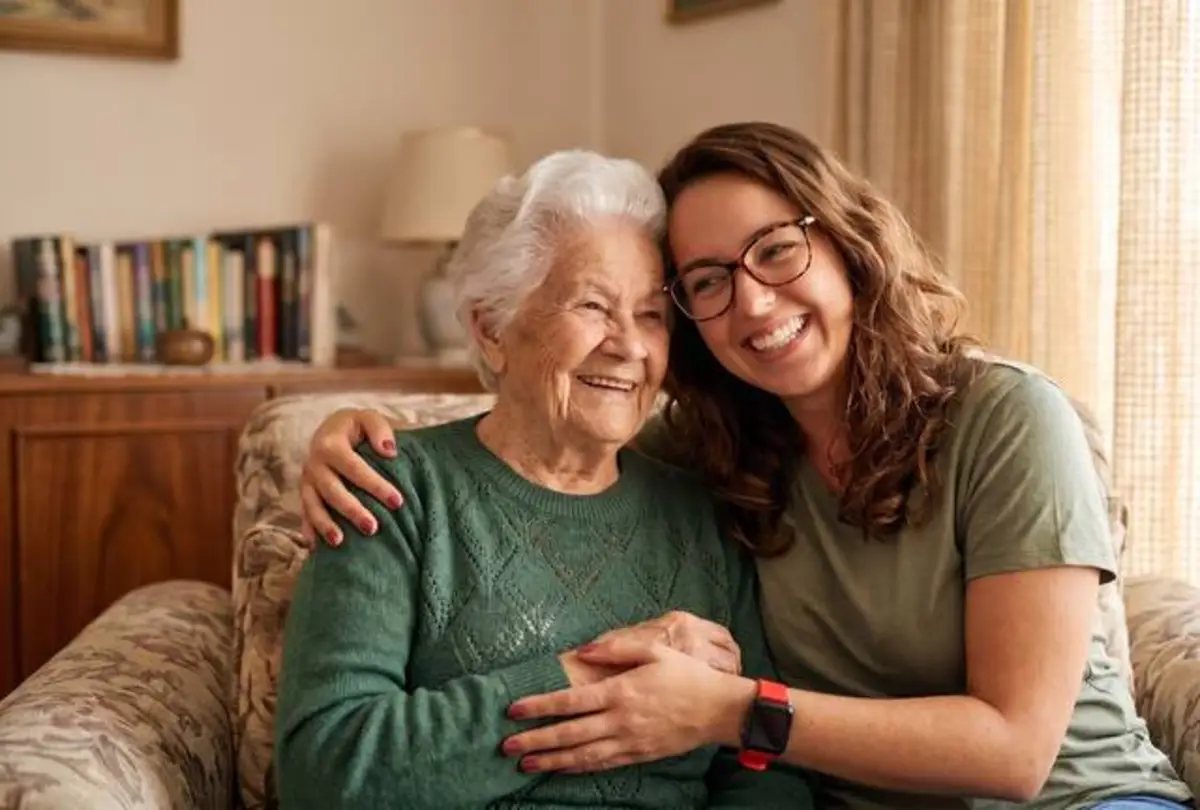
Caregivers need comforting, too.
Being the person who takes care of a family member is a noble calling. These people are compassionate and often make sacrifices and go above and beyond for their loved ones.
The Jewish Association on Aging and RubyWell launched a grant-funded family caregiver support program in the Pittsburgh region earlier this month through a $573,000 grant from the Richard King Mellon Foundation, according to the foundation.
“It can be hard navigating being a caregiver,” said Lisa Vlakancic, a registered nurse who is director of professional services for the Jewish Association on Aging. “These family members are doing a lot of the work and not getting paid and that can be hard on them financially.”
The Jewish Association on Aging serves approximately 4,000 older adults and their families each year with a Medicare-certified home health program at the center of its service model.
RubyWell, a digital healthcare software company based in New York, builds free tools that help family caregivers earn, save and find money throughout the caregiving journey.
RubyWell contacted the Jewish Association on Aging about the collaboration.
“With this, we can change how we deliver home health,“ said Vlakancic. “It is our mission to have people age in place at home for as long as they can and to keep them out of hospitals and nursing homes.”
The 16-month pilot will enroll 50 older adults on Medicare and their family caregivers, providing structured training, a dedicated care navigator, and a monthly stipend for caregivers based on care tasks they complete on a weekly basis.
To be eligible, one must be a home health client with the Jewish Association on Aging with a family member who is the caregiver in the client’s residence.
Vlakancic said they’ve been reaching out to the 160 people the Jewish Association on Aging serves.
Caregivers will be provided assistance with basic care needs and how to handle certain medical situations, such as when to call the doctor. They will be given information about Access, a program that provides shared-ride transportation, so they can travel out of the home with their loved one, as well as be informed about respite care and where to reach for support in a crisis.
There is also a virtual support group for caregivers designed to listen to their concerns. Vlakancic is confident they will get positive outcomes from this pilot program and will have the data behind it to show that it works. The project will cover caregivers in Allegheny and parts of Westmoreland County.
“It’s about creating a village,” Vlakancic said. “Family members are often overwhelmed and unsupported and not compensated. They may have had to leave their jobs and have a burden of not having enough money. We want to make it less stressful for them.”
The program is designed to demonstrate that training, providing wrap-around support and compensating family caregivers results in engagement and activities that lead to a reduction in avoidable emergency department visits, hospitalizations and skilled nursing facility stays — improving outcomes for patients while lowering costs to healthcare systems, Vlakancic said.
“This program gives (the Jewish Association on Aging) an unprecedented opportunity to provide family caregivers with the enhanced tools, support and recognition they need and deserve,” said Mary Anne Foley, president and CEO of Jewish Association on Aging, in a statement. “(Jewish Association on Aging’s) care navigators serve at the heart of the program, bridging the gaps between seniors, their families and clinical care teams.”
Millions of older adults with complex chronic conditions — heart failure, diabetes, COPD, dementia — want to age at home. The challenge is that home is the least connected, least supported part of the care system. Family caregivers provide the majority of day-to-day support, but their work is informal, clinically invisible and uncoordinated. As a result, no scalable model exists to capture early warning signs or intervene before crises occur, with most acute events originating at home between clinical contacts, according to press materials from the Jewish Association on Aging.
“The evidence is clear that episodic, visit-based care is insufficient for patients with complex chronic conditions,” said Cooper Linton, co-founder of Integra Strategies LLC, in a statement. “What’s needed is continuous, preventive support in the home — and trained, engaged family caregivers represent the most cost-effective way to provide this support.”
Integra Strategies is a boutique consulting group that focuses on improvements in the delivery of healthcare at home and empowering lay caregivers to improve outcomes.
Over 63 million family caregivers provide an estimated $1 trillion in care annually, according to AARP, and the average family caregiver provides 27 hours of care per week, and two in three report moderate to high emotional stress.
RubyWell found that, despite their central role, family caregivers remain almost completely outside the healthcare system.
A 2025 actuarial analysis by Wakely Consulting, commissioned by RubyWell, found that structured caregiver support and home health services are associated with significantly lower rates of hospital admissions, emergency room visits and skilled nursing home usage. Based on the analysis, if all Medicare-eligible beneficiaries who qualify for home health received those services, Medicare could save an estimated $17 billion annually.
The care model activates the family caregiver as a member of the care team. Each enrolled family caregiver is paired with a dedicated care navigator — a Jewish Association on Aging-employed social worker with expertise in healthcare navigation for older adults. Through this program, family caregivers receive free online training videos tailored to their loved ones’ specific health conditions, weekly virtual support from their care navigator and a peer cohort of local family caregivers, a structured escalation pathway to flag early warning signs before they become emergencies and a monthly stipend of up to $300 for active participation for 12 months.
The model is designed to complement — not replace — home health agencies, primary care providers and health plan care management teams.
Outcomes will be assessed by Wakely Consulting using claims data, caregiver-reported observations, and clinical records, tracking reductions in hospitalizations, emergency room visits, and skilled nursing facility usage against matched populations.
Details:jaapgh.org or rubywell.com