
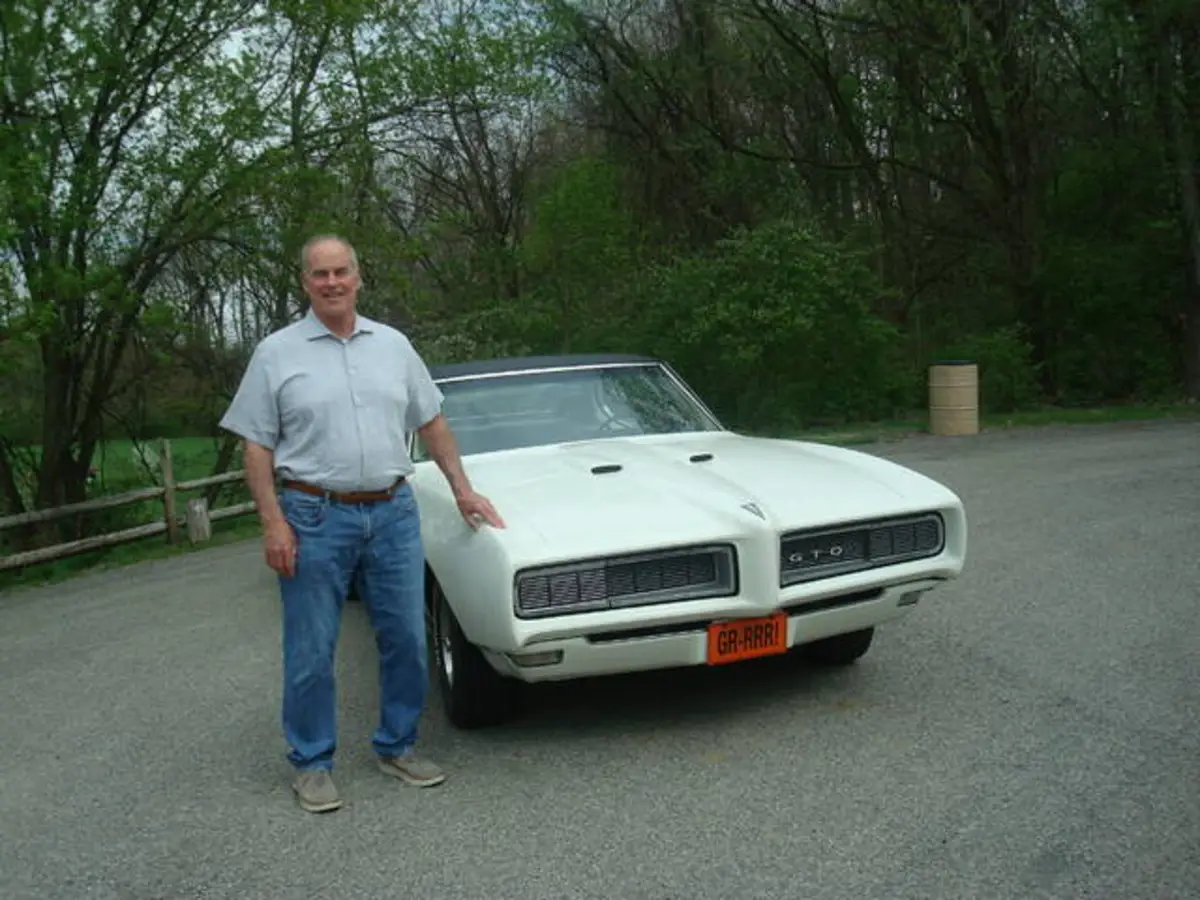
Dave Lackner remembered being on vacation in Stone Harbor, N.J., in 2007 when the phone call came in.
“They had found a kidney for my dad,” Lackner, of Mt. Lebanon, said of that call nearly 20 years ago.
The family scrambled to get the patriarch on a flight home for a middle-of-the-night transplant. One week away from having to start dialysis, a treatment to remove extra fluid and waste when kidneys fail, Dan Lackner received a transplant from a woman who had died in California.
“I never knew a guy who wanted to live more than my dad,” Dave Lackner said. “He had back surgery, a knee replacement, a blockage in his colon. He broke his hip … and he had a kidney transplant. He was the bionic person.”
Dan Lackner lived for 11 years with that new kidney until age 91.
Now, Dave Lackner, 64, is the one waiting for that call.
His kidneys are failing and he needs a transplant. And like his father, the younger Lackner has a will to live.
With so many people waiting for a transplant, patients are dedicating their time and resources to getting the word out about living organ donation as a way to hopefully lessen the wait time.
According to the National Kidney Foundation, more than 90,000 people in the United States are waiting for a kidney transplant. Less than 28,000 receive a transplant each year.
Because it’s possible to live with one kidney, living donation is when a living person donates a kidney to another person. The living donor can be a family member or someone who is not a blood relative.
Getting the word out
Lackner, and others in similar medical situations are thinking of creative ways to share their stories. Some have chosen to advertise on billboards or use social media. Lackner created a large poster featuring a life-size photo of himself and a QR code that links to more information. He also made pamphlets and a YouTube video telling his story.
He began his quest for a kidney in January 2026.
Copies of Lackner’s poster and brochures are at numerous retailers in Mt. Lebanon and Upper St. Clair. On the brochure is a photo of Lackner, his wife, Sue, and their five grandchildren.
“I want to be here to watch them grow up,” Lackner said. “They bring joy to my life and say things ‘off the cuff’ that you just wouldn’t expect.”
They need their grandfather, he said.
“It’s difficult even talking to people about it,” Lackner said. “When I tell people, and my voice is cracking, they feel bad for me. I don’t want anyone to feel bad for me.”
Neither does Mark Wolff, 52, of Center Township, Beaver County. He, too, needs a kidney. He said he is grateful for the 52 years he has lived, which is longer than some other people. But Wolff isn’t thinking of himself — his concern is his 13-year-old daughter, Ally Wolff. He loves attending her archery competitions, and father and daughter spend time fishing.
“If someone is willing to donate, do it for my daughter so she doesn’t have to grow up without a dad,” said Wolff, who created a poster and business card with a QR code that links to his story on the National Kidney Registry that collaborates with his health team at Allegheny Health Network.
Patients need to share their stories because if no one knows, how can they step forward, said Dr. Jennifer Carpenter, surgical director of the living donor kidney transplant program at Allegheny Health Network.
“Some patients don’t want to tell people they are sick or ask for help,” Carpenter said. “I tell them, you will never know who might come forward unless you tell your story.”
Carpenter said she usually talks with the person who comes to an appointment with the patient and encourages that person to be a “patient’s champion and help get the word out.”
“It takes a special person because it is the ultimate act of selflessness,” Carpenter said. “It shows a love of your neighbor being a part of mankind.”
Living donors live healthy lives
Donors can live healthy, normal lives after the surgery, Carpenter said.
Should something happen to them in their lifetime, they would get priority on the waiting list, said Carpenter.
She added that another good resource is the Live Donor Project, a Pittsburgh-based organization dedicated to increasing awareness about living organ donation that is not affiliated with any insurance.
Living kidney donation can save lives and dramatically shorten the wait for transplant for people with kidney failure, said Haley Jensen, senior director of transplant programs for the National Kidney Foundation, via email.
“Living kidney donation is a generous and life-changing gift and it is also a carefully evaluated, voluntary choice,” Jensen said.
Donors go through thorough, extensive medical and psychological screening to minimize the risks from donation as much as possible and support their long-term health, and most return to their normal activities after recovery, Jensen said.
Having to do dialysis
Wolff’s medical situation has had him on home dialysis since January 2025. There are two types of dialysis —hemodialysis and peritoneal dialysis. In hemodialysis, a dialyzer — a filtering machine — is used to remove waste and extra fluid from the blood and then return the filtered blood into the body.
Hemodialysis can be done at a dialysis center or at home. Treatments usually last about four hours and are done three times per week.
In peritoneal dialysis, the blood is filtered inside the body instead of using a dialyzer machine. For this type of dialysis, the lining of a person’s abdomen or belly area, also called the peritoneum, is used as a filter. A person’s abdomen or belly area is slowly filled with dialysate, a cleansing fluid made from a mixture of water, salt and other additives through a catheter. As the blood flows naturally through the area, extra fluid and waste products are pulled out of the blood vessels and into the belly area by the dialysate, almost like a magnet.
Wolff does peritoneal dialysis every evening for eight hours, even if he goes out of town for his daughter’s competitions or on vacation, which takes a lot of coordination, his wife Karla Wolff said.
“Dialysis is definitely inconvenient,” said Mark Wolff. “I’d rather be done with it. It is uncomfortable at times. I would be so appreciative that someone would even want to donate a kidney.”
Lackner is not currently on dialysis but recently visited a dialysis center.
“It was very emotional,” Lackner said. “To think that I might have to do this … if I can’t find a kidney. My hope is that I find a live kidney so I don’t have to do that. I truly believe that God gave us two kidneys so we could give one to somebody who needed one.”
Dr. Amit Tevar, surgical director of the Kidney and Pancreas Transplant Program at UPMC, said he is grateful for people who are sharing their stories.
“Each patient’s story matters,” Tevar said. “This is why we do what we do. The power of living donations allows these people to get back to their lives. It is so rewarding to see people doing well after a transplant. This is a chance for people to show their altruistic selves through organ donation.”
Giving the gift of life
All living kidney donors must be at least 18 years old to donate in the U.S. Some transplant centers require a donor to be 21 or a little older. Some centers have an age limit for older adults, and some medical conditions could prevent someone from being a living donor.
A living donor’s medical expenses, including evaluation and surgery, are covered by the recipient’s health insurance, whether they know each other or not. There are resources to assist with additional expenses.
Living donations have been around for decades, but what has changed over the years is that it is safer for the donor and done via laparoscopy and with robotics, so people go home quicker, Tevar said. The wait time is shorter to find a living donor than a deceased donor. The average wait is 60 months for a cadaver donor, according to Tevar. Lacker and Wolff are also on a waiting list for a deceased donor.
A benefit to living donation is that the organ is usually transplanted within half an hour because the patient and donor are in adjacent rooms, whereas a cadaver organ may have to be transported up to 24 hours, said Tevar, who performs one to two transplants a week.
Two of Tevar’s surgeries were on Eve Alden, 43, who grew up in Hampton and lives on Pittsburgh’s North Side. Alden donated a portion of her liver (livers regenerate in both the donor and the patient). Not long after that, Alden donated a kidney.
Alden found out about living donations via social media.
“Going to UPMC Montefiore and meeting people and seeing the facility, everyone is so friendly and competent and informative,” Alden said. “I felt comfortable and confident.”
She had liver surgery on June 1, 2023, and in August of 2024, she donated a kidney.
“Modesty is Eve’s superpower,” Tevar said.
Alden said her parents were worried at first, but they know she is strong-willed and a person who is always thinking of others. She said the operations had minimal effect on her life, but “to the person you are donating to, it is life changing.”
Alden ran the 5K on May 2 and the half-marathon on May 3 in the Dick’s Sporting Goods Pittsburgh Marathon.
“I am happy to talk about the experience of organ donation and how you can help a person live and be able to reach their hopes and dreams,” Alden said. “It is hard for me to comprehend why someone would not do this if they are in a position to do it. I would do this every year if I could.”
Wolff and Lackner have strong support systems of family and friends.
Lackner said his wife, Sue, and their children, Jill and Jim, and Lackner’s four siblings have been praying.
“We are a very Catholic family,” said Lackner’s brother, Rich Lackner, 69, who coached football as an assistant and then head coach at Carnegie Mellon University for more than four decades. “We are all praying for someone to come forward and help my brother who is a man of great faith. When we go through trying times in our life, God hears us. What an incredible gift a kidney would be.”
Lackner said he is inspired by a woman in his office, Kaitlynn Walton, 34, of Monroeville, who donated a kidney to her fiancé Matt Simpson. Walton said she’s been able to live a healthy, normal life. Walton, who is a mom, said she would do it again.
“You just feel lonely in this sometimes,” Lackner said. “I’m going to want to try to be more helpful to other people, no matter what the problem is. Sometimes you have to have something dramatic happen in your lifetime before you learn what is most important in life.”
Jensen said, on average, kidneys from living donors last longer and are more likely to start working right away than kidneys from deceased donors.
“This is because living donor kidney transplants can be planned, often provide a better biological match, and have fewer logistical hurdles that give them less time outside the body between the donor and recipient,” Jensen said.
Also, when a kidney is donated by a living person, the operations can be scheduled at a good time for both people, Jensen said. Technology has significantly improved kidney donation and transplantation, from better donor-recipient matching to innovations in organ transportation.
“Living kidney donation is one of the best ways to help address the ongoing shortage of kidneys for transplant,” Jensen said. “It can offer people with kidney failure a second chance at a longer, healthier life.”
During the interview for this story, Karla Wolff’s phone rang. She checked the number.
“You have to be ready at all times because if they’ve found a kidney, you don’t want to miss that call,” Karla Wolff said. “It would be so amazing if a living donor decides to donate. We would be forever grateful.”
Benefits of getting a kidney from a living donor
A shorter wait — Having a living donor means you no longer have to wait for dialysis. If you have kidney failure and can find a donor before you need dialysis, you may be able to get a preemptive transplant, meaning you don’t have to go on dialysis at all.
A better match and outcomes — A better match reduces the risk of rejection. Some living donor transplants are done between genetically similar family members, but you can be a great match with someone you are not related to.
Lasts longer — On average, a kidney from a living donor lasts about 15 to 20 years, compared to 7 to 10 years for a kidney from a deceased donor. Some will last longer; others will last less. Also, living donor kidneys often do better than deceased donor kidneys, such as working right away.
Better timing — With a living donor, it is possible to plan the surgery day and time at a time that works best for the pair and the transplant team. This way, both the kidney patient and their living donor can be at their healthiest.
Types of living kidney donation
Directed Donation is when the donor names a specific person who will receive the kidney. It’s the most common type of living donation. Directed donations can be between blood relatives, but they can also happen between people with close personal relationships, such as a spouse, friend, or coworker.
Non-directed donation is when a person does not name a specific person who will get their kidney or have a relationship with the person who receives the donated kidney. In this case, the donor is paired with someone in need of a kidney on the transplant waitlist. Other names for a non-directed donor include altruistic or “good Samaritan” donor.
Source: National Kidney Foundation