
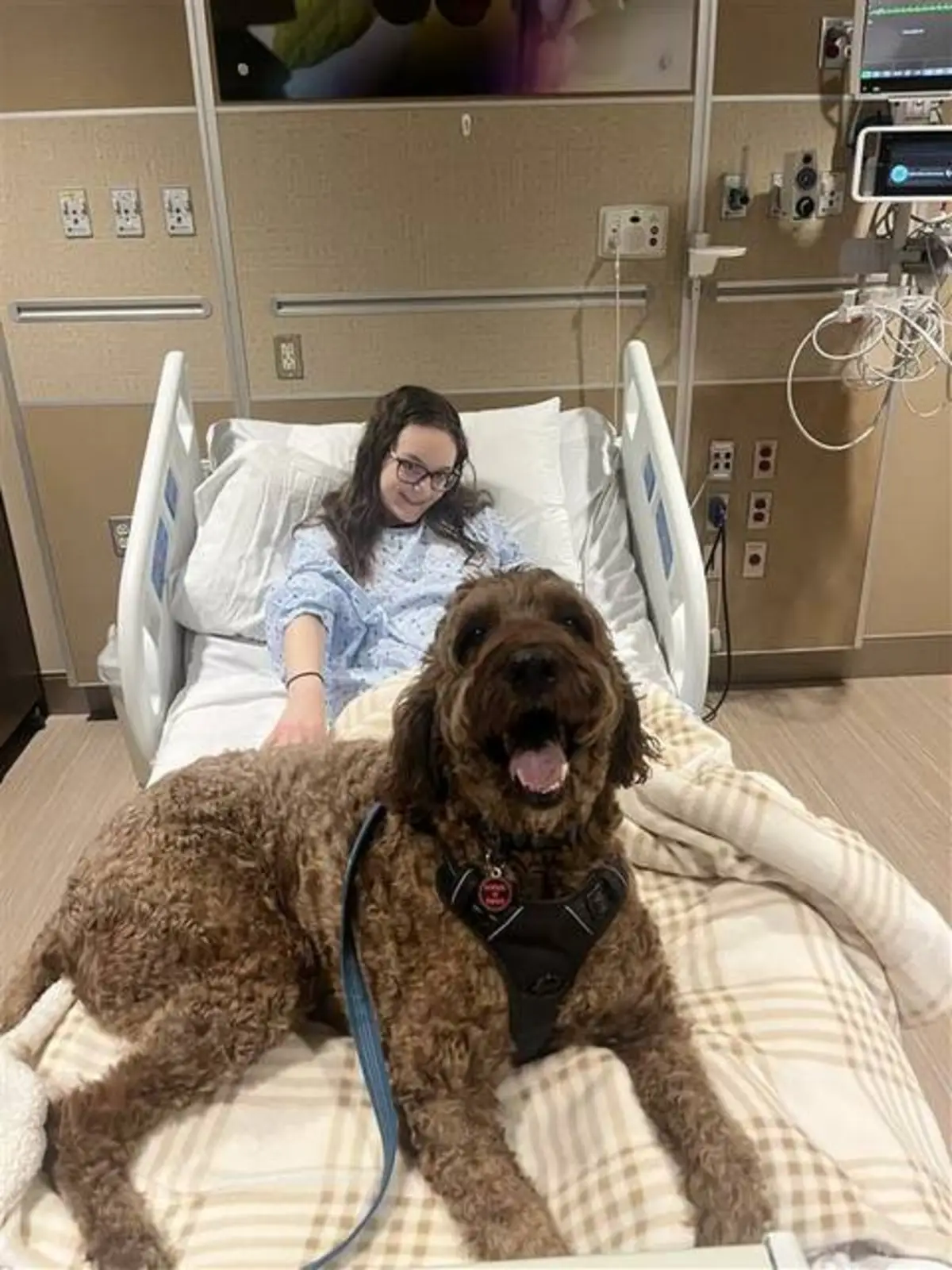
Shortly after 20-year-old Ainsley Flynn of Mt. Lebanon attended a Pittsburgh Penguins game in December 2024, she developed a headache that she initially dismissed as nothing serious.
When she arrived home, however, her symptoms quickly worsened. Severe fatigue and shortness of breath prompted her to seek care at her local emergency room where advanced imaging revealed fluid surrounding her heart.
As her condition rapidly deteriorated, physicians acted decisively, placing Flynn on extracorporeal membrane oxygenation (ECMO) – a form of life support – at the local hospital to relieve pressure on her heart.
Once stabilized on ECMO, Flynn was taken via emergency transport to Allegheny Health Network’s Allegheny General Hospital (AHN AGH) for specialized cardiovascular and critical care.
Flynn was diagnosed with viral myocarditis, a dangerous inflammation of the heart likely caused by her recent bout of influenza. The condition disproportionately affects young adults and, in severe cases, can progress quickly to heart failure and cardiac arrest.
Because of the severity of her illness, Flynn entered life threatening cardiogenic shock, a state in which the heart becomes too weak to pump adequate blood and oxygen to the body leaving patients unresponsive.
“When Ainsley arrived at Allegheny General Hospital, she was critically ill requiring advanced mechanical support,” said Candice Lee, MD, cardiothoracic surgeon at AHN AGH and Flynn’s lead surgeon. “ECMO was already supporting her heart and lungs, allowing us to focus on stabilizing her and determining the best next steps of care.”
While ECMO continued to circulate oxygenated blood throughout her body, allowing her heart and lungs time to rest and recover, Dr. Lee and her surgical team determined that additional cardiac support was needed.
They surgically implanted a groundbreaking Impella heart pump. Rather than inserting the catheter through the groin, the team placed the Impella via an artery in the shoulder, an advanced approach that can improve patient mobility and comfort.
The Impella pump helps unload the left ventricle by drawing blood directly from the heart, giving it time to heal while maintaining adequate circulation throughout the body.
For Flynn, it became a complementary component to ECMO as part of her recovery.
In addition, a critical part of Flynn’s recovery was her participation in AGH’s pioneering ECMO patient mobility program, which challenges the traditional model of prolonged bed rest for patients on life support.
Launched in 2022, the program encourages eligible ECMO patients to sit upright, stand, walk short distances, and engage in controlled movement—activities once thought impossible for patients on such advanced life support.
Among ECMO patients who have been mobilized, AHN AGH reports significantly improved outcomes compared to national averages for bedridden patients.
In 2025 alone, critical care teams at AGH mobilized 53 ECMO patients, achieving a survival rate of 72%, compared to the national average of approximately 50%.
The program has also led to higher rates of patients being discharged directly home rather than to skilled nursing or inpatient rehabilitation facilities.
“Mobilizing this patient population simply saves lives,” said Ilija Klipa, AHN exercise physiologist and a clinical lead of the program. “We’ve seen dramatically improved 90-day survival rates for patients who remain active on ECMO, a crucial factor in combating the rapid muscle atrophy that otherwise occurs. Our program stands out nationwide for its commitment to using every available tool — from handheld bikes to treadmills — to keep patients as active as medically possible, because the benefits are undeniable.”
After a challenging recovery, Flynn’s heart function improved significantly and she was discharged.
Today, she has returned to the same hospital—not as a patient, but as a patient care technician in the cardiac intensive care unit. She now works alongside the caregivers who once saved her life, assisting patients at the bedside and supporting clinical teams.
“Ainsley brings an incredibly unique and powerful perspective to her role,” Dr. Lee said. “She connects deeply with patients experiencing similar life threatening cardiac events. Being able to tell them, ‘I’ve been where you are—and now, I’m thriving,’ gives patients hope in some of their most difficult moments.”
In addition to her role at the hospital, Flynn continues her nursing studies at Duquesne University, with plans to become a registered nurse specializing in cardiovascular care. Ultimately, she hopes to work full time in a cardiac ICU, educating patients and families about how innovative medicine, compassionate caregivers, and resilience can save lives.
She is living proof.