
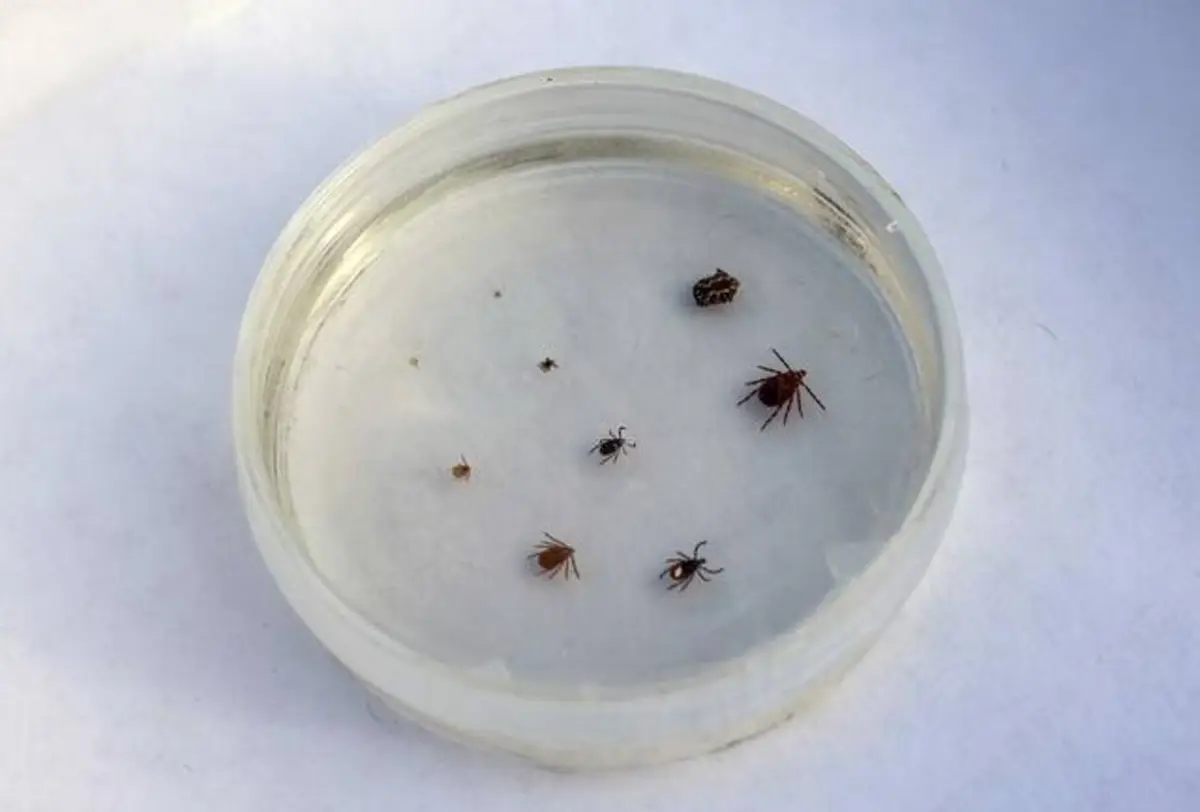
As Allegheny County residents step outside to enjoy near-record heat this week, local health experts are warning about the dangers of Lyme disease after an unusually high number of tick bites reported across the country.
In April, the Centers for Disease Control and Prevention issued an early advisory urging the public to guard against ticks, as reported by The Associated Press. The agency’s tracking system showed weekly emergency room visits for tick bites were at their highest for this time of year since 2017.
The Pennsylvania Department of Health reported increased emergency department visits in nearly all regions of the state, with Lyme disease identified as the most commonly reported tick-borne disease, according to the department’s April report.
“The Allegheny County Health Department does not track the number of tick bites in the county. However, the health department does track tick-borne diseases such as Lyme disease,” said Ronnie Das, spokesman for the Allegheny County Health Department.
From Jan. 1 and May 17, there have been 387 cases of Lyme disease identified among Allegheny County residents, Das said.
Graham Snyder, an infectious disease expert at UPMC, said that physician awareness and increased testing make tick-borne diseases more likely to be recognized and diagnosed. At the same time, he said, there is an increase in both the frequency of infections and the geographic spread of disease-carrying ticks.
“I would advise people, if you are in an area where you have ticks and you have exposure to ticks very often, and you’re concerned about fever, joint pains, nerve symptoms, particularly nerve weakness or heart rhythms, then talk with your doctor. It could be Lyme disease,” Snyder said.
Lyme disease is a bacterial infection spread to people through tick bites. The typical symptoms include fever, headache, fatigue and a skin rash. If left untreated, the infection can spread, affecting the joints, heart and nervous system, according to the CDC.
“Pennsylvania annually ranks in the top 10 nationally for the number of [Lyme disease] cases reported by population,” the health report said.
In 2025, there were 2,595 Lyme disease cases reported among Allegheny County residents.
In 2024, there were 2,628 reported cases, compared with 1,485 in 2023.
Municipalities with 75 or more cases last year included McCandless, Hampton, Shaler, Ross, Penn Hills and Pittsburgh.
As of Monday, the Allegheny County Health Department’s Vector Control Program, which monitors disease in the county, conducted 19 tick surveillance events throughout the county. The specific results of those testing samples will not be available until later this year, Das said.
The Allegheny County Health Department advises residents to remove ticks by using tweezers to grasp the tick as close to the skin’s surface as possible, pulling upward without twisting, then cleaning the bite area and hands with rubbing alcohol or soap and water.
At least 25 species of ticks have been identified in Pennsylvania. The most common include blacklegged ticks, longhorned ticks and American dog ticks, according to the county health department.
Snyder said there are several ways to help prevent tick-borne illness.
He recommends wearing long-sleeved clothing and tucking pants into socks. Light-colored clothing can also make it easier to spot ticks on the body.
“When you’re done with your activities, make sure that you check yourself for any ticks,” Snyder said. “You can also treat that clothing with permethrin. There are products available where you can wash your clothes with permethrin that has anti-tick activity that stays with the clothes for a number of washes.”
Permethrin is a synthetic pyrethroid insecticide that mimics a naturally occurring insecticide.
Snyder said if a tick has become engorged, “its belly becomes a light gray” color, meaning it is filled with blood and there is a risk of contracting Lyme disease.
“There is a way to prevent getting Lyme disease if that happens. So, if you have a tick that you could see and it’s been engorged, you can take a dose of doxycycline, and that has been effective at reducing the chance of getting Lyme disease,” Snyder said.
Doxycycline must be prescribed by a doctor.