
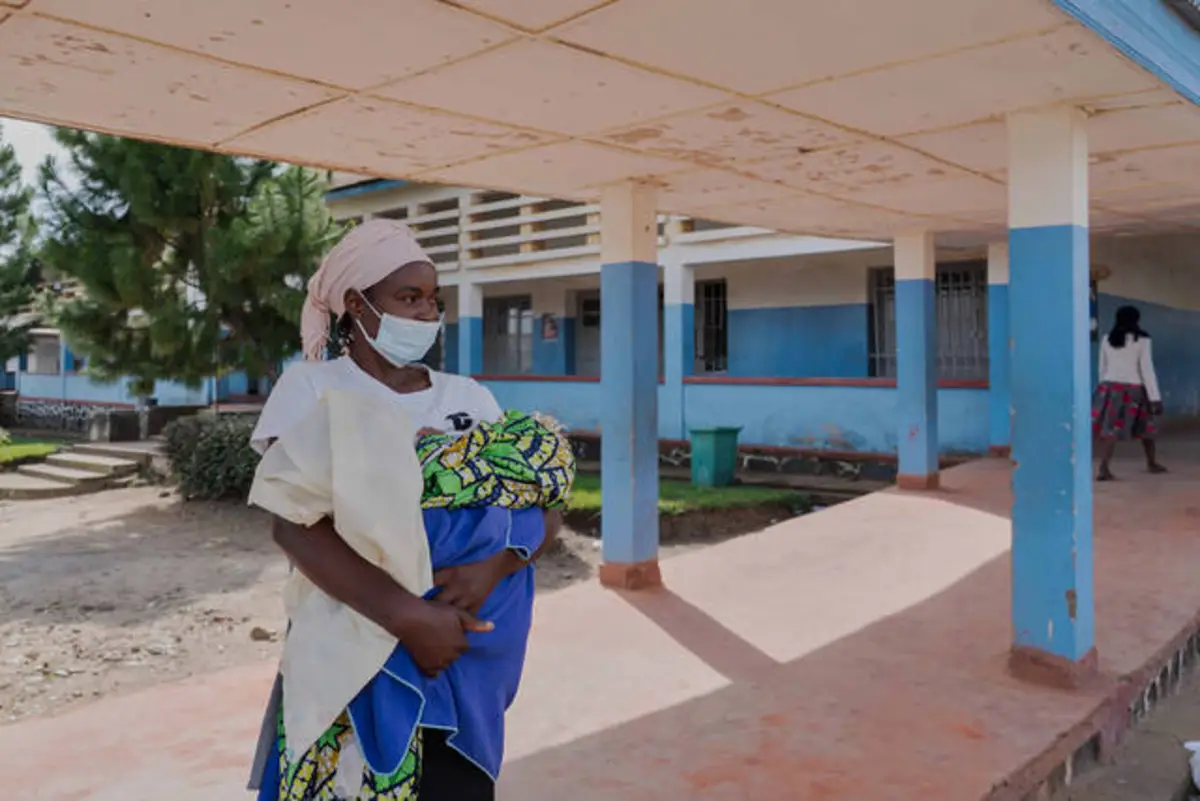
KINSHASA, Congo — Congo will open three Ebola treatment centers in the eastern Ituri province, and the World Health Organization is sending a team of experts to the country, following an outbreak of a rare type of the virus that has killed more than 110 people.
An American doctor in Congo is among the newly confirmed cases of the virus with no approved vaccines or medicines, Congolese officials said Monday, as details emerged about the government’s delayed response to the outbreak.
The WHO on Sunday declared the Ebola outbreak a public health emergency of international concern. As of Monday, there were over 118 deaths and 300 suspected cases in Ituri and North Kivu provinces, and one death and one suspected case in neighboring Uganda.
The Bundibugyo virus spread undetected for at least a few weeks, health experts and aid workers said. Cases have now been confirmed in Bunia, North Kivu’s rebel-held capital of Goma, Mongbwalu, Butembo and Nyakunde.
“Because early tests looked for the wrong strain of Ebola, we got false negatives and lost weeks of response time,” said Matthew M. Kavanagh, director of the Georgetown University Center for Global Health Policy and Politics. “We are playing catch-up against a very dangerous pathogen.”
He criticized the Trump administration’s earlier decision to withdraw from the WHO and make deep cuts in foreign aid. “When you pull billions out of the WHO and dismantle front line USAID programs, you gut the exact surveillance system meant to catch these viruses early,” he said.
An American doctor tests positive
The American doctor is among the cases in Bunia, the capital of Ituri province in eastern Congo, said Dr. Jean-Jacques Muyembe, medical director of the country’s National Institute of Bio-Medical Research.
Dr. Peter Stafford had been treating patients at a hospital there when he developed symptoms, Serge, the organization he works for, said in a statement.
Three others employees of Serge were working at the same hospital — including Stafford’s wife — but are not showing symptoms.
Seven Americans, including the one who tested positive, are being transported to Germany for monitoring, Dr. Satish Pillai of the U.S. Centers for Disease Control and Prevention said in a call with reporters. Pillai said the American developed symptoms over the weekend.
CDC officials did not immediately respond to follow-up questions about which facility or facilities in Germany they are being taken, or about what the case patient’s current condition is.
The original response was delayed
Congo has said the first person died from the virus on April 24 in Bunia, and the body was repatriated to the Mongbwalu health zone, a mining area with a large population.
“That caused the Ebola outbreak to escalate,” Kamba has said.
When another person fell ill on April 26, samples were sent to Kinshasa for testing, according to the Africa Centers for Disease Control. On May 5, the WHO was alerted of about 50 deaths in Mongbwalu, including four health workers. The first case was confirmed on May 14.
Samples from Bunia were initially tested for the more common type of Ebola, Zaire, Congolese officials said. They came back negative, said Dr. Richard Kitenge, the Health Ministry Incident Manager for Ebola.
The first confirmation of Ebola came on May 14, and Bundibugyo was confirmed the next day. Now more resources are being rushed to the region.
“The situation is quite worrying and is evolving pretty quickly,” Esther Sterk with the Medecins Sans Frontieres aid group told the AP. “It was detected quite late.” But she said that was often the case with outbreaks of Ebola, which has similar symptoms to other tropical diseases.
Report says 6 Americans are exposed to the virus
On Sunday, CBS News reported at least six Americans had been exposed to Ebola in Congo, citing anonymous sources in international aid organizations. The AP has not been able to independently verify the others.
U.S. health officials on Sunday said the risk to Americans was low.
The CDC has issued travel advisories urging Americans traveling in Congo and Uganda to avoid people with symptoms like fever, muscle pain and rash. The CDC also said it was imposing “appropriate measures for identifying individuals with any symptoms” at ports of entry.
This is a rare type of Ebola
Ebola is highly contagious and can be contracted via bodily fluids such as vomit, blood or semen. The disease it causes is rare but severe and often fatal.
The Bundibugyo virus is a rare type. Although more than 20 Ebola outbreaks have taken place in Congo and Uganda since 1976, this is only the third time that the Bundibugyo virus has been detected.
The U.S. CDC says it causes fever, headache, muscle pain, weakness, diarrhea, vomiting, stomach pain and unexplained bleeding or bruising.
The Bundibugyo virus was first detected in Uganda’s Bundibugyo district during a 2007-2008 outbreak that infected 149 people and killed 37. The second time was in 2012, in an outbreak in Isiro, Congo, where 57 cases and 29 deaths were reported.
The Africa CDC chief, Dr. Jean Kaseya, told Sky News on Sunday he is in “panic mode” due to a lack of medicines and vaccines, but some candidate treatments are anticipated in the coming weeks.
The region already grapples with a humanitarian crisis
Ituri’s Mongbwalu is in remote eastern Congo, with poor road networks more than 620 miles from the capital, Kinshasa.
Eastern Congo long has grappled with a humanitarian crisis and the threat of armed groups that have killed dozens and displaced thousands in Ituri in the past year.
U.N. staff have been asked to work from home and avoid physical contact and crowded areas, said a Bunia-based U.N. official, who spoke on condition of anonymity because they were not authorized to speak publicly on the subject.
Ituri has over 273,00 displaced people, according to the U.N.
Rwanda closed its land border with Congo on Sunday. AP reporters tried to cross the border on Sunday and Monday morning but were told it was closed except for holders of international flight tickets. Rwandan authorities did not reply to a request for comment.