
The production of composite materials is a growing industry with an array of job opportunities, which led to the new Composite Manufacturing Technician Program at Westmoreland County Community College
Composite materials are made of two or more different materials. The finished product is used in aerospace, defense and other industrial manufacturing applications.
“It’s sort of a non-degree, low barrier entry program,” said Annie Colarusso, regional economic competitiveness officer at the Allegheny Conference on Community Development.
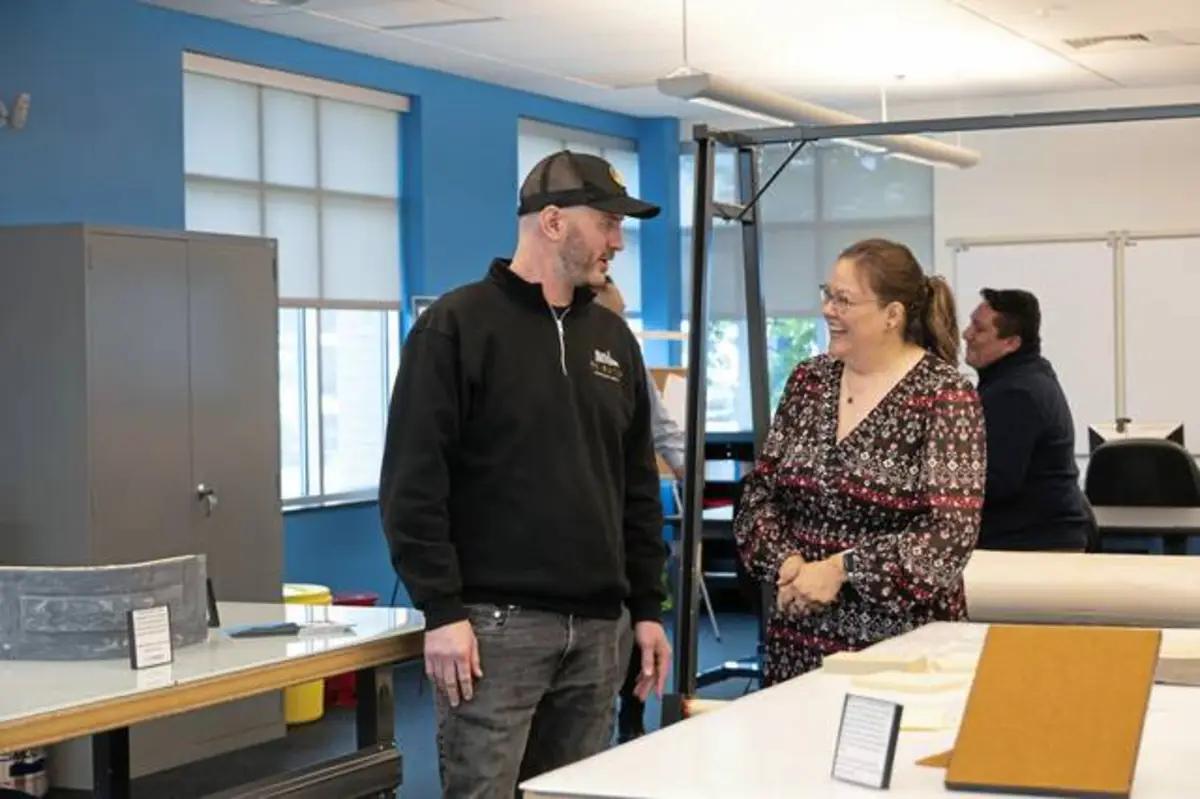
By the first-floor elevators at WCCC’s New Kensington campus, the combined lab and classroom space is stocked with lecture seating, hands-on work spaces and machinery, such as an autoclave, which sterilizes equipment with heat and pressure.
The first cohort of students — comprised of current Re:Build Manufacturing employees — took their exit exams last Friday.
Colarusso said Re:Build, which set up shop in the New Kensington Advanced Manufacturing Park in 2024, has aided the program’s focus.
“They have been really working hand-in-hand with (the college) to shape the curriculum to make sure it meets industry standards,” Colarusso said.
Megan Sheesley, executive director of advancement and community engagement at WCCC, said Re:Build will also consider hiring students of the program.
A Re:Build representative did not respond to a request for comment.
“We are also reaching out to to engage other regional employers as well,” Sheesley said.
Sheesley said the program is one of few approved by the American Composites Manufacturers Association.
The Allegheny Conference manages the New Economy Collaborative, which is a program partner alongside the Southwestern Pennsylvania Commission and the college.
The space set-up, machines, tools and tuition for the program’s first two cohorts was paid for by a nearly $690,000 grant, Sheesley said
“Students who come through our program are prepared,” Sheesley said. “No matter which element of composites they decide to go into, they will have have touched the most advanced equipment in the field and be prepared for that.”
Funding was part of $64 million package from the federally-backed investment program the Build Back Better Regional Challenge to fund advanced robotics, manufacturing and other technology programs, Colarusso said.
Sheesley said the college hopes to attract all types of applicants, whether it’s people looking for a career change, recent graduates or people working in manufacturing who want to learn more.
“This program really is great for anyone who loves to work with their hands,” she said.
Sheesley said a tuition rate hasn’t been chosen yet for future cohorts.
Anyone wishing to apply for the second cohort starting in June or future ones can look up Composite Manufacturing Technician Program on the WCCC website for instructions.
“It’s really in depth (training), and it’s got more to it than just the composites element,” Sheesley said. “There’s also workplace safety. And I believe blueprint reading will be part of the next cohort.
“So people are going to leave with a lot of transferable skills.”