
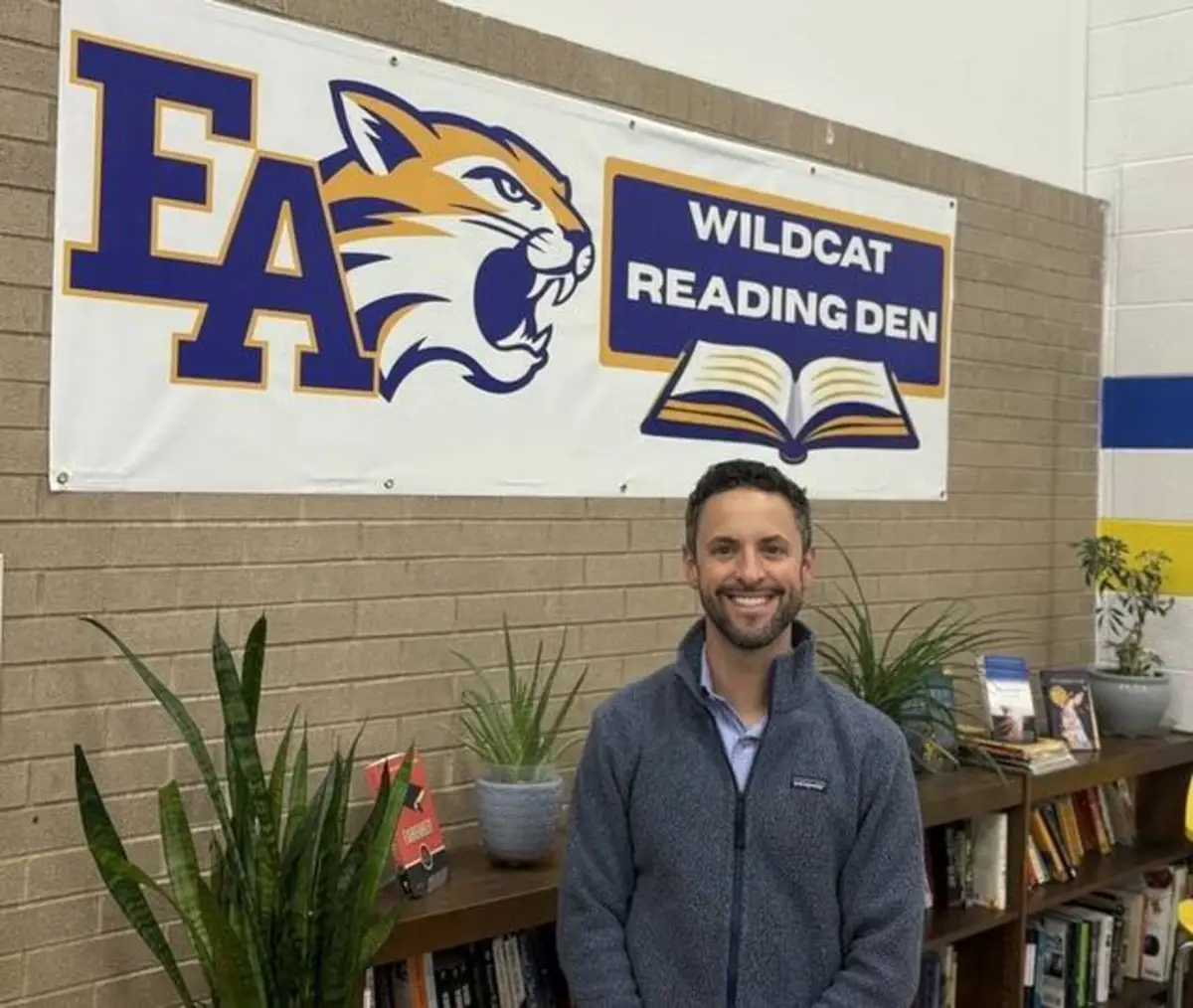
East Allegheny Superintendent Joe DiLucente says public education isn’t what it once was.
With the growth of online or alternative schooling options, schools must make themselves attractive to support and engage students in the public school system, said DiLucente, superintendent at East Allegheny, which serves North Versailles, East McKeesport, Wilmerding and Wall, since 2023.
“The post-covid educational landscape has taught us that students aren’t returning to school in the same numbers they used to,” he said. “The onus is on us to provide meaningful and relevant programming.”
So last year, the district became the first public school in the country to integrate “immersive reality technology.” There’s been growth and achievements among high school STEM robotics programs. School counselors have made targeted efforts to decrease chronic absenteeism rates.
Now, DiLucente thinks the involvement in a national program can accelerate growth and improve the district’s profile.
East Allegheny was one of 35 school districts nationwide inducted last fall into the League of Innovative Schools, a national network focused on innovation in education. The network was created by Digital Promise, a global nonprofit.
“East Allegheny had lost trust in the community,” DiLucente said. “To rebuild it, it took connecting and relating with people first, and ensuring programming was viable and future-ready. I’m proud to say we’re making significant movement on both of these fronts.”
There are 170 school districts nationwide in the league. Western Pennsylvania school districts accepted this year were Blackhawk, Butler Area, East Allegheny, Keystone Oaks, North Allegheny and Seneca Valley.
Southwestern Pennsylvania has the largest concentration of districts in the network nationwide. In Allegheny County, districts are Avonworth, Baldwin, Duquesne, Elizabeth Forward, Fox Chapel Area, Hampton, Northgate, Shaler, South Allegheny and South Fayette.
Schools complete an application and interview process to be inducted.
“Everyone thinks it’s about teaching and computers, and it’s not,” said William Stropkaj, superintendent at Keystone Oaks. “It’s about teaching and learning what’s happening in our schools.”
Keystone Oaks has made an effort to add high school courses that promote real-world learning and job experiences, like its Golden Oaks Design student-run woodshop business, Stropkaj said. It also has added courses like Fashion Design, a family consumer science-crossed-art class and additional workforce development programs in industrial manufacturing and education.
“Teachers come together and think outside of the box. We think about project-based learning that’s meaningful to kids,” Stropkaj said. “We want to get our kids out there to experience the world. We want to have kids prepared for anything they want to do when they graduate Keystone Oaks.”
Stropkaj believes the networking through the League of Innovative Schools will pay off for his district. He’s already made connections with two superintendents in California.
“Some of the situations they’re having out there, we’re having here,” Stropkaj said. “I want to pick other people’s brains throughout the country. What’s working, what’s not working, and is that something that can be transferable to Keystone Oaks?”
Jim Cox, North Allegheny’s director of technology and innovation, sees that with artificial intelligence. Over the past year, North Allegheny has discussed the future of AI within the district through its AI Strategic Taskforce.
“Participation in League cohorts focusing on AI has allowed North Allegheny to discuss the advantages and disadvantages of approaches taken by other forward thinking districts across the country,” Cox said.
North Allegheny administrators toured a Seattle-area school district whose student programming and structures were different from Pennsylvania models, Cox said. Things like competency-based grading and micro-school models on the West Coast have North Allegheny administrators considering similar practices, he said.
East Allegheny’s DiLucente said site visits and collaborative opportunities with districts nationwide would not have been possible without being in the network. His staff will review lessons from other districts across the country and determine what would work best at his schools before implementation.
“While states have different standards and needs, our desires are the same — it’s to grow learners,” DiLucente said. “I don’t want to implement the next popular initiative. I want something to bear fruit for East Allegheny students and staff.”
Organizations that fund innovative learning, such as the Grable Foundation, Remake Learning and The School Superintendents Association, benefit the Pittsburgh region through education, Cox said.
“I wouldn’t be surprised if you don’t see at least three or four more local school districts get into the league this fall,” Stropkaj said.