
Quaker Valley School District property owners will pay about 3.5% more in real estate taxes as part of the next school year’s budget.
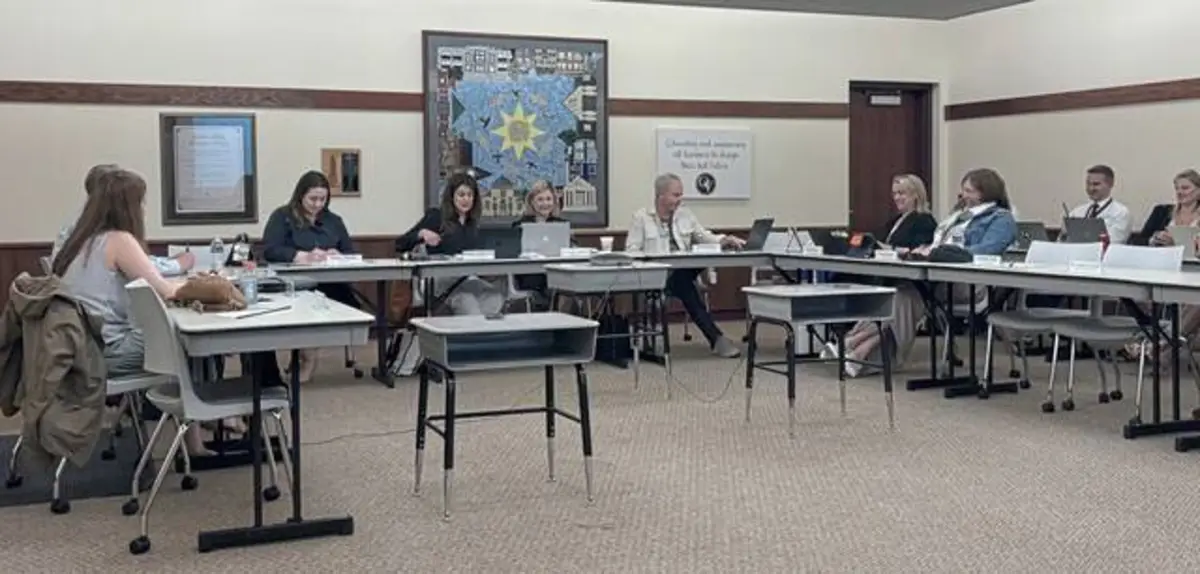
No cuts to programs or services are included in the 2026-27 spending plan, which was approved by school directors in a 6-0 vote on May 20.
Board members Stratton Nash, Corinna Skorpenske and Missy Walls were absent.
The current tax rate is 22.075 mills. The new rate is 22.8469 mills, which is an increase of 0.7719-mill.
Owners of a $200,000 assessed valued property currently pay $4,415 in school property taxes.
They would pay about $4,569 next school year, a $154 increase, under the proposed millage rate.
District officials earlier this year said they do not rely on a median property value and use a standardized assessed value of $200,000 when illustrating the effect of millage changes.
There were some financial adjustments since April’s preliminary budget approval, but not enough to impact the tax increase or programming.
“On the revenue side, the district received its property tax relief funding,” district director of finance and operations Brooke Baker said on May 20.
“The amount came in lower than last year, as last year’s allocation had been used as a placeholder in the preliminary budget, which accounts for the revenue adjustment.
“On the expenditure side, there were updates to salary and benefit projections, and the district also received final insurance rates, resulting in adjustments to projected expenses.”
Updated projected revenues were listed at $63.8 million and expenses at $64 million, a shortfall of about $180,000.
The funding gap is expected to be closed by pulling from the district’s $10.25 million reserve fund.
Anticipated income includes about $43 million in real estate taxes, $10.8 million in state revenue, including $2.95 million in basic education subsidies, $6.4 million in Act 511 taxes, including earned income taxes and real estate transfers, $1.5 million in delinquent real estate taxes and $516,000 in federal and other funds.
Anticipated spending includes about about $43 million for salaries and benefits, $6.68 million for debt service, $2.6 million for transportation, $1.33 million for building utilities, $1.2 million for technology, $1.1 million for safety and security services, $1.1 million for central administration/building operations, $575,000 for the Sewickley Public Library and $565,000 for student services.
Baker said the tax increase is necessary because revenue is not keeping up with expenses.
“For the second year in a row, we have not seen the same percentage increases in revenues that we have seen in prior years,” Baker said. “Because of that, we worked very hard during this budget cycle to ensure our expenditures were more closely aligned with our revenues while still maintaining the high-quality programs and services Quaker Valley is known for.”
Brooke delivered a budget presentation on May 12. Its video is available on the district’s YouTube page.
Geoff Barnes, board vice president and finance committee chair, said that the presentation was very thorough and had all of the board members on the same page.
“It’s tremendously helpful and informative,” Barnes said.
He elaborated after the meeting about some of the financial challenges Quaker Valley and other school districts are facing, as well as the balancing act between meeting students’ needs and being fiscally responsible to taxpayers.
The falling common level ratio in Allegheny County is a budget challenge. It impacts assessed property values used for taxation and can limit local revenue growth.
“We’re doing excellent cost controls and cutting under significant constraints imposed on us by changes to the common level ratio and what it means for the real estate tax base,” Barnes said.
“Students are always in mind. That’s not a short game. That’s a long game. Is it to make sure they have everything for next year? Yes, but not at the expense of multiple successive generations of students after them.
“It really is balancing the long-term insurability that we continue to provide all the great educational services, extracurricular services, etc. that we can and that we currently do.”
Barnes said the district will continue to examine its finances year-round and may add to its surplus next year if things fall into place.
“It’s a constant process,” he said. “When you pass the budget, you’re locking in what you believe your costs and your revenues are going to be for the year. From here, we’re looking at eyeing savings on the things that we’ve already prepared to spend on in the budget. That’s part of the yearlong process.”
State law requires school districts to pass their final budgets by the end of June.
Baker said the district likes to finalize things a month early for several reasons, including generally having all the important information and figures needed for the final budget in early May, and the school board only having one meeting in June.
“Another important factor is the timeline for printing, preparing and mailing tax bills to residents,” Baker said. “Approving the budget earlier allows our tax collectors enough time to get bills out by July 1, which is important so community members have the full two-month discount period available to them.”
More information about the district and its finances is available at qvsd.org.