
Michael McKenry was mentally exhausted when he joined the Texas Rangers in 2016, reeling from his father’s battle with esophageal cancer while recovering from his own season-ending torn lateral meniscus.
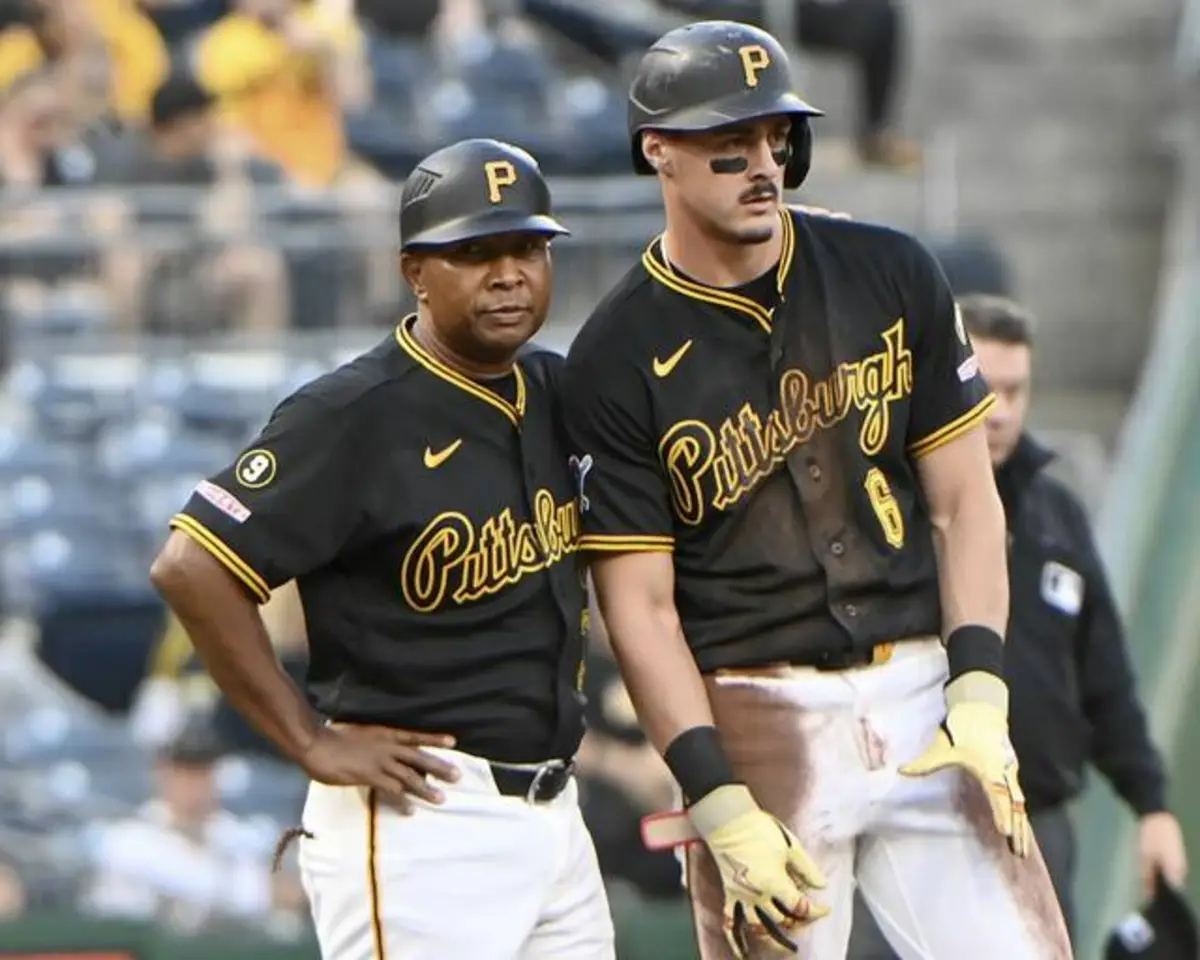
Then he met Tony Beasley, the third base coach with the infectious personality and willingness to share words of wisdom with the veteran catcher as his major league career hung in the balance.
Beasley didn’t reveal that he had been diagnosed with rectal cancer, which required three rounds of chemotherapy, radiation and surgery. Instead, he listened to McKenry’s troubles and offered the same advice that Beasley was following himself: Trust in God.
“He just had an aura about him,” said McKenry, the former Pittsburgh Pirates catcher who is now a baseball analyst for SportsNet Pittsburgh. “He was always speaking life into me. He had this grace about the way he spoke to people. He was really intentional with everything he said. He really cared about what you said to him. He’d ask about my dad but never brought up that he had cancer and was going through it. I think it’s one of the greatest shows in faith in Jesus I have ever seen.”
McKenry shared the story with fans after a 17-7 win over the Cincinnati Reds on May 2 during Faith Night at PNC Park, prompting Beasley’s powerful testimonial about how beating rectal cancer strengthened his faith and provided a perspective he carried into coaching.
“In my mind, you take things for granted, like that you’re going to be able to do this forever,” Beasley said. “Well, in 2016, I sat out the whole year. I watched somebody do my job. I was thankful that the GM told me, ‘Don’t worry about your job. Your job is going to be here. Just get better.’ That’s not the norm everywhere. It was a whole fight. Just getting through that gave me a new perspective to not take anything for granted, the opportunity that you have to impact people’s lives and make a difference. That’s what I really wanted to do.”
McKenry can attest to Beasley’s impact as a man and a mentor, how his profound faith poured positivity into players by connecting with them through his passion for baseball and, more importantly, life.
“You coach the personality and the person before you ever get to philosophy. If you can’t reach them, they won’t ever hear what you’re saying,” McKenry said. “He’s just a special breed. One of the best hires we’ve made in years. Don Kelly nailed that.”
‘Can I make an impact?’
After more than a decade with the Rangers, including a 48-game stint as interim manager in 2022 and World Series championship the next year, Beasley decided he was ready to retire last October.
On Halloween, he told the Texas front office he wasn’t returning. Two hours later, Kelly called with a request to reconsider. Kelly said he wasn’t sure what was going on with Beasley but knew that he wanted him on the Pirates’ coaching staff.
Their paths had first crossed in 2004 when Kelly was playing for the Detroit Double-A affiliate Erie SeaWolves and Beasley was manager of the Altoona Curve. Kelly remembers the 5-foot-8 Beasley standing tall for his team after a bench-clearing brawl. Three years later, they met up again when Beasley was a minor league infield instructor and Kelly played for the Pirates.
“I respected him then as an opposing player, the way he handled himself and his team,” Kelly said. “I got to know him better in 2007. I’ve known him for 20-plus years, just the man, what he means as a human and what he means as a baseball guy.”
For Beasley, it was a return to his roots. He played seven seasons as an infielder in the minors for the Pirates, then managed rookie ball for Williamsport, Low-A Hickory and Altoona and spent one season as Washington Nationals third base coach before joining the Pirates in 2007 and becoming John Russell’s third base coach from 2009-10.
When Beasley told the Rangers he was moving on, he felt a weight lifted off his shoulders. After 37 seasons of baseball, both playing and coaching, he was ready to retire and enjoy life with his wife, Stacy. Kelly quickly changed his mind.
“I’ll tell you what, it’s been rejuvenating for me,” Beasley said. “Donnie actually called two hours after that conversation. He knew nothing about it. It was weird. When I told him what happened, he said, ‘We can talk.’ It was the way Donnie and I talked — because the Braves called, the Nationals called, the Padres called — but it was like, ‘This is where I need to be. I can be impactful.’ I wanted to be somewhere I could say, ‘Can I make an impact? Can I make a difference?’”
‘With truth and with love’
Beasley immediately envisioned working with Oneil Cruz, the 6-foot-7, 248-pounder with tantalizing five-tool talent who had yet to fulfill his potential and struggled in his transition from shortstop to center field. That was a challenge Beasley couldn’t resist.
“I know there was a reputation defensively and stuff, as far as how he approached things,” Beasley said. “This is an interesting kid, with his skill set. I felt if I could impact him, it could predict change of the whole team. He’s got that kind of ability. That was one of my most intriguing aspects.”
With Cruz came an immediate test for Beasley.
On Opening Day at the New York Mets, Cruz made a pair of critical misplays in center in the first inning, coming in on Brett Baty’s line drive over his head for a three-run triple, then losing Marcus Semien’s fly ball in the sun that shortened Paul Skenes’ start to 37 pitches.
Kelly credited Beasley for how he handled Cruz, by tackling it “with truth and with love.”
“The game itself was disastrous, with what happened, and the reverberations could have been,” Kelly said. “But I do believe because of who Tony is and how he goes about it, for Oneil it was not — because of Tony. He has a unique ability to kick you in the butt while putting his arm around you, if that’s fair. He can hold you accountable and let you know he loves in a way that you need to be better. He gets the most out of people.”
Pirates first base coach Tarrik Brock, who called his coaching style “rough, rugged and raw,” noted how Beasley brings a nurturing environment and a level head in pushing players to reach peak performance in a way that brings balance to the staff.
Beasley’s challenges continued when the Pirates signed designated hitter Marcell Ozuna, shifted Bryan Reynolds to left field and moved Ryan O’Hearn from first base to right field. Entering Thursday, the Pirates’ starting outfielders combined for minus-13 defensive runs saved. But they believe Beasley is helping them overcome their struggles.
“He’s just great,” Reynolds said. “He’s grounded. He brings you back to where you need to be and gets you going. He’s going to say what he needs to say about whatever happened, but he’ll also build you up when he needs to. He reads the situation well. He’s got that life experience. He’s seen some things, done some things, been through the highs and lows … experience you can feed off.”
‘A miraculous ending’
When Beasley tells the whole tale, he gets chills.
Only 49 years old when he was diagnosed with Stage III cancer, he reveals that he was rooted in a belief system that allowed him to not fear death. He didn’t ask, “Why me?” Rather, he relied on his favorite scripture verse, 2 Corinthians 5:7 — “for we live by faith, not by sight” — and how his faith was fulfilled with what he calls a miraculous outcome.
“I wasn’t worried about what I thought I may be seeing and what people were saying,” Beasley said. “I knew what I believed, and that was important to me. The Word of God, talking about healing and if we believe then all things are possible.”
Even what he calls “a miraculous ending.”
Six months after all of his treatments, Beasley said, scans showed that a tumor remained. Where his oncologist was concerned just days before a scheduled surgery, Beasley was convinced that a cure was coming.
“I said, ‘Don’t worry. It’s going to be done. My body is going to function the way God designed it to function.’ He looked at me like I was crazy,” Beasley said. “I went to the hotel and my wife and I prayed about it. I said, ‘Lord, I’ve done everything medically that’s been required. Monday morning, I’m just trusting and believing that you’re going to heal me completely. On Monday, you’re going to receive glory because this whole situation is about honoring you.”
Midway through the procedure, the doctor updated Stacy that the tumor was gone. Beasley considers it the exclamation point to his ordeal, giving God all the glory. After six years of scans, he was cleared of cancer. This year marks his 10th anniversary as a survivor.
What remains are the scars from the port on his upper chest, his colostomy bag and holes from the robotic prostatectomy. They help Beasley overcome outfield errors or a bad send on the basepaths, bringing him back to having an appreciation for his health.
“I can tell you this: No matter what I deal with personally, any scenario that can happen, when I take a shower at the end of the day, I see my surgery markings,” Beasley said. “I can’t hide. When I look in the mirror, it’s a reminder to me that it’s not that big of a deal. It allows me an easier path to get back to and flush stuff. Every day is a ring-the-bell day. That’s my motto: Win each day. I tell people, ‘Win your day. Win your day.’ That’s all we’ve got, is today.”
‘It’s his testimony’
Beasley doesn’t seek out players to share his story. Pirates chaplain Brad Henderson talked about it at a Bible study and encouraged players to approach Beasley and hear it for themselves.
Rookie shortstop Konnor Griffin did just that before batting practice one day. They sat down in the dugout and discussed their faith, as Beasley caught Griffin’s attention by praying before every game.
“He’s the type of guy that he’s not going to tell you the story for you to feel bad for him. It’s his testimony. He wants to move other people’s lives,” Griffin said. “For him to share that is pretty bold. I hope it motivated people to stay strong in their faith and keep doing life, even when it’s hard. It’s cool because he can make baseball so small, telling a story like that. Life-threatening stuff is more serious than playing a game. All of us are healthy and playing the game we love. Even if there’s a bad day performance-wise, you’re still doing a lot better than some people out there.”
As Pirates players listened to Beasley’s testimonial on Faith Night, they fed off how his cancer ordeal only strengthened his bond with God. Outfielder Jake Mangum called it “awesome” and inspiring, emphasizing how Beasley uses tough love to push Pirates players to be the best version of themselves.
“His story is a unique one filled with adversity and some tough times. For him to continue his faith and not give in to earthly things that are out of our control speaks wonders of ‘Beas’ and his faith,” Mangum said. “His story has helped a lot of people with their faith journey, too. My God. What a guy. It’s unbelievable. For him to lean into his faith more after something like that, that’s a man with a great heart.”
Pirates outfielder/first baseman Billy Cook also asked Beasley to share his story, calling the coach a “great light to be around” by tailoring his approach to each individual and putting the game of life in perspective.
“He’ll show up with a smile on his face every day, and he really leads by example even though he’s not playing. Then you get into Bible studies with him and hear him talk about stuff not on the field and you reach another level of respect for him,” Cook said. “I’m sure the fans felt the same way. That’s why he’s so special: He always brings the spirit. Even if he’s not talking about it, you can just feel it.”