
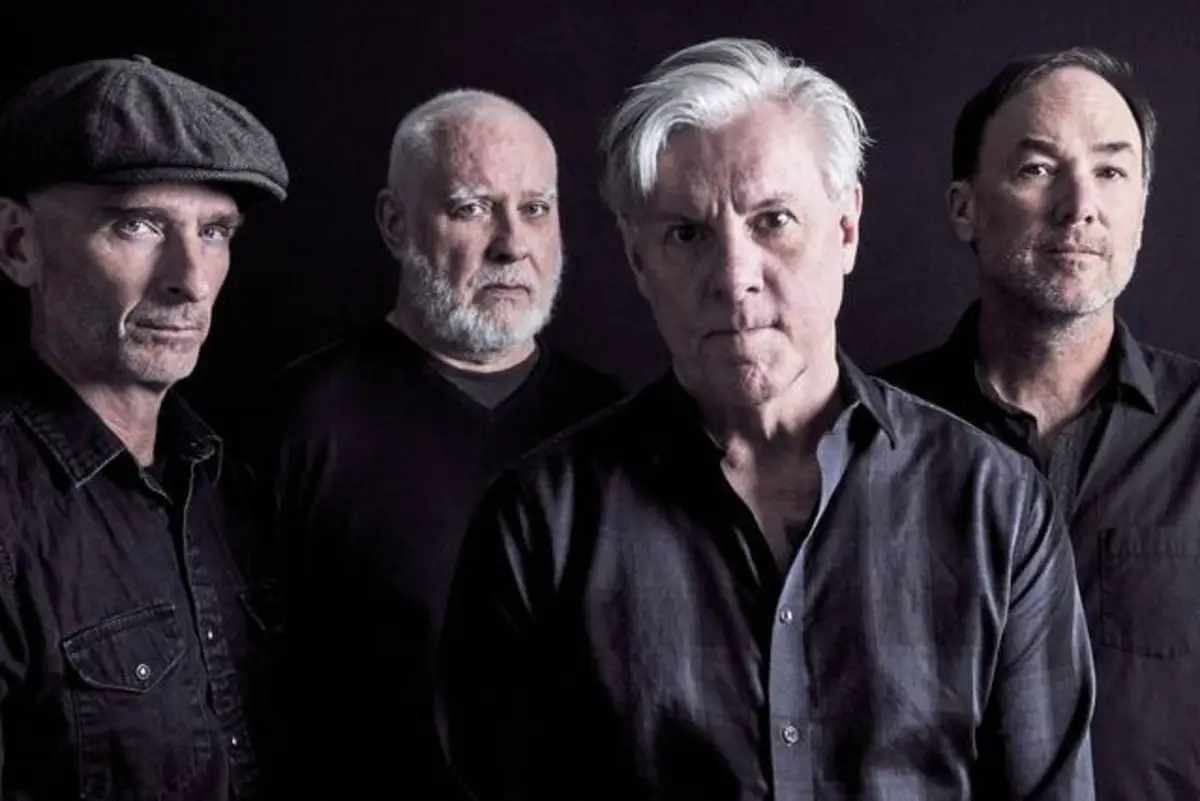
Texas alternative rock veterans Toadies achieved a longtime goal with “The Charmer,” the band’s seventh studio album.
Released May 1, the Toadies’ first album in nine years came in collaboration with Steve Albini, a recording engineer who gained acclaim in the 1980s and ’90s alternative music scene for his raw, unpolished style, captured on albums like “Surfer Rosa” by Pixies and “In Utero” by Nirvana. Albini died in May 2024, just a few weeks after the band’s last session with him.
“It was our first time recording with Steve Albini — the late, great Steve Albini — and it was just a dream come true,” Toadies drummer Mark Reznicek said. “It’s something that we’ve wanted to do since basically our first album, but we were on a major label then and they vetoed the idea for whatever reason. But it was always kind of in the back of our heads. We were always all big fans of Pixies’ “Surfer Rosa,” the Breeders, PJ Harvey, all the albums that he worked on, so that part was definitely a dream come true and everything just kind of came together at the right time.”
The new album features heavily in the band’s current tour, which visits the Roxian Theatre on May 27, with Local H and Vandoliers opening. And they’ll undoubtedly play “Possum Kingdom,” their 1995 hit which remains a radio staple.
Reznicek said he could still remember the band’s first show here, and he hopes to hit up Eide’s Entertainment to check out their comic books and music.
“I really like playing Pittsburgh. On our very first tour in 1994, I remember playing there and it was in the fall, maybe late September, early October, so it’s kind of a little bit chilly in the air and the leaves were changing,” he said. “I just remember thinking it was pretty cool. I think that we had a day off there and we went and saw ‘Pulp Fiction’ in the theater.”
In a Zoom call earlier this month from Oklahoma City, Reznicek spoke with TribLive about working with Albini, the origins of “I Wanted to Be Everywhere,” long gaps between albums and more. Find a transcript of the conversation, edited for clarity and length, below.
What stands out the most about working with Steve Albini? How did he help to shape the album?
He made it clear in interviews a lot over the years that he’s just a recording engineer. He’s not a producer. And he specified he didn’t want to be credited as a producer. So we were prepared for that and before we went in the studio with him, we rehearsed a lot and got the songs really tight so that we could come in and just lay them down and have him record them. But over the course of the three or four weeks that we were there recording with him, he kind of emerged and was offering suggestions and had some ideas for, why don’t we try this guitar sound or try this amp setting or whatever. And before we knew it, he was actually acting as a producer despite what he might say were he around today. But it was a pretty cool process to watch and we bonded with him and had our little in-jokes while we were there. Yeah, it was just great.
So the experience probably turned out a little bit different than what you expected then?
Yeah, but in a good way. I don’t know if I can speak for the other guys, but I was pretty intimidated at first going in. I’ve read a lot of interviews with him and stuff he’s written, so I knew that he was known for having a kind of a prickly personality, but he really wasn’t. He could be a smart aleck. Most mornings he would make us a cup of coffee when we arrived and stuff like that. (laughs) He was just a cool guy, really.
All this was recorded to a tape instead of digital, right?
Yes, in fact, I don’t know that Steve even knew how to work digital recording computers. It was all straight to two-inch tape, and if something needed to be edited, he would get out a razorblade and do it right there on the spot. It was kind of a callback to the way we recorded “Rubberneck,” which is just prior to the digital recording revolution, so in a way going back to our roots. We wanted to work with Albini on the first album, and the first album was recorded on two-inch tape, and now here it is kind of full circle.
Does that change the way that you guys have to work if it’s recorded that way?
It could, but it didn’t in this case. There have been times in the past where we recorded something and decided to make an edit or to composite two different takes into one, and on a computer that’s super easy, really. On two-inch tape, it’s not really as easy. So we went into it knowing let’s try and get these as tight as we can so we can just play through them, and that’s essentially what happened. It was just four guys in a room playing together. Instead of recording piecemeal one part or one section at a time, it was just a band in a room playing.
Did Albini’s death change the perspective on the album for you at all?
I mean, it’s pretty heartbreaking because we had a pretty good rapport with him, and we had definitely discussed maybe working with him again in the future. So there’s sort of a, I don’t want to say finality to it, but knowing that this is us and Steve Albini creating something together and it’s a once-in-a-lifetime, one-of-a-kind thing that will be impossible to repeat.
Related
• Bruce Springsteen’s politics, rock power on full display in nearly 3-hour show in Pittsburgh
• Lyle Lovett bringing 3 intimate nights of shows to City Winery Pittsburgh
• 2026 Pittsburgh area concert calendar
With the album, do you have any personal favorite songs off of it, just on your end?
We just in the last couple weeks started playing a song called “I Wanted to Be Everywhere” and that’s a favorite for sort of a selfish reason. It had an unusual origin where one day I had this idea for a drum beat in a weird time signature that was 7/8. So I just made a voice memo like beatboxing, and then I sent it to our guitar player Clark (Vogeler) and I said I don’t know if this beat is anything, but if you got any kind of riffs or whatever to put on top of it, see what you come up with. So he messed with it and he actually took that beatbox recording and programmed a little simple drum beat based on it and then put some riffs over the top. Then we sent that to (singer/guitarist) Vaden (Lewis), and next thing we know it’s a full-blown song. I like playing in weird time signatures, one of the Toadies’ trademarks, I guess. The key is to try and make a weird time signature not sound weird, so it sort of tricks your ear. That one really does it, plus it has all these cool little guitar hooks in it, not just one riff that repeats throughout the song, but there’s several different little hooks that come in at different points. It stood out to me for the reason that it originated with this weird voice memo thing and now it’s a full-blown Toadies song, so I really like that one.
I thought “I Call Your Name” might be one of your favorites since it just starts off with that 30 seconds of just you drumming.
Yeah, I love that one too, and that’s another one that we’ve just started playing live in the last couple weeks since the tour started. Just play that sort of tribal beat at the top for quite a while until the bass kicks in and then the rest of the band, so that’s fun. And then in the middle, there’s a part where I drop out completely so I wasn’t sure what to do. Like OK, these guys are going to be playing for like a minute, minute and a half, just the three of them with no drums. What am I supposed to do up here on stage? So the last few shows I just leave for a minute and a half or so and watch them from the wings of the stage and maybe have a have a drink, cool down a little bit and then come back on just in time for the big outro of the song, so that’s a really fun one to play.
The band has been playing some of these songs off the album for at least four years now. “The Charmer,” “Closer to You” and “Long Time,” they’ve been in the set for a while, so did it feel good to finally get them onto an album?
Yeah, I think the last time we toured was in 2022, and those songs were new back then, so we’re like, hey, let’s throw in a few new ones. So it’s cool to finally hear them etched in stone on the album. That’s been a long time coming because some of the first songs that we made demos for this project were pre-pandemic, like 2018, so it covers a range from then till the time we recorded, like four or five years of Toadies time.
It had been nine years in between albums. Does it feel like it was that long?
Well, it doesn’t. You know how the pandemic kind of distorted time for all of us and it’s like, we’ve kind of memory-holed a lot of what happened in that time. The last album came out in 2017 and like I was saying, we actually started work on it the following year. We had plans for a big tour in 2020 and then the world came to a stop so we just kept working on songs and stuff like that. So yeah, it’s weird. What is time anymore after the pandemic? (laughs) It could be a week, it could be a year. It all seems the same.
The Toadies have also had big gaps in between albums, seven years in between “Rubberneck” and “Hell Below/Stars Above.” And then there was another seven years after that one. Is it just that new music sometimes gets put on the backburner a little bit?
In a way. There’s reasons for those gaps. After “Rubberneck” came out, we were on tour for like two years straight, went from being a band nobody heard of, and then after a year and a half, it went gold, and then shortly after that it went platinum. So we were so busy touring. There were a few new songs that went on soundtracks and compilations. But then we got off tour and we started working on the next album, recorded a whole other album in 1998 that the label rejected. So we went back to the drawing board, and it was 2001 before they released “Hell Below/Stars Above.” So there’s a whole story there.
Then after “Hell Below/Stars Above” came out, the label, it seems like they were just done with this us. I don’t know, for whatever reason, they didn’t put any kind of promotional push behind it and we’re like, we just devoted five years of our lives to making this album and you’re not even advertising it. So our bass player, Lisa (Umbarger), quit and shortly after that, Vaden decided, eh, let’s just pull the plug. So we actually weren’t really a band from 2001 to 2008 when the next album came out. So the gaps, there’s explanations for the gaps, but it’s also true we’re not that prolific. We’re harsh judges of our own stuff so we don’t just want to do more of the same and fart out an album. (laughs)
Before the tour started, there was a Facebook post soliciting what the fans want to see you add to the setlist. Did you see that post? Were there any surprises of what people want to hear?
There were a few, and we incorporated some of them. It seemed like a lot of people were requesting the song “Dollskin” from the “Hell Below” album, which we’ve played off and on over the years, but we incorporated it back into the set. I don’t know the reason why, but that song has always seemed to be special to some people.
You’re touring with Local H. What are you looking forward to on this tour and how important is it to have good tourmates out on the road with you to make life bearable?
That’s really important, and we’re really good friends with Local H. We’ve done a tour with them before – I think it was in 2017 – so we got to know them really well then and then Scott Lucas, their singer, lives in Chicago so while we were recording up there at Electrical Audio with Albini, he would come to the studio some days just to hang out and he let us borrow some of his amps and would take us out for pizza and stuff like that, so we’re already good friends with Scott. It’s cool having people you know that are almost like family out on the road with you. The other act with us is the Vandoliers, and they’re from the Dallas-Fort Worth area like us and we’ve known them for years. It makes it more fun and everybody gets along and we’re having a blast.
If you go
Who: Toadies, Local H, Vandoliers
When: 8 p.m. May 27
Where: Roxian Theatre, McKees Rocks
Tickets: Starting at $49.90, ticketmaster.com