
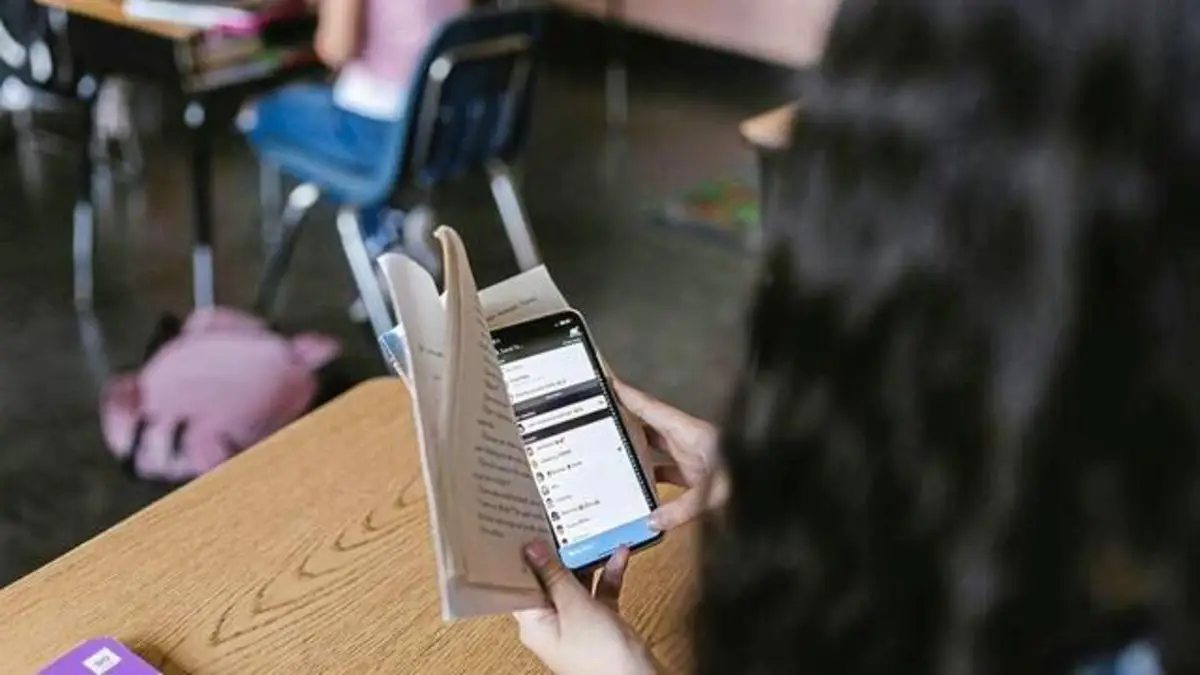
Introduced in October, Senate Bill 1014 awaits House approval for its statewide “bell-to-bell” ban on cell phones during school hours.
For concerned parents and teachers, action can’t come soon enough.
Public support for the bill is widespread and growing, with 74% of U.S. adults backing a ban on cellphones in middle and high school classrooms. It’s also bipartisan, with more than 70% of Republicans and Democrats in favor.
However, this momentum does not ensure the bill will be passed in its entirety.
Much like a previous cellphone ban bill proposed by former Republican Sen. Ryan Aument, which initially required schools to secure phones in lockable bags, it was later amended to “encourage” the policy rather than mandate it.
So, too, could this proposal go. And to date, amendments to the bill have already been made.
Legislation to include private schools under the ban and provide more exceptions, such as students who have family members with qualifying medical conditions, have been incorporated. Republican Sen. Devlin Robinson of Bridgeville, the bill’s sponsor, is not in favor of the changes.
“I’m not thrilled with the amendment and don’t believe it improves the bill,” said Robinson. Although much of “the original language was left intact,” the bill has yet to make it to the governor’s desk or make a difference for many concerned voters.
“I’ve been hearing from a lot of my constituents that are teachers and parents and they’re just getting fed up.” Robinson said. Already, 18 states have enacted full “bell to bell” bans and seen results, but Pennsylvania teachers still struggle to maintain order and keep their students’ attention when competing against TikTok, Snapchat or Instagram.
Angela Girol, a fourth-grade teacher in Pittsburgh and member of the school board, voiced support for the bill, as even her students of 9 and 10 years old can’t seem to shake what appears to be a generational death grip on cellular devices.
“We really wish it wasn’t an issue we have to deal with,” Girol said, adding that making sure students are not on their phones or trying to resolve online conflicts has turned teaching into policing – a position neither she nor her colleagues signed up for.
“We need to be supported at a higher level than just our local level,” Griol said. “I’m really hoping that lawmakers can see that this is really important.”
State Rep. Mandy Steele — a Democrat from Fox Chapel who has sponsored a similar school phone bill and is the mom of four — is one of these lawmakers.
“We’ve got to move one of these bills and do it fast,” Steele said. “The research is abundant and clear that children are in a very serious crisis.”
Since the popularization of smartphones among children, parents and teachers are seeing lower test scores, while rates of depression, suicide, hospitalization, and obesity continue to rise.
“We’re not seeing children outside, we’re not seeing them engaging with one another, engaging with adults. We’re not seeing them ride their bikes or play in the street,” Steele said. “What we’re seeing is them staring down at a device in their hand.”