
New guidelines by the American Heart Association urge people to check their cholesterol earlier in life — in some cases, as young as toddlers — to stave off heart disease.
Recommendations, in conjunction with the American College of Cardiology and updated in March for the first time since 2018, include new personalized risk assessments for heart health.
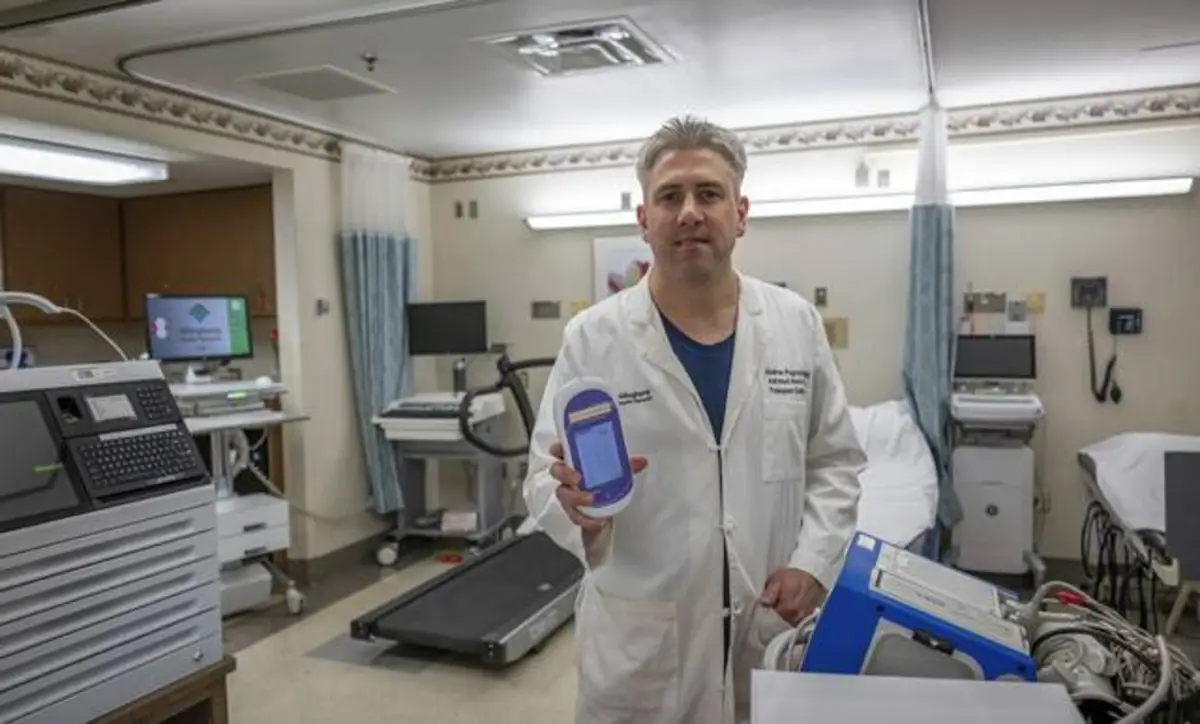
“In extreme cases, where there are known genetic mutations in the family, (cholesterol) screenings can start as early as 2,” said Dr. Andrew Pogozelski, chief of cardiology at AHN Forbes Hospital.
For most people, screenings should start at 19 and repeat every five years, Pogozelski said. It was previously believed that middle age presented the most jeopardy for developing risks. Routine checkups formerly recommended to begin at 30 were thought to be early enough to combat heart issues that would develop in people’s 50s and 60s.
“We’ve seen a lot of science since 2018,” said Dr. Anum Saeed, assistant professor of medicine at the University of Pittsburgh School of Medicine, cardiologist and lipidologist at the UPMC Heart and Vascular Institute.
“The risk of developing heart disease can start much earlier in life than we might think. Really, the risk starts the moment you are born.”
Cholesterol is a waxy substance that the body uses to build cells and make hormones. It is manufactured by the liver, which makes all the cholesterol that the body needs. Other sources of cholesterol come from meat, poultry and dairy.
Maintaining a healthy level of cholesterol is recommended, as too much can lead to risks of heart disease and stroke.
Updated guidelines include sweeping changes that shift thinking to focus on earlier assessment and aggressive, targeted intervention to stave off years of lost prevention.
“We were losing out on many years that we could intervene for high-risk people,” Pogozelski said. “Maybe starting at age 20 might still be late. Years of exposure to high blood pressure and cholesterol are what shape the process and lead to (heart) disease.”
Key guideline changes include lower-for-longer LDL, or “bad” cholesterol, with targets dropping from 70 to 55 for at-risk patients. About 1 in 4 adults has elevated levels of LDL, according to the American Heart Association.
Under the new recommendations, everyone beginning at age 9 should be screened at least once for the genetic risk factor lipoprotein(a), an inherited cholesterol unaffected by typical medications and lifestyle changes. The early test will establish a baseline and identify those at higher risk for heart attack and stroke.
Awareness is the highlight of the new guidelines, Saeed said.
“Be diligent, go to your appointments, and talk about family histories,” she said. “The good news is that if you’re 30 years old and high risk, we can modify that with therapy. It’s not about putting more people on medication but to offer intervention sooner if needed.”
A new risk calculator, PREVENT, is available to estimate 10- and 30-year risks of heart attack or stroke for adults 30 to 79, replacing older models. Pogozelski said people can plug in their blood pressure and other numbers to help guide prevention-focused treatments.
The PREVENT calculator includes three optional predictors: urine albumin-creatinine ratio, hemoglobin A1c and social deprivation index to further personalize risk estimates.
“Diseases are a summation of risk multiplied by years,” Saeed said. “So better awareness and catching the disease early provides the best outcome.”
As always, healthy lifestyle choices are the first level of defense. People should aim for a diet heavy on lean protein, vegetables and fiber. Exercise, about 180 minutes a week, also can figure into long-term health.
“However you break those minutes up, you want something that makes you a little out of breath and gives you that glazed doughnut look,” Saeed said, referring to sweat.
Getting 8,000 to 10,000 steps a day is the goal.
Experts also advise eliminating smoking and limiting alcohol.
“Whatever age you are and all the family history and things you can’t control, there are numbers that you can change,” Pogozelski said. “Weight, BMI, stress levels — these are things in your control.”