
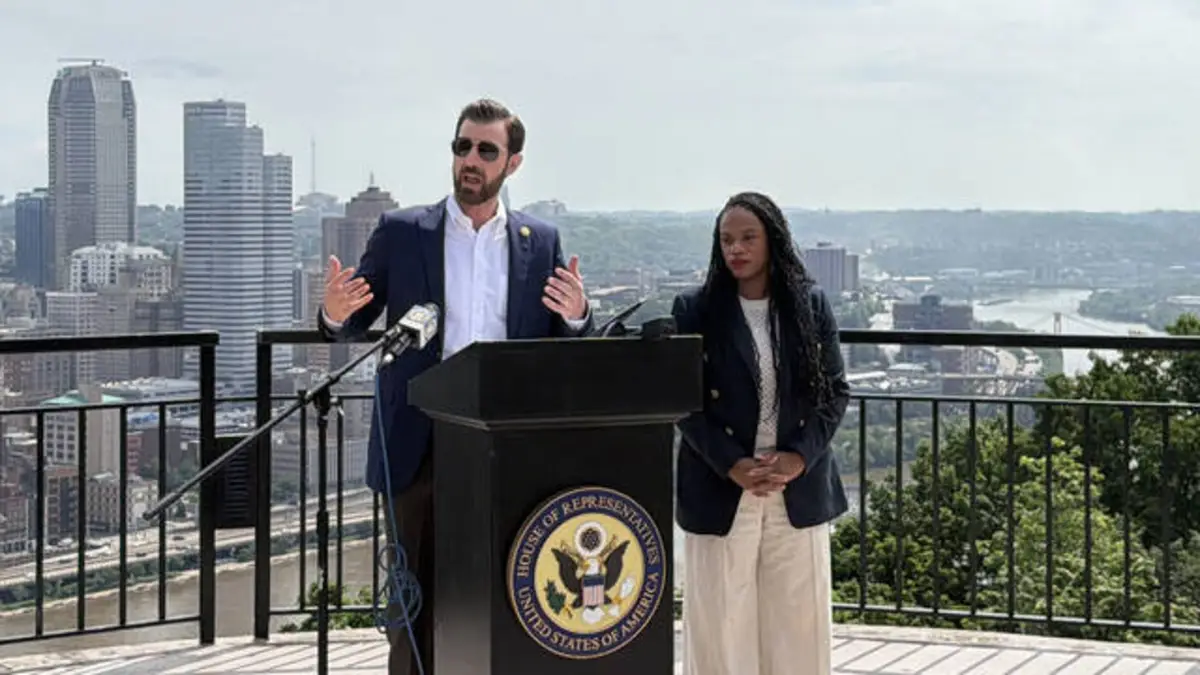
U.S. Reps. Summer Lee and Chris Deluzio on Tuesday unveiled a package of bills to combat so-called zombie mines across the Appalachian region that experts say harm the health and safety of Western Pennsylvanians.
A zombie mine is a nonproducing, unreclaimed modern coal mine, according to Appalachian Voices, a nonprofit group of environmental advocates. They can discharge toxic pollution into streams, destabilize land and increase risks of flooding and landslides.
“As coal companies declare bankruptcy or shut down operations, many abandon their legal responsibility to restore the land — shifting billions of dollars in cleanup costs onto taxpayers,” the legislators said.
Lee, D-Swissvale, and Deluzio, D-Fox Chapel, announced their package of three bills during a news conference on Mt. Washington.
They chose the location on Grandview Avenue at the site of a state historical marker recognizing Mount Washington’s old name — Coal Hill — where Pennsylvania’s “bituminous coal industry was born” around 1760. “Here the Pittsburgh coal bed was mined to supply Fort Pitt,” according to the marker.
@triblive U.S. Reps Summer Lee and Chris Deluzio on Tuesday unveiled a package of bills to combat so-called zombie mines across the Appalachian region — that experts say harm the health and safety of Western Pennsylvanians. #politics#pittsburgh#bill#congress#government♬ original sound – TribLive
“It is a part of our region’s history,” Deluzio said of mining. “We’ve powered the country, and that’s a source of pride, but it’s also come at great cost to us and our health.”
When zombie mine cleanup doesn’t happen, he said, damage like pollution in rivers and streams, poor drinking water, mudslides and flooding can last for decades.
“The cleanup process of coal mine reclamation, essentially repairing the damage they’ve done from mining, is often skimped on or totally forgotten — not even forgotten, purposefully ignored,” Deluzio said. “(The new bills will) hold mining corporations accountable for polluting our water and force them to make good on their promises.”
Deluzio said corporations shirk their financial responsibilities through subsidiaries or shell companies.
“It would stop corporations from playing financial games to avoid their responsibilities,” he said of the new bills.
Through the Surface Mining Control and Reclamation Act of 1977, coal companies are required to post bonds that would give regulatory agencies the money to reclaim mines if needed.
But there are 633,000 acres of zombie mines across the Appalachian region in need of reclamation, according to Kevin Zedack, government affairs specialist with Appalachian Voices. Of this, 426,000 acres of mined land have been partially reclaimed, and 207,000 acres are fully unreclaimed.
In addition to Pennsylvania, this number encompasses Alabama, Tennessee, Virginia, Kentucky, West Virginia and Ohio, according to the “Repairing the Damage” report through Appalachian Voices.
Reclamation would cost a total of nearly $10 billion for the seven states overall, Zedack said. The bonding the Appalachia region has for this is only about $4 billion. In Pennsylvania, the report estimates between $1.9 billion and $2.3 billion would be needed.
The $6 billion gap is a “big question mark” right now, he said.
“There is currently no taxpayer fund or fee paying into that,” Zedack said.
Zedack said the lack of reclamation in zombie mines can lead to:
- Landslides
- Increased flood risk due to stormwater management system failure
- Increased runoff in bare rock and soil
- Continued pollution from poorly maintained sites
- Safety risks of dilapidated infrastructure
- Stagnation of local economies because of lost reclamation jobs
Reports have estimated about 23,000 to 43,000 job years are available by fully reclaiming the zombie mine sites across Appalachia, he said.
“Mine reclamation is not just about paperwork or technical policy that will affect isolated projects,” said Heaven Sensky, organizing director at the Center for Coalfield Justice. “Closing regulatory gaps and strengthening reclamation requirements helps us begin to build a stronger foundation for economic development in communities that have long been left behind. Reclamation creates jobs, restores land and water and opens the door to a future not defined solely by extractive economies.”
Lee introduced the Coal Clean Up Taxpayer Protection Act, limiting the practice of self-bonding, which allows mine operators to promise to pay for cleanup rather than put actual money or collateral down to secure bond funding.
Deluzio introduced the Bond Improvement and Reclamation Assurance Act, which will require full-cost bonding and combat bond adequacy issues.
Additionally, U.S. Rep. Don Beyer, D-Va., will introduce the CLEAN UP Mines Act, which will set specific time limits for completing reclamation processes on zombie mines.
Lee said zombie mines remain present-day threats families in Western Pennsylvania deal with daily.
“Corporations have made false promises, and they’ve used loopholes to evade responsibility and to continue to poison our communities,” she said. “At the same time, we’re watching a lawless administration roll back environmental protections and leave our communities with the devastating consequences.”
Despite introducing the package of bills, Lee acknowledged it will be an uphill battle to get them passed.
“This is still about public safety and health … turning land that was written off into land that’s usable again,” she said. “A taxpayer should not be forced to subsidize corporate neglect, and we’re going to keep pushing until these protections become law and until our communities finally get the justice they have been owed for far too long.”