
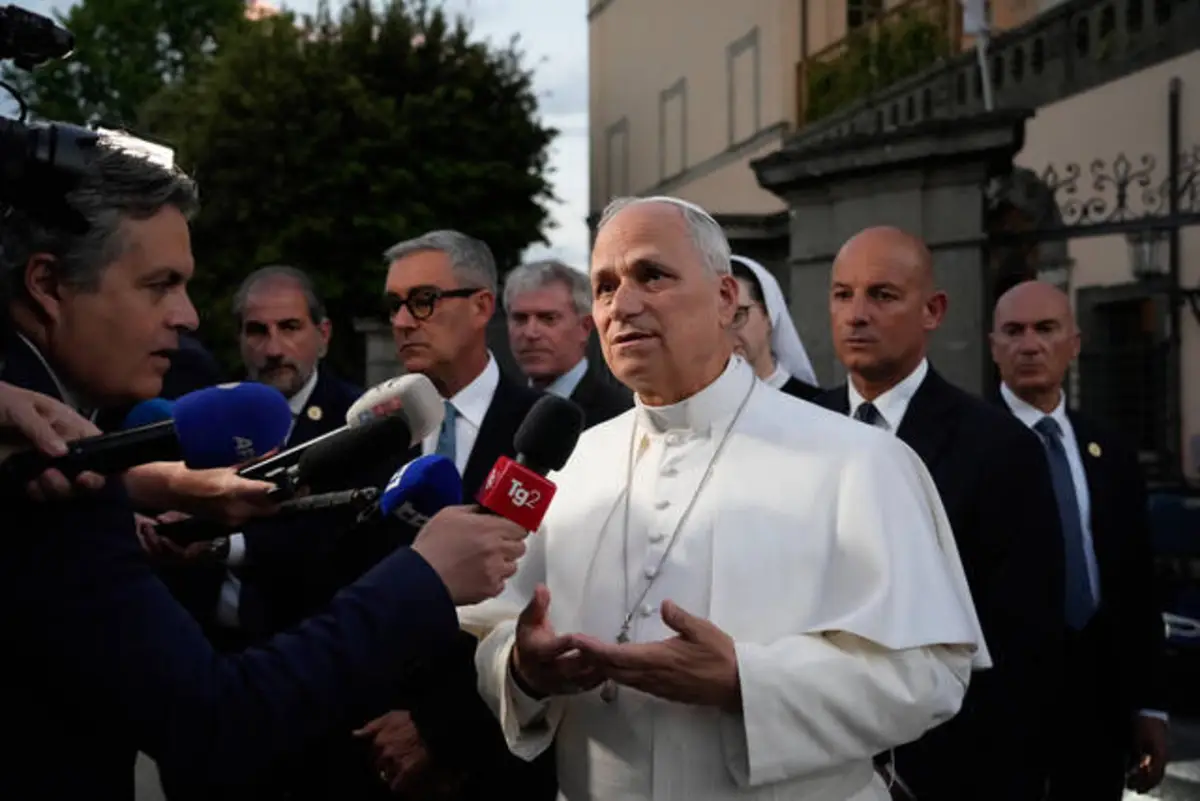
Catholic universities across Western Pennsylvania are examining the future of artificial intelligence, guided by the newly released words of Pope Leo XIV.
“Magnifica Humanitas,” a 42,300-word papal encyclical issued Monday, outlines how AI must be freed from monopolistic control and no longer leveraged for geopolitical or commercial gains.
At the heart of the address is a deep concern for human dignity and an exploration of how the technology can be used to benefit humanity, said James Swindal, a professor of philosophy and Catholic studies at Duquesne University.
“He’s not saying let’s get rid of AI,” Swindal said. “He is saying let’s put it where it belongs.”
In the text, Leo denounced the “culture of power” driving the AI race, especially in developing more sophisticated methods of remote warfare.
Experts in the tech industry, academia and Catholic morality said the document likely will become a benchmark in the debate over AI, a point of reference for policymakers, researchers and ordinary folks alike. It comes as the near-daily developments in the technology trigger concerns over AI replacing human jobs and even human intelligence.
Most Catholic universities’ AI policies already align with the pope’s message, Swindal said.
David Dausey, executive vice president and provost at Duquesne University, said in a statement to TribLive that he has worked for years to ensure the institution’s tech guidelines mirror its core mission.
“Our work has anticipated the necessity of learning and judging the quality of the tools and how they help our students as tools,” Dausey said.
Local campus reactions
A day after the encyclical’s release, faculty members at Saint Vincent College in Unity already were reviewing the text to see how the Vatican’s perspectives on AI can be integrated into higher education, said the Rev. Paul R. Taylor, college president.
The document will help shape the college’s AI policy, which administrators have been developing for more than a year, he said.
“Pope Leo was very concerned in that encyclical about how human beings would be mistreated with the inappropriate use of AI, and that’s something that goes against the fundamentals of the church,” Taylor said. “Human life is sacred, and for us to recognize that value of human life is our ultimate priority.”
Taylor noted the pope’s background in mathematics lends him academic credibility to engage in the artificial intelligence conversation, making the document even more impactful. Leo holds a bachelor of science in mathematics from Villanova University.
The papal address arrives at a time when public discourse regarding AI “unravels things,” Taylor said, pointing to recent instances where college graduates booed when the technology was highlighted by commencement speakers.
“I think to be able to speak out about AI in ways that many people have not yet is brave,” Taylor said. “For Pope Leo to be a worldwide leader to ask the important questions and broach these important topics at this point puts him really in the forefront of this discussion.”
‘Being human first’
Pope Leo’s message serves as a “strong moral compass” for faith-based higher education, said Kathy Humphrey, president of Carlow University, particularly because it treats technology as a neutral tool rather than an inherent evil.
“It should reflect our institution and how we use it,” Humphrey said. “It reinforces the importance of being human first, and that reminds us that AI should expand human possibilities, not diminish them.”
Dausey echoed that sentiment, noting automated systems inherently lack the nuance of sensory input, interpersonal complexity and true human interaction.
“The way in which we communicate must never be supplanted by AI, which cannot by its very nature build the authentic human relationships required to face the complexity of challenges that demand collective collaborations and empathy,” Dausey said.
The Associated Press contributed to this report.