
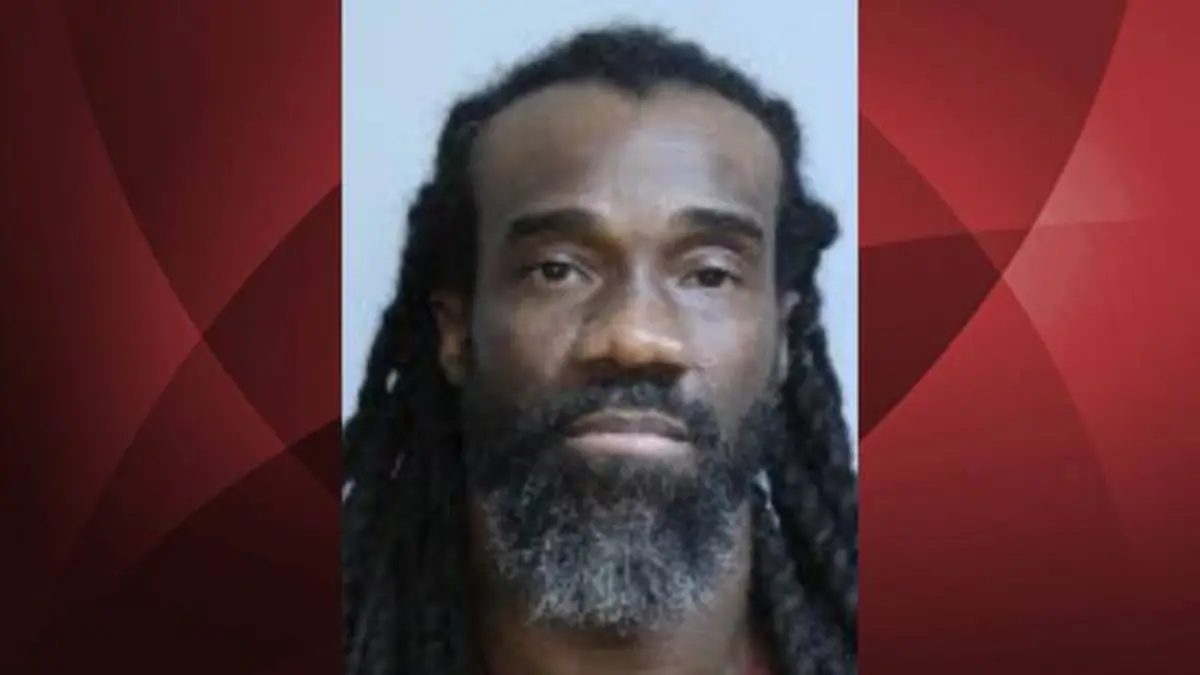
A judge Tuesday modified the life sentence without parole for a Pittsburgh man imprisoned more than 30 years ago for killing someone as a teen, paving the way for his possible release one day.
Keith Hicks was 17 when he fatally shot 15-year-old Terrance Allen, an innocent bystander Hicks and two other suspects came upon in Pittsburgh’s South Side after they set out to avenge a friend’s death.
At 11:43 a.m. Tuesday, Hicks turned to Terrance’s mother, seated in a wheelchair near the jury box in an Allegheny County courtroom, and mouthed two words.
“I’m sorry.”
“For decades, I’ve been waiting to apologize to you, ma’am,” Hicks, 48, told her.
“I’m so sorry for what I did to your family,” Hicks added, his voice quiet and peppered with pauses as he fought back tears. “And I’m going to do everything possible to change lives.”
Hicks has served 31 years in jail for first-degree murder in the 1994 slaying.
Allegheny County Common Pleas Judge Eliot Howsie reduced Hicks’ punishment to 30 years to life as part of a resentencing under a 2012 U.S. Supreme Court that declared it unconstitutional to give juveniles life terms without the possibility of parole.
“I don’t know if and when he’ll get out of prison — that’s up to the parole board,” Howsie told a standing-room-only courtroom packed with Hicks’ supporters. “My hope is that when Mr. Hicks is released … he’ll spend his time and energy trying to pay it forward.”
‘Overcoming obstacles’
Hicks and two others opened fire on Terrance Allen on Nov. 1, 1994, on Pittsburgh’s South Side, according to an account in court records.
The trio set out to avenge the death of a friend when they came across Allen and killed him, shooting him 14 times with an AK-47 assault rifle and a handgun, according to a state Superior Court opinion. Hicks gave a signed confession, the court said.
When Hicks sought resentencing, prosecutors sought a prison term of 40 years to life. Defense attorney Herbert A. Terrell told Howsie last week that he wanted Hicks released now, based on time served.
Howsie started a 20-minute explanation Tuesday on Hicks’ sentence by talking about the “heinous, reprehensible conduct (Hicks) engaged in.
“There’s no amount of time you could serve to undo the harm you’ve caused,” Howsie added. “You feel you’ve paid your debt to society. And that’s a legitimate argument.”
More than a dozen people sat in Howsie’s court, wearing shirts voicing support for Hicks. “Overcoming obstacles,” it read in white ink on the black T-shirts.
A brother’s perspective
Howsie spent much of the brief hearing Tuesday reading a letter from James Allen, in which the victim’s younger brother sought Hicks’ release. Howsie said the letter, dated Tuesday, left him “somewhat speechless.”
“I surely believe it’s time to turn that page,” James Allen wrote, according to what Howsie read in court. “The only thing Keith can do from here … is to come home and put his work into the community.”
James Allen was a boy when Hicks killed his older brother Terrance, who headed out that day to pick up a video game. James Allen said he first attended one of Hicks’ court hearings last week; he previously had never seen the man.
The two men locked eyes while Hicks spoke last week, according to the letter.
“It meant a lot to me that he gave me that moment — and what I saw was a grown man full of sorrow,” the victim’s brother wrote. “We’re starting over … I want Keith to know he has my blessings.”
Howsie adjourned after addressing Hicks directly.
“You have a lot you need to atone for,” the judge told Hicks.
“I will, your honor,” Hicks quietly replied. “I will.”
Howsie got the final word: “They say time will tell.”
Rancor remains
Hicks — who appeared in court in a florescent yellow prison jumpsuit, with hair down his back and sporting a graying beard — talked during last week’s hearing on the resentencing largely about his growth, as well as his drive to educate himself and mentor others.
Hicks said he earned his high-school equivalency diploma while in prison over the past three decades. He received certification in heating and air conditioning repair work and started studying for an engineering degree.
He also mentored multiple men — inside and outside the State Correctional Institution-Greene, a maximum-security prison housing 1,600 male inmates outside of Waynesburg.
Kimberly Allen, the victim’s aunt, was one of several people to push back from the witness stand against Hicks’ plea for release.
She repeated a number last Wednesday that was cited often in court: 31 years. While Hicks was sentenced to state prison in 1996, he has been incarcerated since his arrest in 1995.
“I keep hearing ‘31 years! 31 years!’ My nephew didn’t get to live 31 years. He didn’t even get to live past 15,” Allen said last week on the witness stand. “He was robbed of everything.”
The victim’s family declined comment Tuesday after leaving court.