
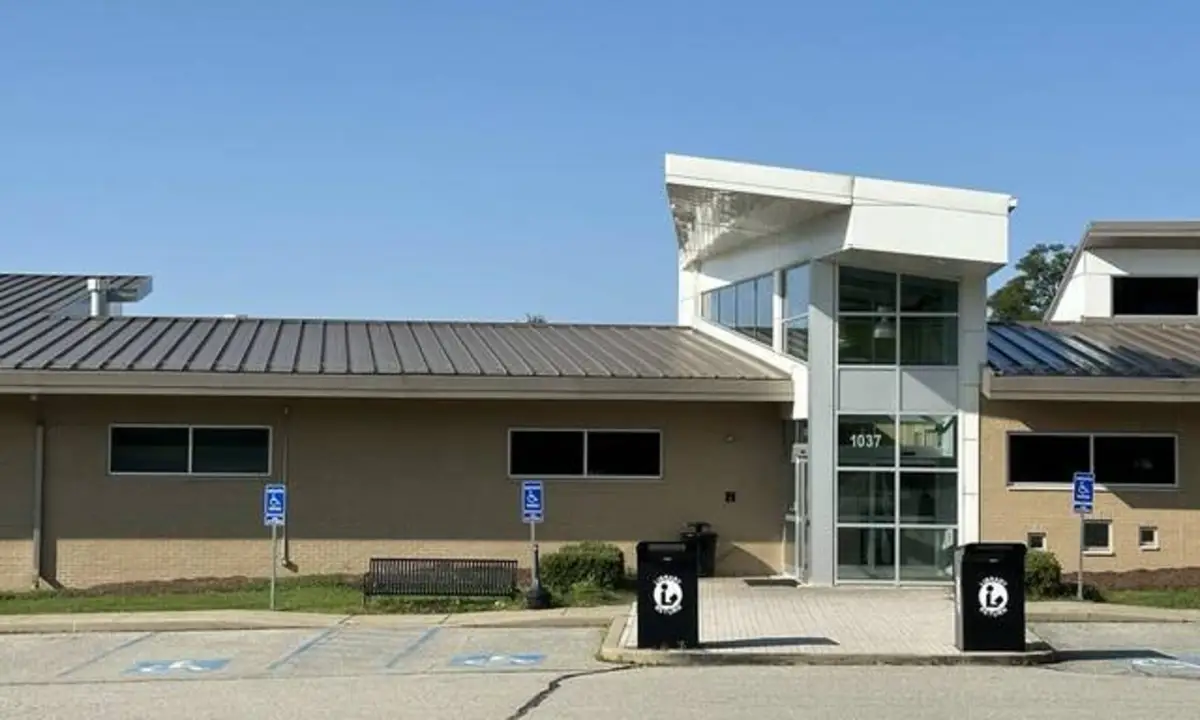
Nearly two dozen Penn Hills Library employees voted to unionize on May 21.
The decision, according to employees, was to ensure the security of their current benefits and work environment in a time of transition at the library.
Dakota Kuhn, a part-time public service associate at the library, led the charge in the unionization process. Kuhn of Monroeville has attended the library since her childhood and worked at the library for nearly three years.
She said she has heard co-workers mention wanting to unionize more than once.
“When we found out that our previous director, Tina Zins, was going to be leaving for another library position elsewhere in the state, I went, ‘This seems like a good time to unionize,’ ” Kuhn said.
Larry Choby, president of the Penn Hills Library Board, said he was surprised when he found out the employees wanted to unionize.
“We had recently lost our executive director to another position,” Choby said. “Beyond that, I don’t know what their motivation was.”
Jessica Beichler filled the position in May. Beichler, the former director of Penn Area Library in Harrison City, will start at Penn Hills Library on June 22.
Choby said he never received any reports about dissatisfaction regarding labor or the jobs’ demands. He said the majority of the library’s staff is at least in the 75th percentile compared to other salaries offered at libraries in Allegheny County.
Even at this point in the process, nothing has been communicated about why they wanted to unionize, Choby said.
In addition to the transition, funding cuts have become a widespread concern for libraries across the country, Kuhn said. While they haven’t hit Penn Hills Library yet, she said employees wanted to be prepared if the library ever faces such cuts.
“We do have fairly competitive wages,” Kuhn said. “However, it is not equal to the cost of living, and there are a number of us who have multiple jobs to make ends meet.”
After consulting her co-workers and gauging interest, Kuhn visited the United Steelworkers website to fill out a form to begin the process for union representation.
“From there, it was surprisingly easy,” she said.
Kuhn said she filled out the form in February. Employees held the first organization meeting in March, signed authorization cards in April and held the final unionization vote in May.
Twenty-three employees of various titles — including librarians, shelving associates, public service associates and librarian assistants — now are represented by the union.
“I see this as kind of a bump in the road,” Choby said.
With negotiations, Choby said all the rules and procedures, staffing, scheduling, wages and benefits that were previously established between employees and management will need to be rewritten with the unionization.
“Everything will be on the table during negotiations,” Choby said. “Although I don’t foresee this process as being extensive or bitter or anything like that.”
It’s all part of the process, he said.
According to Jenn Wood, communications representative for USW, the Penn Hills Library is the second Pittsburgh-area library to join the union. The Carnegie Library of Pittsburgh joined USW in 2019.
“We’re all really excited,” Kuhn said. “The Penn Hills Library doesn’t work without library workers. This is a chance to show up for ourselves and our community.”
KJ Miller, a library assistant, worked with the Carnegie Library for about six months and had some prior knowledge about unionizing a library.
“The process was just us really wanting to secure the benefits and work environment that we currently already have with a new director coming in,” Miller said.
Miller said their experience at Carnegie helped their understanding of what being in a union actually means for library employees. Securing the benefits and pay they get as a full-time employee, and uplifting the voices of their part-time co-workers, also were motivators for the unionization.
“It doesn’t have to be this thing that feels big and scary,” Miller said. “It feels great, honestly.”
The next phase for the newly formed union is to negotiate a contract with the library’s board and management. The library is an independent nonprofit, but the municipality owns the building in which it operates.
Miller, Kuhn and one other employee make up the bargaining committee for the union.
Utilization rates have been steadily growing at the library, and its programming is expanding, Choby said.
“The library and the librarians there have done a fantastic job,” Choby said. “The library itself has done very well and is continuing to do well.”