
In many cases, the first steps of fire prevention have already failed when the fire department is called to a blaze.
Otherwise, chances are there would be no call at all, according to Jim Langenhahn, a volunteer firefighter at Ingomar Volunteer Fire Company No. 2.
Educating the public on those first steps is what he and other volunteers at the department hope to accomplish.
“The job of firefighting is almost reactive. Fire safety education reduces risk because it is proactive,” Langenhahn said.
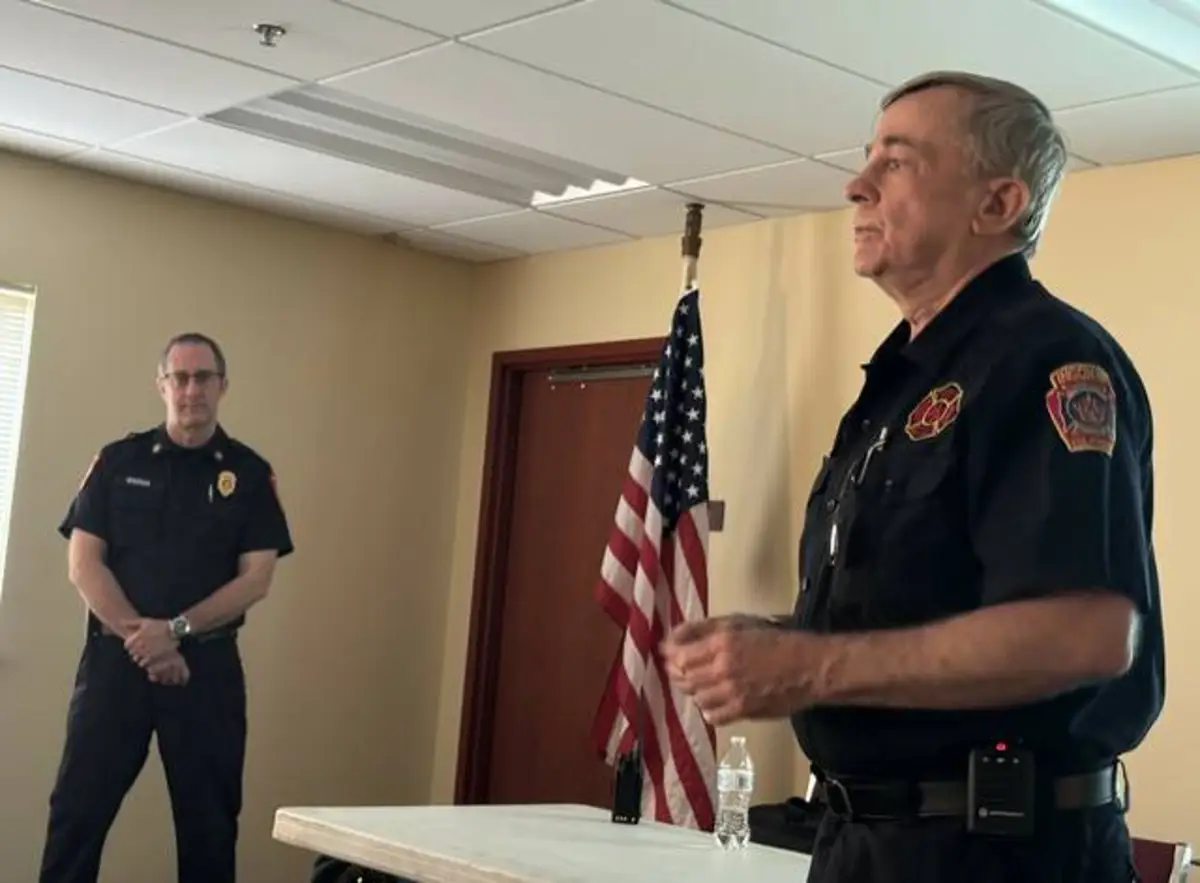
A community fire education presentation May 28 featuring McCandless Fire Marshal Jeff Wissner was hosted by the department at its main station on Harmony Drive in McCandless.
With Pennsylvania regularly leading the nation in the number of house fires, Ingomar’s firefighters felt it was important to reach out to residents on preventive measures, starting with the nearby McCandless communities of Woodhaven Oaks and Olde Ingomar.
The evening began with Wissner’s 40-minute presentation on how fires are easily started and easily spread, preventive measures and what to do in an emergency.
Wissner serves as a liaison to McCandless’ three volunteer fire departments: Highland, Ingomar and Peebles. As a fire marshal and firefighter for more than 15 years, he conducts fire inspections and investigations, and teaches fire prevention within the community.
“As you can imagine, I’ve seen a lot. And an overwhelming majority of them can be prevented. My mission is to get the word on how to be safe in homes,” said Wissner, who has been the town’s fire marshal for four years.
The leading cause of residential fires from 2014 to 2023 is cooking-related, numbering 167,800 for those years. This is followed by 31,500 unintentional or careless fires; 27,900 heating-related fires; and 23,700 electronic malfunction fires, according to data from the U.S. Fire Administration.
Fire can spread quickly. Wissner shared a video of how a cigarette thrown in the garbage quickly produced a significant fire in a home. The fire alarm did not trigger until approximately two minutes after the start because the smoke did not reach the top level until that time.
By five minutes, the house was engulfed in flames.
A fire alarm is necessary on every level, including the basement, and outside and inside every bedroom. Change the batteries every year and check the expiration date on the fire alarm.
Most importantly, sleep with the door closed. Wissner shared a video of a controlled burn of a home. The difference between a bedroom with an opened door during the fire compared to a bedroom with a closed door was striking.
While the former was completely burned out with temperatures reaching approximately 1,000 degrees, a closed door during the fire resulted in almost no fire damage and temperatures reaching around 100 degrees.
“The effectiveness of a closed door during a fire is substantial. It increases the time that rescue can get to you,” Wissner said. “You will be safe in that room if you shut the door.”
He also discussed the importance of carbon monoxide detectors and the danger of natural gas. Call 911 if that “rotten egg” odor is noticed, he said.
Other tips included cleaning the furnace and removing dryer lint regularly. Also, wipe out a dirty oven before cleaning it, because that grease can catch fire as the oven hits those high-cleaning temperatures, he said.
Plug power-heavy space heaters directly into the wall outlet, not a power extension. In addition to cleaning the dryer of lint, turn it off when leaving the house.
Lithium-ion batteries are a difficult fire hazard, because they don’t need oxygen to burn and water does not put them out, he said. These are found in cellphones, computers, laptops, portable power packs, electric bikes and scooters.
The gas given off by these batteries is extremely toxic.
If the body of one of these items is hot to the touch, swollen or discolored, that’s a sign there is a problem. If it’s safe to do so, place it outside.
Also, if a hissing or popping noise is heard, or gas is being emitted, then it’s likely too late. Leave the room. Shut the door and call 911.
Residents should have a fire blanket, a fire extinguisher spray or a fire extinguisher handy in the kitchen and other areas of the home. And they learn how to use each one properly. If comfortable and safe enough, only put out fires that are smaller than you, and with an exit path behind you, Wissner said.
A wealth of other fire safety information was shared with the group, including a tour of the station.
An additional focus of the evening was on recruitment, with hopes that a visit to the station and meeting local volunteers might spark some interest to join, Ingomar VFC Chief Gregory Quatchak said.
To learn more and for information on fire safety programs for other local neighborhoods, call the station at 412-364-3571.
Fire safety tips
• Make and rehearse an exit plan.
• Have a phone near the bed for emergency calls.
• Keep a fire extinguisher on every floor and one within reach of automobiles.
• Test fire alarms, smoke detectors and carbon monoxide detectors frequently.
• Close the bedroom doors while sleeping. Closed doors can prevent the spread of a house fire.
• Touch a closed door with the back of your hand during a fire. Never grab a hot door or handle.
• Have the furnace inspected and serviced at least annually.
• Check electrical outlets, which can wear out and allow sparking.
• A burning house can block exits in as little as three minutes. When fire is detected, leave the house immediately.
Source: Ingomar Volunteer Fire Company No. 2