
Generation X is having a moment.
Netflix’s hit series “Stranger Things” introduced today’s youth to the culture of the 1980s, a time before we all became fixated on our smartphones and began missing the simplicities of everyday life. The show’s soundtrack, fashion, BMX bikes, shopping malls and suburban adventures are a love letter to Gen X.
It makes those of us born between 1965 and 1980 — generally the span designated to be the years for us Gen Xers — long for Pittsburgh’s departed landmarks like Rosebud and Metropol nightclubs in the Strip District, Graffiti music venue in North Oakland and the Beehive Coffeehouse & Dessertery on the South Side’s East Carson Street.
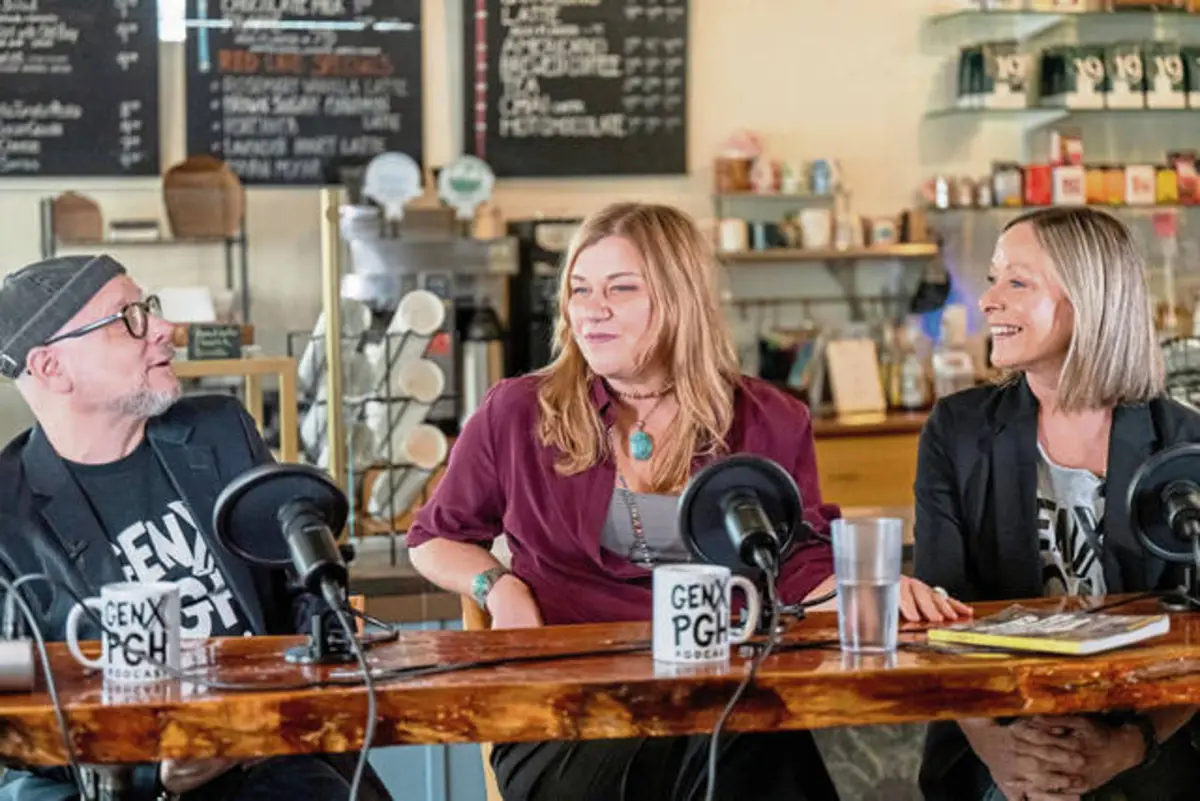
Local author and journalist David Rullo has a new podcast, “Gen X PGH,” that taps into that period, exploring the people, places and culture that shaped the city during the 1980s and ’90s.
The podcast, which records weekly at the Potomac Station Coffee House in Dormont, grew out of Rullo’s 2023 book, “Gen X Pittsburgh: The Beehive and the ’90s Scene.”
“What I didn’t know was that the coffeehouse would become Pittsburgh’s center for the grunge and Gen X culture soon to become part of Pittsburgh’s American psyche,” he wrote of the Beehive. “These people in their ripped jeans, Doc Martens and cardigan sweaters were similar to those in the scenes developing in most large cities. This cultural phenomenon happened without the internet, cellphones, Facebook, Twitter, Instagram or TikTok.”
For me, Gen X Pittsburgh means skateboarding on city streets and the “Skateboarding Is Not a Crime” protest in Squirrel Hill that landed some of my high school friends in the back of a paddy wagon in the late ’80s. It means lying beneath a dirt jump at King Estate in Highland Park while your friend jumped a BMX bike with mag wheels over your head — or occasionally landed on you. It means MTV and high school parties in the woods that lasted until the cops showed up.
It was a combined version of freedom, adventure and just enough danger to keep the stories alive.
Enough of my reminiscing.
The positive response to Rullo’s book reinforced a notion that maybe there was another way to preserve Pittsburgh’s defining Gen X institutions. And a podcast was born.
Rullo’s co-host is Valerie Christofel, an Art Institute of Pittsburgh graduate who once worked at the Beehive.
One of the city’s original destinations for gourmet coffee, the Beehive combined art, music and a bohemian atmosphere that drew everyone from musicians and writers to artists and college students.
Christofel’s memories of Pittsburgh stretch back to when the city was emerging from the steel collapse but hadn’t yet become the polished destination it is today.
“It was so raw back then,” she told me. “You could feel there was a shift happening.”
Many of us lifers or boomerangers (people who left and later returned) still remember the Pittsburgh of old with a touch of longing.
“I still love the city,” said Rullo, who grew up in North Versailles. “But it is a little nicer now.”
He recalls a collection of experiences: browsing at Jay’s Book Stall in Oakland, wandering through unconventional South Side shops, playing in a band at Pepper’s Hothouse in Lawrenceville, exploring the Strip District when it was still overrun with wholesale businesses instead of apartment buildings.
“It had a little bit of dirt,” he said.
That sentiment surfaces during various episodes of the podcast. Their stories aren’t solely exercises in nostalgia. They take time to discuss how Pittsburgh has evolved.
Christofel met Rullo while he was researching his book and interviewing the Beehive’s co-owner, Scott Kramer, who connected him with former staff. The Beehive closed in 2018.
“We became friends, started writing a screenplay together, and I said, ‘I think we should do a podcast,’” she recalled. “Three weeks later, we were doing a podcast.”
Listeners will find that some guests focus on culture. Others remember the music scene, local comedy, radio personalities and neighborhood institutions. Others discuss the city’s physical transformation, from reclaimed brownfields and riverfront development to bike lanes and urban planning.
Former Pittsburgh Mayor Bill Peduto talked about the city’s post-industrial evolution. Comedian Jim Krenn remembered his sketches on 102.5 WDVE-FM. Chris Briem, an economist who writes widely on Pittsburgh development, recorded last week.
The podcast also airs weekly on YouTube.
You can’t really get more Pittsburgh Gen X than the band Rusted Root. Former member Jenn Wertz joined Rullo and Christofel last month to recount the group’s rise.
“One of the reasons we got a lot of attention from record labels is, they were like, ‘Who are these kids from Pittsburgh playing tribal rock?’” Wertz said. “It was kind of Talking Headsy, kind of African, some Middle Eastern energy in the music and people just couldn’t believe we were from Pittsburgh.
“It was an exciting and wild time. Whenever we took it out of town and it started to get momentum, it was like a sensation to people.”
For Rullo, a senior staff writer at the Pittsburgh Jewish Chronicle, the podcast will continue to serve as a portal to the past and a reunion.
“This city punches above its weight all the time,” Rullo told me. “People think of Pittsburgh as this blue-collar steel city, and we are, but we’ve always had incredible an amazing arts scene and amazing stories to tell.”
The stories are finding a second life — one episode at a time.