
With boisterous summer celebrations approaching, signs of hearing damage could go unheard.
The World Health Organization predicts that by 2050 nearly 2.5 billion people worldwide will suffer from some level of hearing loss — with upwards of 700 million cases necessitating rehabilitation.
Currently, around 95.1 million children aged 5-19 live with hearing loss, with more than 1 billion young adults at risk of permanent but avoidable hearing loss.
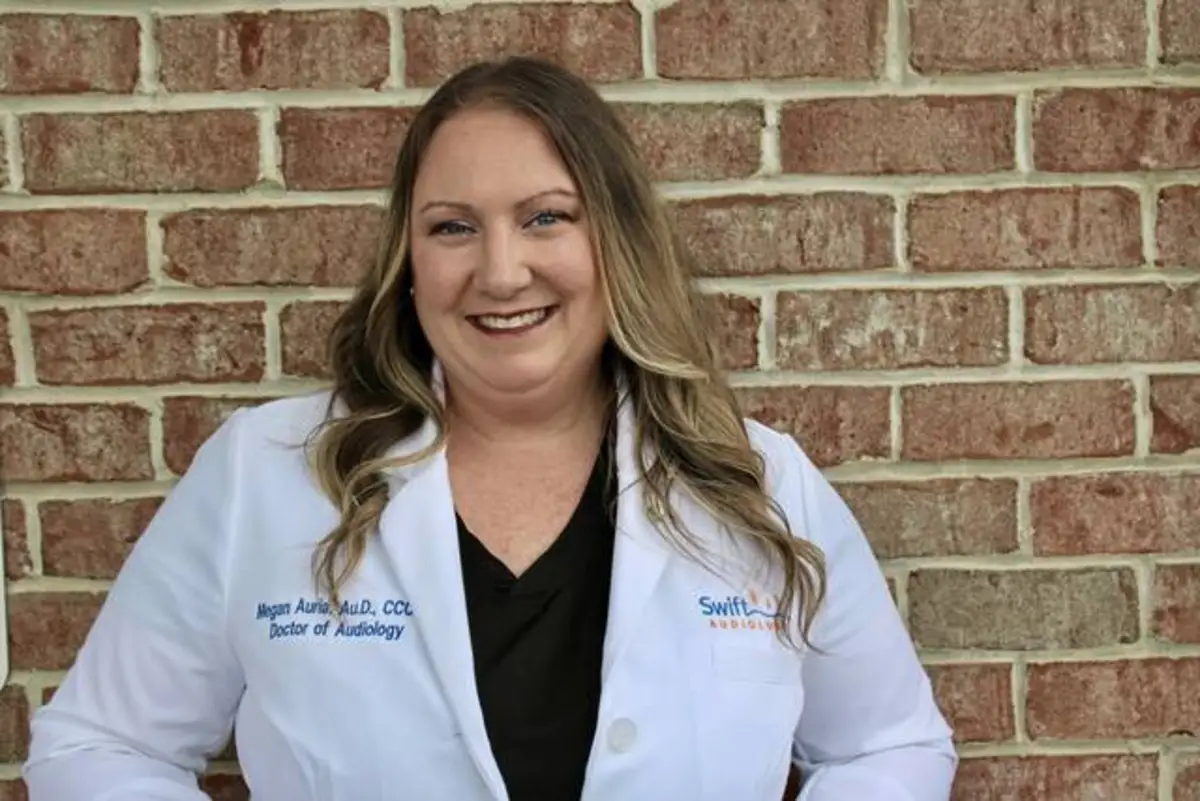
In light of those numbers, Megan Auria, supervising audiologist at Swift Audiology, offers sound advice on how to best protect a vital sense and cut through the cacophony of summer noise.
Q: How do I know if I should be wearing earplugs?
A: A person should be wearing earplugs or any type of hearing protection when they are around loud noises for an extended period of time.
Concerts, mowing grass, using firearms and using power tools are the most common scenarios. Less commonly thought of places include Penguin and Steeler games, symphony performances and being around fireworks — to name a few.
Q: What effects might I notice if a situation is too loud to be experienced without protection?
A: Oh boy! As a millennial, it brings me back to my college days when we went to nightclubs every weekend.
We would leave the club, our ears would be feeling clogged, ringing off the charts, not being able to even converse with our friends next to us.
Little did I know then that we were giving ourselves a temporary threshold shift (TTS). This is a temporary hearing loss where your ears feel muffled or plugged. It is the ear’s defense mechanism and usually disappears within 16 to 48 hours.
Q: What happens inside the ear when exposed to overly loud noises that cause hearing damage?
A: Our tiny hair cells called cilia become damaged beyond repair. Think of it as holding pipe cleaners and just hitting them back and forth, then trying to make them straight and new again. It’s not going to happen. Our inner hair cells become so damaged that hearing loss or nerve damage can occur.
Q: How can exposure to loud noises affect your hearing in the short term and the long term?
A: In the short term, we can experience a temporary threshold shift (temporary hearing loss). With prolonged exposure or frequent exposure, over time and with repeated damage, [damage to] our hair cells (cilia) can become permanent — whether it be [through] hearing loss and/or tinnitus (ringing in the ears).
Q: How are things different for children?
A: Well, tiny humans, tiny ears. Their loud noise exposure limit is much less, sometimes starting at 70 [decibels]. So if you think about it, normal conversations can be around 60-70 dB. That means these kiddos’ ears can hurt much faster than ours; they should be protected more often.
Q: What makes a quality, effective pair of earplugs? What should I look for?
A: One of the biggest things to look for when choosing earplugs, other than getting custom earplugs, is the noise reduction rating. I personally love to see the numbers around 23-25 dB of noise reduction. Also, make sure it is a tight seal.
Q: What are some alternatives to earplugs, and how do they compare in terms of efficacy and application?
A: The only other alternative I would recommend is protective headphones or ear muffs.
Q: Is custom ear protection worth it? Why or why not?
A: Yes! In fact, at Swift Audiology, we actually specialize in custom hearing protection. They are custom-fit to your ear with high-grade silicone. This allows maximum protection with a great seal — and you get to choose fun colors.
Q: Are there any conditions that make it more advisable to wear ear protection? What and why?
A: They can be used as swim plugs for people with ear tubes or who are prone to ear infections.
Superior canal dehiscence syndrome (SCDS) is a rare inner ear condition caused by an abnormal hole or thinning in the bone overlying the superior semicircular canal. This could cause sounds to be overstimulating and too loud to some.
Then there’s hyperacusis, a condition causing a heightened sensitivity to certain frequency ranges and volumes. Earplugs act as a buffer to prevent everyday sounds from causing pain or discomfort.
Misophonia is characterized by intense anger or disgust triggered by specific sounds (e.g., chewing, breathing, tapping). Specialized low-decibel earplugs can selectively muffle these triggers.
Additionally, individuals with neurodivergent conditions often experience sensory overload in loud, crowded environments.
Q: What are some ways to heal the ears if you believe you might already have some damage?
A: Wear hearing protection as much as possible — always.