
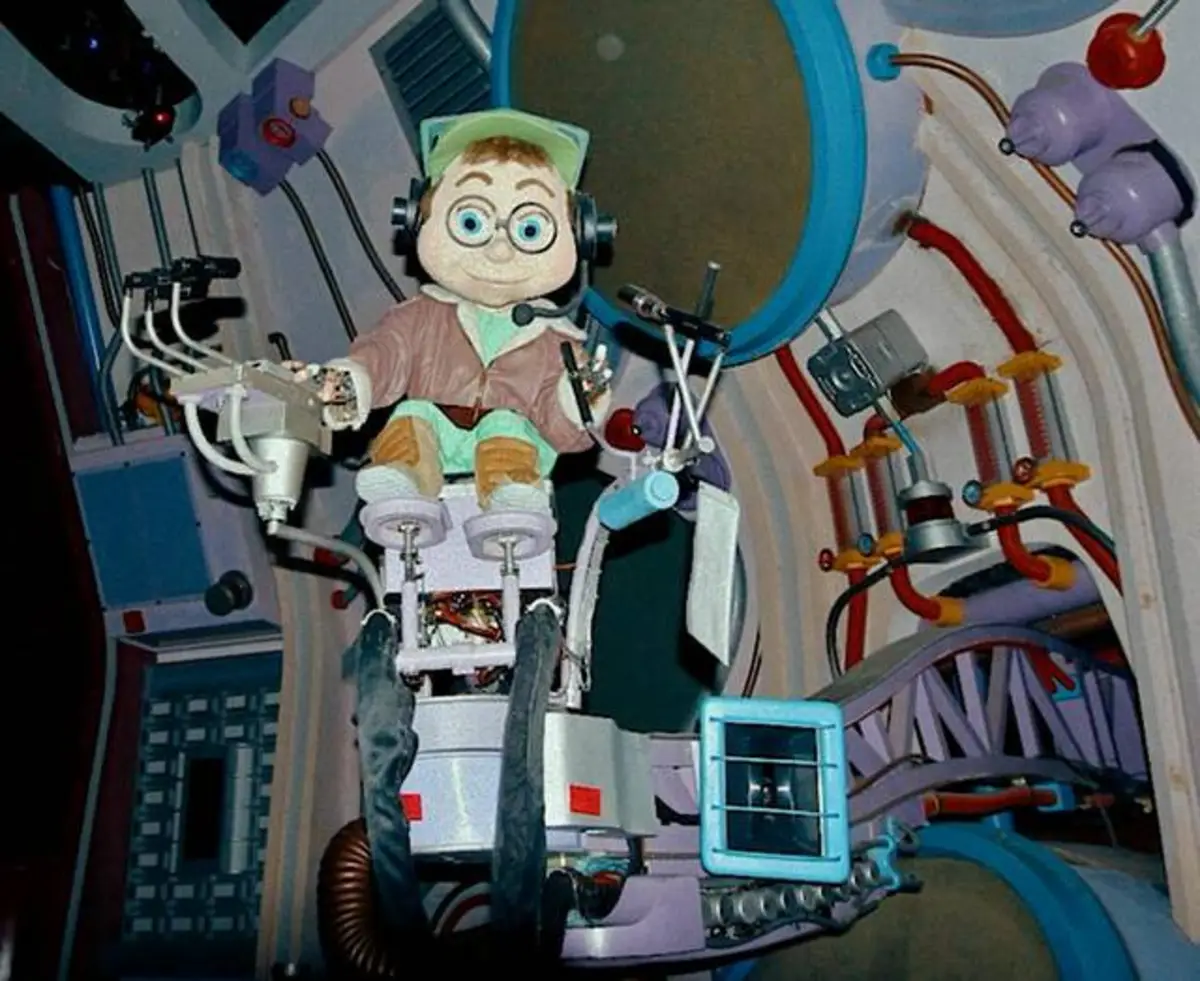
“Stolen Kingdom” may be a documentary about what goes on after dark at Disney Parks, but there’s no way it will ever stream on Disney .
A documentary about the history of urban exploration, trespassing, and theft at Walt Disney World in Florida, “Stolen Kingdom” recounts early pranks that led to a true-crime mystery: Who stole the $500,000 Buzzy animatronic from the shuttered Wonders of Life pavilion at Epcot?
After a brief theatrical run in some cities – doesn’t look like it played in Pittsburgh – “Stolen Kingdom” arrives June 16 on digital on demand platforms (Amazon Prime Video, Apple TV, Fandango at Home, etc.). The film is already available via Letterboxd.
Clearly intended for Disneyphiles and Disney adults, “Stolen Kingdom” also seems designed to appeal to fans of true crime series and podcasts. But it’s ultimately more effective as an exploration of theme park urban explorer sub-culture (and the Disney black market) than it is as a true crime story because viewers only get definitive answers on one theft, and it’s not “who stole Buzzy?”
“Stolen Kingdom” marks the directorial debut of writer/director/producer Joshua Bailey, who once worked at Walt Disney World. The film is clearly made by someone who understands the appeal of Disney Parks and the rabid following that can manifest in those who make multiple trips to Disney World every year.
Then there’s a further subset of Disney fans who get interested in shuttered — but still standing — attractions, from Discovery Island to River Country USA to Cranium Command inside Epcot’s Wonders of Life.
“I think abandoned places get people’s imaginations going,” filmmaker Dan Bell says in “Stolen Kingdom.” “There is beauty in it. It’s basically opening a casket and seeing a place that hasn’t been used, (a place that) is falling apart, that at one time served a purpose but doesn’t serve a purpose anymore. People love that kind of stuff.”
Bailey starts his history of urban exploration in Disney Parks in the 1980s with a pair of friends who began hopping off slow-moving Disney rides and discovered no security alarm sounded and no employees tried to stop them. Those escapades led the friends to get more aggressive in their forbidden departures from ride vehicles in Epcot’s Horizons pavilion. One frequent Disney visitor recounts tossing a copy of Playboy onto the floor of a boy’s bedroom set in Epcot’s Spaceship Earth and how the magazine remained on display there for months.
Then there’s Patrick Spikes, a one-time Disney employee and full-time narcissist who boasts about posting backstage photos online and how, after that violation of the Disney employee manual, he moved on to stealing from backstage areas and selling unused wardrobe and various pieces of Disney ephemera.
Boastful and seemingly devoid of self-awareness about how he comes off, Spikes is the primary anti-hero of “Stolen Kingdom.” While some of the other Disney trespassers admit to growth and castigate their more youthful selves, 20-something Spikes can’t keep from bragging about his exploits.
Eventually, this all leads to a police interrogation over Buzzy’s stolen clothing, which disappeared before the entire animatronic went missing. The interrogation is especially cringeworthy and difficult to watch due to Spikes’ embarrassing behavior.
At a taut 74 minutes, “Stolen Kingdom” offers a fast-paced, enjoyable trip into this Disney fan subculture, depicting urban explorers who grow up and those who simply rack up multiple lifetime bans from Disney properties.
But it’s less successful as a true crime story because the Buzzy theft remains unsolved. That doesn’t prevent “Stolen Kingdom” from intimating Spikes had a role in Buzzy’s disappearance, but a lack of a resolution may leave viewers a little unsatisfied when the end credits roll.