
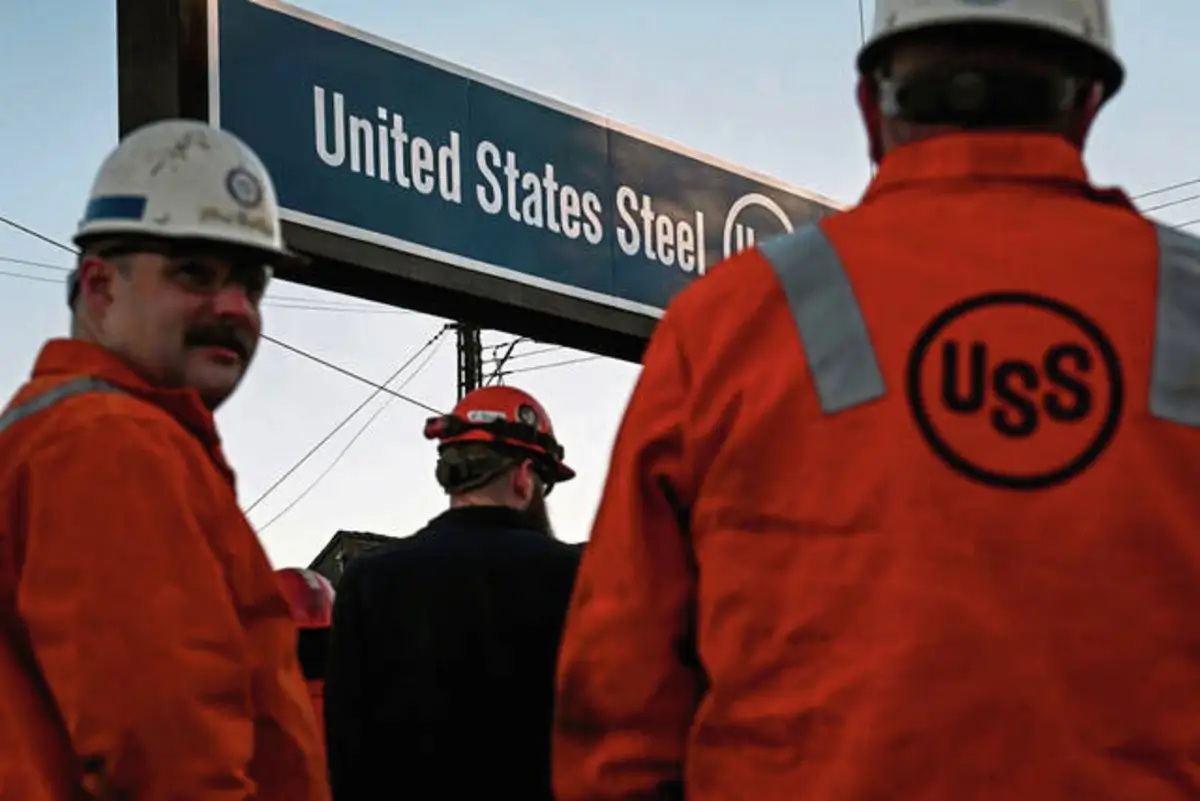
I know the lifeblood of Pittsburgh’s steel communities firsthand. My family’s roots in the industry run deep; my grandfather worked at J&L Steel from age 13 until retirement, and my father was a lifelong Boilermaker. At the same time, as a retired U.S. Army colonel who spent the bulk of my career handling national security in the Asia-Pacific, I intimately understand the strategic importance of Japan. They are a critical ally for the United States, and with the successful merger of U.S. Steel with Nippon Steel, they have so far proven to be an honest partner for Pennsylvania’s steel industry.
Most importantly, Nippon Steel has followed through with their promises before the merger’s approval. They have taken concrete first steps to modernize Mon Valley’s steelmaking facilities worth $100 million, delivered on the $5,000 bonuses to union workers, and sent nearly 50 experts to U.S. Steel sites to improve production and business practices. Whether it be in our security or economic cooperation, the Japanese are delivering and will continue to do so for the commonwealth.
And Nippon’s honest performance so far is starting to convince key leaders in Washington. Sen. John Fetterman, one of the deal’s most public critics, applauded Nippon’s execution of its $2 billion investment in the Mon Valley Works, calling it “great news for our community, our steelworkers and the Union Way of Life.” Commerce Secretary Howard Lutnick, during his recent visit to Edgar Thomson Plant in Braddock, said the merger is “so far so good … . I think it’s working great. … as far as the United States of America is concerned, they are absolutely living up to the deal.”
Such demonstrations of early successes are embarrassing people who vehemently opposed this deal, while reaffirming those who desperately wanted it done. No one wanted it more than the rank-and-file members of the United Steelworkers union. Ironically, it was their senior leadership who wanted this merger rejected. As a proponent of this deal — both from the national security and the economic aspects — its exhaustive public campaign to kill Nippon Steel’s acquisition of U.S. Steel was frustrating, to say the least.
By deploying “national security threat” as its weapon of choice, the union’s leaders engaged in remarkably foolish fearmongering against a steadfast partner. Framing a multibillion-dollar investment by a Japanese company as a geopolitical hazard was a desperate attempt to manipulate regulators. The Committee on Foreign Investment in the United States (CFIUS) saw through this facade, unable to reach a consensus that the deal actually threatened the nation. Yet, they persisted with the same arguments of “national security” that were overblown, repeatedly urging both Presidents Biden and Trump to block the deal based on biased distrust rather than objective reality. We should be cautious when union leadership pushes too hard on certain issues.
Let us not forget that the United Steelworkers union had a part in the 1979 closure of several U.S. Steel mills in Pittsburgh. This point might have been forgotten with the passage of time. As a kid, I recall high school grads bragging about making “$13 an hour at the mill for just pushing a broom.” They were new and not allowed to go near the actual steel production.
My dad was concerned about stories like this. He said, “It did not seem right that brand new unskilled labor would be making $10 an hour over minimum wage.” As it turned out, something wasn’t right; numbers like that turned out to be unsustainable. When I asked my dad, “Why are all the mills were closing?” He told me, “They were closing the mills in Pittsburgh to move production to non-union mills in the South.” The closures in 1979 should serve as a stark reminder for USW and its leaders to approach these talks in a realistic, sustainable manner.
Now, as early bargaining attempts between U.S. Steel and the USW have broken down over healthcare assurances, negotiations for the upcoming September contract expiration are set to resume starting in July. This stall in talks should absolutely not be used as an excuse to downplay the successful execution of Nippon Steel’s promises so far from the merger. It is time for the new USW leadership to drop the hollow alarmism of the past, listen to the voices of their members and negotiate constructively for Pennsylvania’s economy.
Col. Michael Stelzig, U.S. Army Retired, served as a foreign policy specialist with extensive experience gained during assignments at U.S. Indo-Pacific Command, Thailand, Afghanistan, Philippines and finally as the Defense Attaché to Cambodia. He is a Pittsburgh native.