
As a social worker for Pittsburgh’s co-response program, Jaime Gribben-Mahoney has spent the last three years helping people experiencing mental health crises Downtown.
Sometimes that means sitting on a sidewalk alongside her police partner, Sgt. Colleen Bristow, and coaxing someone to get hospital treatment.
Other times, co-responders talk suicidal people off the edge of a bridge or install Ring doorbell cameras to help seniors feel safer.
One city social worker, Gribben-Mahoney said, has been offering grief support to a mother who lost her infant.
Those efforts — now underway in four of Pittsburgh’s six police zones — are set to expand citywide.
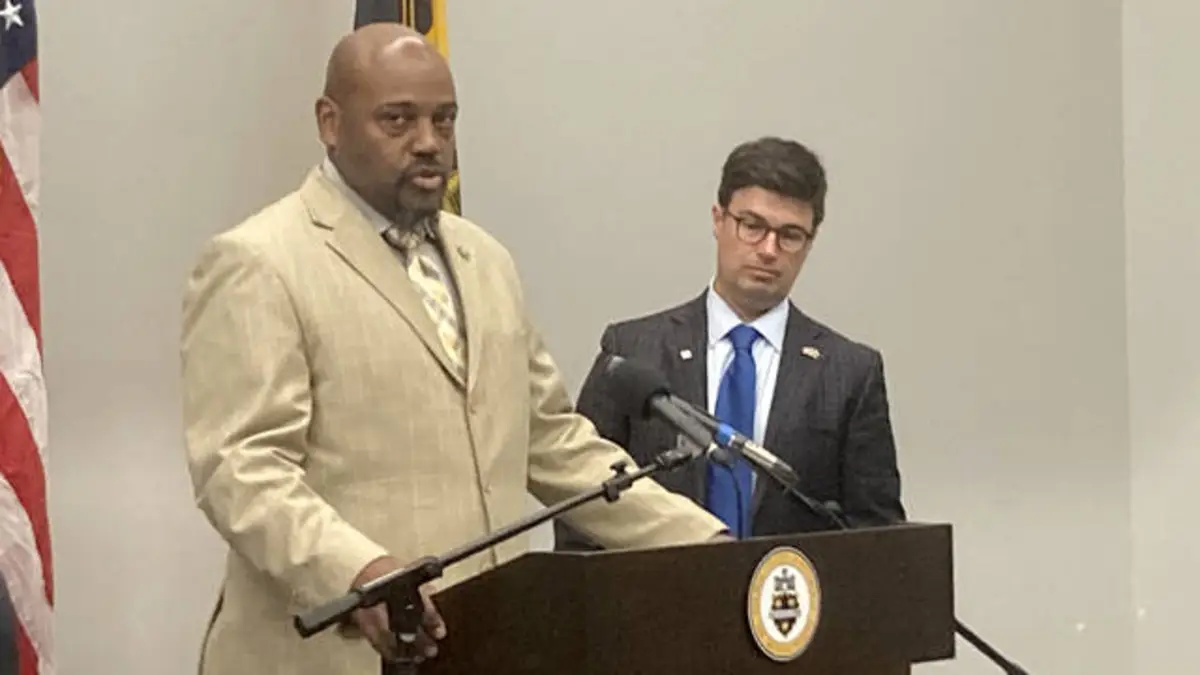
“Individuals need help on a variety of levels,” Mayor Corey O’Connor said Wednesday, as he joined top public safety officials to announce the relaunch and expansion of the city’s co-response program, which pairs mental health clinicians with police officers.
The teams respond to certain 911 calls involving people who may be struggling with a mental health crisis.
Under former Mayor Ed Gainey, the program was altered late last year so that social workers responded separately from their law enforcement counterparts.
Laura Drogowski, who heads the city’s Office of Community Health and Safety, said that approach may still be used in addition to the co-response model that sees officers and social workers responding together.
“We are creating teams that can respond more effectively to individuals in need,” police Chief Jason Lando said.
The co-response model started up again last month. Other city social worker teams — including one dedicated to homeless outreach — are deployed without police counterparts.
O’Connor while campaigning last year had vowed to restore the co-response efforts. He tapped Drogowski to reprise her role at the helm of the Office of Community Health and Safety, where she had pioneered co-response efforts under former Mayor Bill Peduto.
The city currently has three co-response social workers dedicated to the program, public safety spokeswoman Emily Bourne said. The goal is to increase that to seven — one for each police zone, plus one focused on Downtown.
Public Safety Director Sheldon Williams said the goal is to ensure the right people are responding to each unique situation.
Social workers are not meant to replace police, Williams said, but to supplement their work.
The co-response model, he said, ensures police can keep social workers safe and allows mental health experts to provide support beyond a law enforcement response.
Drogowski said the city wants to hire additional mental health clinicians for all police zones, plus an additional team for Downtown.
They’ll go through a co-responder academy where they will receive training alongside the police officers involved in the initiative.
Drogowski said she also hopes to expand the hours when co-responders are working and to make them available to support the city’s EMS and fire bureaus.
The co-response team currently works Monday through Friday from 8 a.m. until 4 p.m.
That has left the city unable to tap into the resource when crises occur outside of regular business hours.
Some critics questioned why social workers weren’t called, for instance, when a woman was killed by a car on the West End Bridge in 2024 after refusing help from police officers who offered to drive her to a safer spot.