
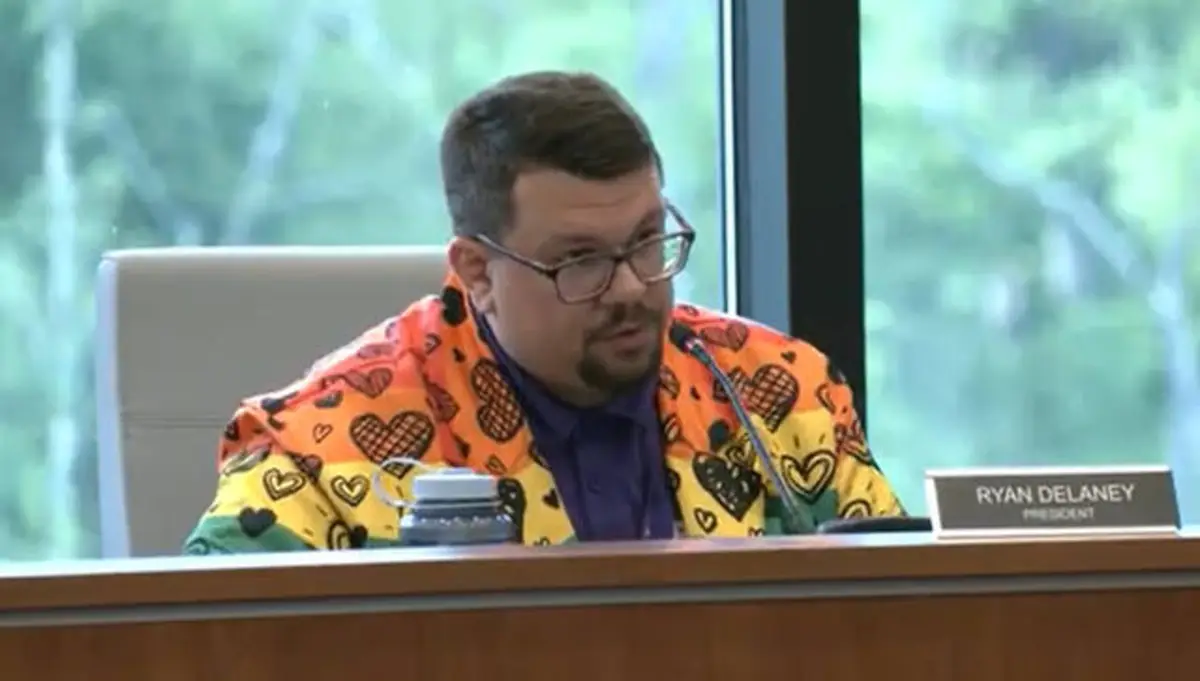
Plum Council President Ryan Delaney may appear to have started some controversy at a recent meeting. But did he?
Last week, Delaney appeared at the meeting in a rainbow-print jacket and spoke on the issue of LGBTQ youth. He encouraged kids in crisis to talk to someone.
This wasn’t out of the ordinary for Delaney. He is a therapist. His own children fall under the LGBTQ umbrella. And it’s June, when that community celebrates Pride Month.
The comments were not received well by everyone. There were residents who criticized them. So did a national social media account, prompting angry responses online and on the phone.
But this isn’t about what Delaney said. It’s about whether he gets to say anything at all.
Mayor Harry Schlegel said he found Delaney’s statements “very inappropriate.” He said the meeting “was not the time or place.”
Delaney didn’t bring up Pride while council was approving the bills or voting on a building project. He brought up a mental health issue during the president’s comment period — a portion of the meeting specifically intended for the council president’s remarks.
This is just the latest example of efforts to narrow public discourse.
Most recently, those efforts have focused on the public. Municipalities have imposed stricter limits on public comment. In Springdale, a dispute over speaking at a meeting even ended with an arrest.
There have been attempts to limit who can speak on behalf of government. In 2023, Aspinwall adopted a policy stating only the council president and borough manager could speak to the media on behalf of the borough.
Does this mean public meetings should be a forum for any topic? No. Does it mean everyone has to agree? Of course not.
But being able to discuss things that affect the community — and the health and safety of the LGBTQ population falls in that category — should be on the table. Topics we don’t like often still need to be discussed.
And let’s be clear about this. While some people might want to pretend issues of sexuality and gender do not exist, they do. The youth Delaney was addressing are at critical risk. Suicide is the second leading cause of death for children 10 to 14 and the third leading cause for those 15 to 24. LGBTQ youth have a four times higher risk. One of the main reasons is the increased stress of discrimination, bullying and physical harm.
Those are not hypothetical concerns. They are community concerns.
Every elected official comes into office with the support of the people and with their own cocktail of perspectives and knowledge. Delaney’s happen to include being a therapist and the parent of LGBTQ children. Other officials bring different experiences and expertise to the table.
A municipal leader has a chance to speak to those issues the same way a state representative or a member of Congress does.
No community has ever been improved by deciding some issues are too uncomfortable to discuss or some voices are better left unheard.