
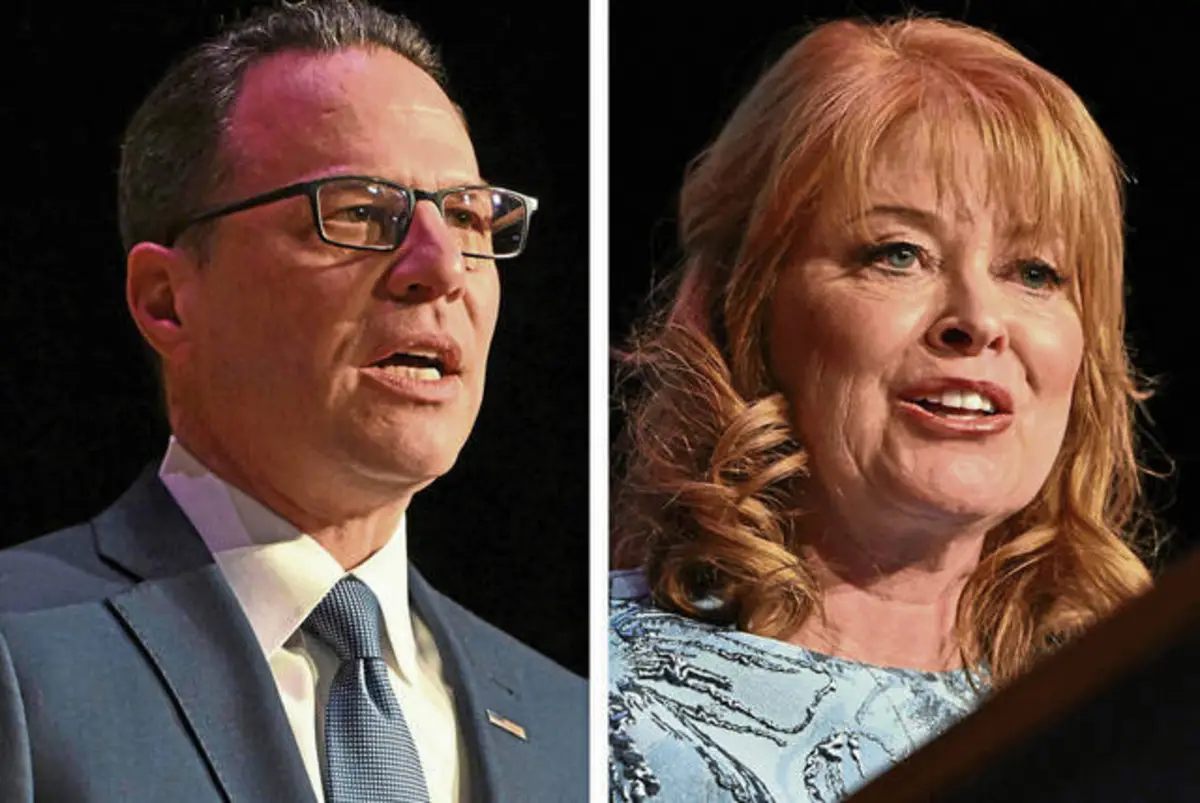
Pennsylvania’s two leading candidates for governor appear willing to face off in at least one debate this year.
State Treasurer Stacy Garrity, a Republican from Bradford County, called for seven debates with incumbent Gov. Josh Shapiro, a Democrat from Montgomery County — one in each of Pennsylvania’s media markets, including Pittsburgh.
“Pennsylvania is at a crossroads and, as I say in every speech, we need to decide what type of state we want to be. Public debates will give the voters of Pennsylvania the opportunity to make this decision with the most information possible,” Garrity said in a statement.
Garrity spokesman Matt Beynon said Tuesday that the two campaigns had not yet started trying to work out details for potential debates, including how many might be held and their format.
Shapiro spokesman Manuel Bonder said in a separate statement that the Shapiro campaign wouldn’t “negotiate the terms of a debate through the press,” but added, “We look forward to engaging with the Garrity campaign directly on any good faith efforts to do so and continue making the choice in this election clear.”
In 2022, Shapiro and his Republican opponent, state Sen. Doug Mastriano of Franklin County, did not participate in any debates after failing to agree on terms. Mastriano refused to participate in a debate with a moderator from the traditional news media, which he described as “unpaid advocates and ideological allies of the Democratic candidates.”
Instead, Mastriano called for two debates in which each candidate would select a moderator. The moderators would alternate questions during the debates. Shapiro called Mastriano’s proposal “unserious” and an “obvious stunt.”
Former Gov. Tom Wolf, a Democrat, and Republican nominee Scott Wagner participated in one debate during the 2018 campaign.
Chris Borick, a political science professor at Allentown’s Muhlenberg College, said debates are “part of the broader vetting process that voters should have an opportunity to engage in.”
“While they certainly can be less than productive in some cases in helping voters make decisions, they still offer a degree of information that can be valuable,” Borick said.
Politically, debates offer more risk than upside for an incumbent like Shapiro who has been leading in polls, Borick said. For Garrity, debates offer “opportunities to land some hits to shift the trajectory of the race and find a spark.”
The latest Franklin & Marshall College poll showed Shapiro leading Garrity, 50% to 28%, while 16% of respondents said they didn’t know who they would vote for or refused to answer and 6% said they would vote for someone else.