
Allegheny County residents in November will get to vote on whether to keep existing limitations on county council power or repeal long-standing restrictions on council’s budget and access to county-funded benefits.
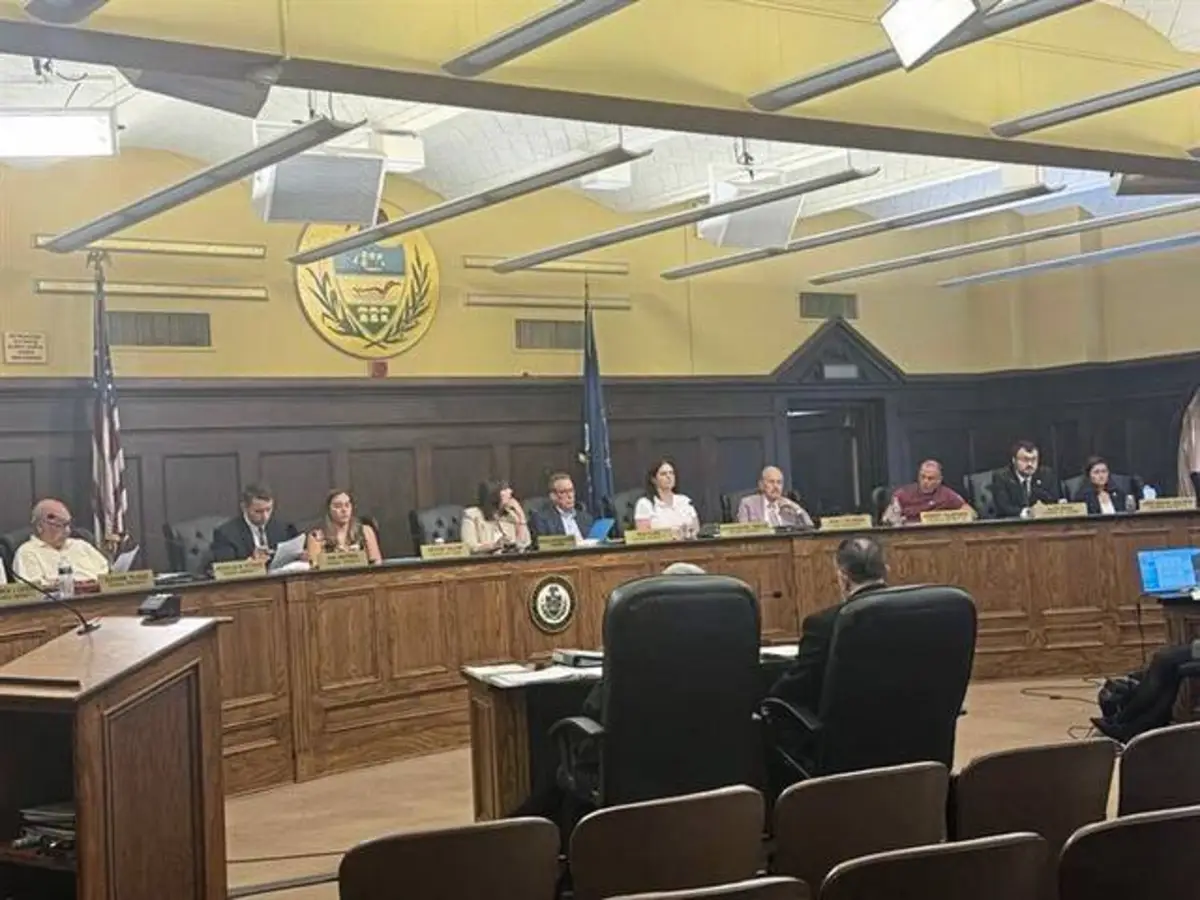
In two 9-6 votes on Tuesday, Allegheny County Council approved placing two home rule charter amendments on the ballot. If approved by voters, the amendments would eliminate existing charter limits on council’s spending authority and member benefits.
While the measures will not automatically increase council funding or provide new benefits, they would allow council to pursue those changes through future legislation.
The first amendment will ask voters to eliminate a charter provision that limits council’s annual operating budget to 0.4% of the county’s locally levied tax revenues.
The second asks voters to eliminate charter restrictions that keep council from receiving county-funded personal staff, district offices and fringe benefits, including health insurance, life insurance and pensions.
The proposals were sponsored by Dan Grzybek, D-Bethel Park, Jordan Botta, D-Bloomfield, Kathleen Madonna-Emmerling, D-Moon Township, Pat Catena, D-Carnegie, Bob Palmosina, D-Pittsburgh, and at-large members Bethany Hallam and Alex Rose.
The provisions went in front of the Committee on Government Reform on June 9.
Despite initial concern from some members of the committee over the optics of asking the public to remove budget limitations — following backlash over the recent 36% property-tax increase approved in 2025 — both proposals advanced with an affirmative recommendation.
However, public perception remained a driving concern among council members at Tuesday’s vote.
‘Go down in a burning ring of fire’
Council President Michelle Naccarati-Chapkis, D-Plum, and Vice President John Palmiere, D-Baldwin, voted against both provisions. Council members Nicholas Futules, D-Verona, DeWitt Walton, D-Hill District, Suzanne Filiaggi, R-Franklin Park, and Aaron Adams, D-Duquesne, also opposed both measures.
Futules strongly criticized the proposal during discussion. Comparing the situation to a “Johnny Cash country song,” he said it felt like “a burning ring of fire.”
He questioned how such a proposal could be brought forward to county residents, arguing that it suggested unchecked spending and staffing.
“Anybody that votes for this, you got to be out of your mind,” Futules said.
Naccarati-Chapkis said she was worried about the timing of the changes. She wants the provisions to be looked at by the Government Review Commission.
The Government Review Commission is appointed by both the county executive and council every 10 years to conduct a 12-month review of the county’s operation.
The commission is well-suited to review the provisions “while they’re working with us for the 12-month period,” Naccarati-Chapkis said. “This year our staff’s budget was $1.5 million. Next year it is projected to be $2 million, and for me, I think it’s a timing issue, and I’d rather delay that,”
Walton called both referendums a waste of taxpayer money.
“I think that this is a real disservice to the residents of Allegheny County. We county council are allocated a specific amount of dollars based upon the revenue in the operating budget and the intent of this and the following piece of legislation will place a real burden on taxpayers across the county,” Walton said.
Filiaggi said while she understands that council needs resources to serve residents and perform its oversight role, she urged council to consider how it will look to taxpayers.
Filiaggi pointed to rising property taxes from reassessments, a potential $90 million to $100 million increase in annual pension funding obligations, and the possibility that the Allegheny County Board of Health’s recent proposed paid parental leave, if approved, could act as a “hidden tax.”
“Eliminating the cap creates the appearance that council is asking for open-ended authority over its own budget, that concern is heightened by the serious financial issues already facing the county,” Filiaggi said.
Supporters say proposal improves oversight
Grzybek and Rose argued it was a matter of increasing the county’s resources.
“For us to be able to, you know, provide effective oversight of the budgetary process, make sure that taxpayers’ dollars are being spent wisely in accordance with the general welfare,” Rose said.
“We need to treat ourselves seriously. We cannot just continuously try to put up this facade that we’re doing our jobs,” he continued.
Grzybek agreed, saying the provisions would better equip council members to provide good fiduciary oversight to the county in the long term, which would be beneficial to the taxpayers.
While Botta voted in favor of both provisions, unlike other supporters he did not make a case for why they should pass but rather for voter discretion.
“I find no better form of government than to put it in front of the voters, so that they can directly have an influence over the decisions of our county charter,” Botta said.
George Dougherty is an associate professor at University of Pittsburgh’s School of Public & International Affairs who also acts as a financial recovery coordinator for a number of the county’s municipalities. He said the proposals’ chances on the ballot depend on how voters interpret their intent.
He believes the amendment removing the budget’s cap is more likely to be supported by voters because it “solves a clear governmental problem.
“I will say anything that seems to benefit current elected officials and or almost assure raising of taxes or new taxing powers has a much harder road than things that improve governance,” Dougherty said.