
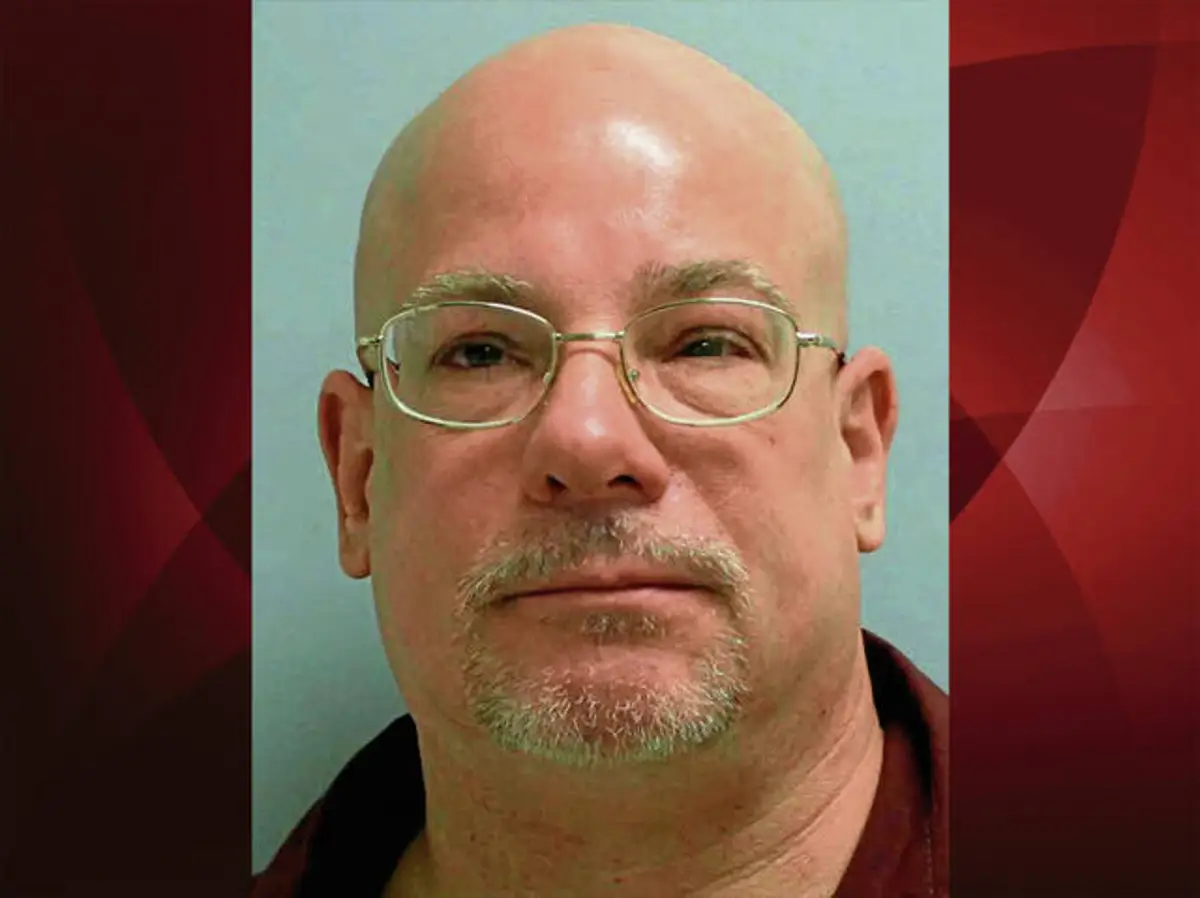
Westmoreland County prosecutors argued there is enough circumstantial evidence for a jury to again conclude a Jeannette man set a fatal fire more than three decades ago that killed his wife and two young children.
Attorneys with the Pennsylvania Innocence Project contended during a daylong hearing Tuesday the murder and arson case against James Young, 59, should be dismissed, saying there is insufficient evidence to prove he set the June 9, 1993, fire at a home of South 14th Street.
Young’s wife, Gina Marie Young, 26, and her children, ages 3 years and 7 months, died in the blaze.
Young was convicted of first-degree murder and arson in a jury trial in 1995 and was sentenced to life in prison without parole.
His conviction was overturned last year after a judge ruled prosecutors relied on discredited science to determine the fire was intentionally set.
Prosecutors said they intend to retry Young even though they have since conceded investigators can no longer say for sure the blaze was arson. They contend there remains sufficient circumstantial evidence to prove the most likely cause of the fire was that Young ignited it in the home’s living room.
Assistant District Attorney Elizabeth Ranger argued, despite a formal characterization that the cause of the fire is “undetermined,” prosecutors still can convince a jury to find Young intentionally set the home ablaze.
Young’s odd behavior as the blaze raged, his history of domestic violence against his wife and a prior threat to burn down the family home is strong enough evidence for the case to go forward, according to prosecutors.
Ranger told Westmoreland County Judge Michael Stewart II witnesses claimed Young initially declined to acknowledge the house was on fire, and he finally appeared to take limited action only after his neighbors insisted he attempt to rescue his wife, who appeared in an upstairs window that police said was jammed shut with a blanket.
“That behavior is circumstantial evidence that shows this case was an arson,” Ranger argued.
At the 1995 trial, prosecutors presented testimony that claimed Young spread an accelerant, likely gasoline, in the living room to fuel the fire. A gasoline can was found outside, and investigators contended a diaper worn by one of Young’s children contained traces of the fuel.
Retired state police forensic scientist Leonard McCoy, who testified during the 1995 trial and again Tuesday, told the judge he remains convinced a liquid in the can found outside the Young home was likely gasoline.
Matt Regentin, an associate professor at Duquesne University and former fire investigator for the U.S. Bureau of Alcohol, Tobacco Firearms and Explosives, testified that, under modern fire investigatory standards, the cause of the Jeannette blaze must be labeled “undetermined.” That characterization does not rule out arson as a potential cause, he testified.
“It’s consistent with it being incendiary or accidental,” Regentin said.
A judge ruled last year investigatory tactics used in the aftermath of the 1993 fire that included a reliance on dogs to sniff out the presence of an accelerant is no longer an accepted method to determine the cause of a blaze.
Prosecutors are now barred from introducing specific evidence related to the original finding of arson.
Defense-hired expert Craig Beyler testified using current investigatory standards found no evidence of arson. He suggested a dangerous halogen-style lamp, remnants of a lit cigarette or an electrical failure could have been the cause of the blaze.
“As of today, the scientific method (of investigating fires) is that, if there is more than one hypothetical, the cause remains undetermined. Speculation has no role,” Beyler testified.
Young has maintained his innocence since before his first trial and throughout the decades that followed as he sought to have his conviction overturned.
“At the original trial, attorneys argued there is no case if there is no arson,” said defense attorney Nalim Sanghvi. “That’s where we are here. There’s no viable evidence to establish this was an incendiary fire.”
The judge said he will rule on the defense’s dismissal motion after reviewing written legal arguments that will be filed over the next four months.