
Arthur Brunazzi said it was a no-brainer to open a Trump Account for each of his three kids.
“I’m always looking for new avenues to invest,” said Brunazzi, 43, of Elizabeth. “Everything comes with risk, even my investments that I have for myself.”
Parents and guardians now can sign up their children for a Trump Account, a savings and investment platform for anyone under 18 years old. Registration opened July 4.
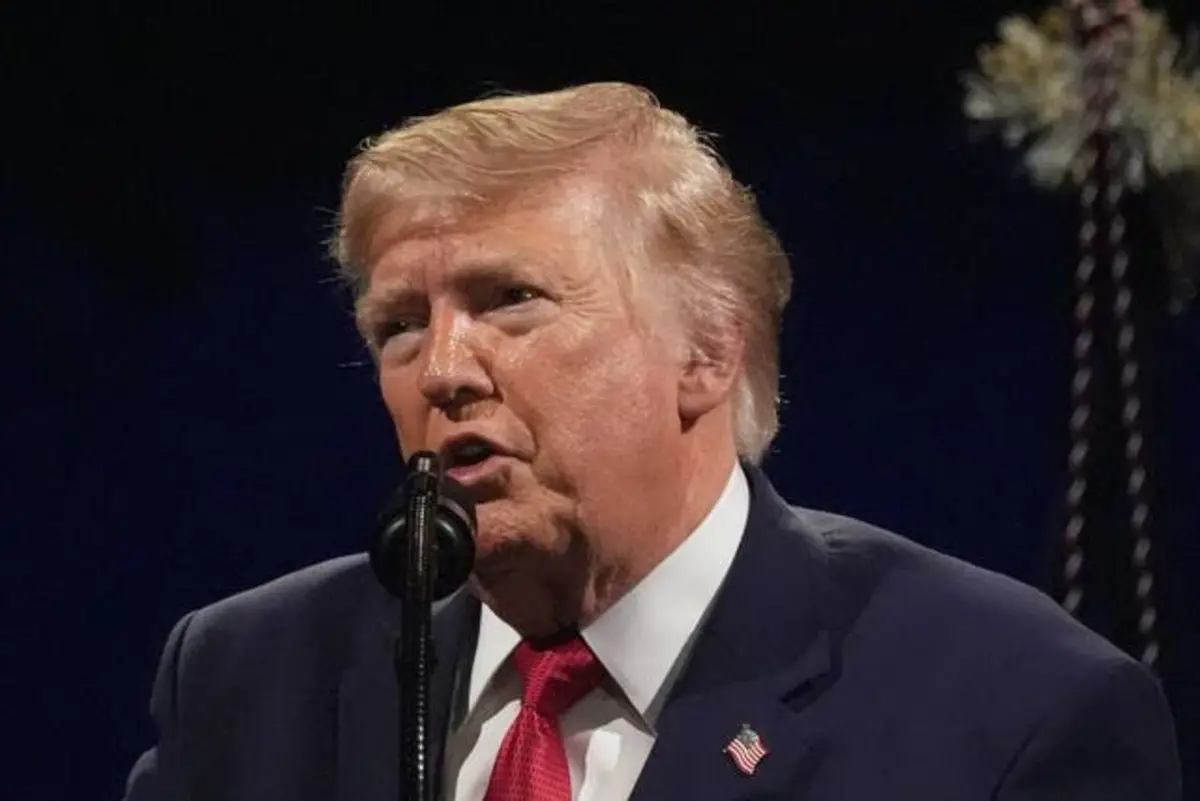
President Donald Trump touted the retirement investment program as a means for future generations to own a stake in the American economy and boost financial security.
Children born as U.S. citizens between Jan. 1, 2025, and Dec. 31, 2028, will receive $1,000 from the U.S. Treasury Department to start their accounts, according to the Trump Accounts website. Up to $5,000 per year can be added to the accounts. The child will gain custody of the account when they turn 18, but can use it only for specific purposes such as paying tuition, starting a business or making a down payment on a home.
According to the Treasury Department, accounts have already been opened for 5.5 million children, with 1.4 million of them eligible for the $1,000 contribution, the Associated Press reported. About 86% of those accounts were opened by families that earn less than $200,000 annually.
U.S. Sens. John Fetterman, D-Braddock, and Dave McCormick, R-Squirrel Hill, this week promoted the new savings accounts.
Todd McCollum, chairman of Pittsburgh’s Republican committee, also endorsed the accounts, saying they’re “an equal opportunity for everyone to rise up.” He said he hopes people take advantage of them.
“This is a way for poverty-stricken people to get out of poverty,” he told TribLive. “The longer you’re involved in this, the better it’s going to be.”
“I’ve actually had quite a bit of feedback where people are using it,” said McCandless GOP vice chairman Bob Crankovic, 41. “It’s definitely a vehicle to get people out of, if they’re in poverty, or if they’re on dire financial straits.”
Democrats aren’t as enthusiastic. They argue the accounts offer limited tax benefits, could undermine Social Security benefits and don’t offer enough for lower income families.
How it works
James Moyer, partner and senior wealth adviser at Pittsburgh-based accounting firm Schneider Downs, said he believes the Trump Accounts are generally a positive opportunity.
“It could really help people start building a retirement account — that otherwise wouldn’t have been able to — at a really young age,” he said, referring to the $1,000 available for newborns. “We are classifying them as retirement accounts, but there are exceptions to take money out of them once the owner reaches 18.”
Parents can contribute $2,500 annually in pretax dollars to their children’s accounts.
Employers, charitable organizations and governments also can contribute, up to the $5,000 annual cap. More than 50 companies have committed to offer contributions for children of their employees, similar to how they might for an employee’s 401K, according to the Treasury.
The Treasury touted the concept as a way businesses can invest in their employees’ families while simultaneously receiving tax deductions.
Moyer opened accounts for his three kids, ages 9, 5 and 3.
“I came from a family in Titusville and had two great parents. They gave me great advice, but I always look back at when I was earning money at my first job and I was never told to put money into a Roth IRA or any type of IRA,” he said. “If I could go back and do that, I (would).”
The power of compounding money “can be huge,” Moyer said.
There aren’t many details yet as to where money will be invested.
“Everything that I’ve read points to U.S.-based investment,” Moyer said. “I think it’s going to be an index-based investment that’s going to track U.S. companies.”
The goal is to increase the amount of Americans who have stock ownership, helping children obtain a “foothold in the American economy from birth or early childhood,” according to the Treasury.
Families can open an account online at no cost through TrumpAccounts.gov.
‘A no-brainer’
Belle Mulhern has two kids: Bridie, who is 20 months old, and Micah, who is about to be 6 months old. She opened accounts this week for both.
Only her youngest was eligible for the $1,000 seed money.
“So the way that I saw it, because he qualified for the $1,000, it was pretty much no risk, all reward,” said Mulhern, 24, of Trafford. “I don’t have to contribute anything, and he gets that $1,000.
“Even if you contribute nothing to that account, by the time they turn 18 … it’s all gain there, so there was really no reason for me not to.”
The Trump Accounts website touts predicted return on investment, projecting around $6,000 by the time a child turns 18 if no contributions are made other than the initial $1,000.
Contributing $250 each year would push the account’s value to around $19,000 at age 18, and contributing $5,000 annually would create a $271,000 value, according to the Trump Accounts website.
Brunazzi said the biggest benefit is the flexibility to cash out at 18, earlier than traditional retirement accounts. And the projected growth of 7% to 15% is more than a high-yield savings account, which is traditionally around 2% to 4%, he said.
“There’s a little bit of risk involved with it, but typically with the stock market, it usually comes back and forth,” he said. “The potential upside of making that 7% to 15% over 3% or 2% with just a high-yield savings account seemed like it was a no-brainer.”
Making the accounts for his kids, ages 8, 6 and 1, was simple, according to Brunazzi. “All I do is just plug my bank account into it,” he said.
Brunazzi and some co-workers who also opened accounts are taking a wait-and-see approach before investing more money.
“There’s kind of an incubation period for all of us,” he said. “We may pull our money from our other accounts and put them into our (Trump Accounts). We’re contributing a little bit to see how they do, waiting a little bit — we’ll kind of go from there as they mature.”
Mulhern said her family has discussed possibly contributing $1,000 to her daughter’s account, so both of her kids’ accounts start the same. Then they will “just see what happens,” she said.
“I’m not sure if I want to put any money into something that I’m not completely sure of, especially when there already are other options,” she said, citing Roth IRAs and 529 education savings plans. “So, I think I’m going to hold off on contributing to either of the accounts for a couple of years, see the direction and where anything goes and (any) changes.
“We do want to be able to set our kids up for success and to have something in their pocket by the time they’re an adult.”
Jaqualynn Durbin said she had no reservations about opening Trump Accounts for her 2-year-old and 3-month-old, although she said there was a hiccup in securing the $1,000 seed money.
She said she received an “ineligible” prompt for her 3-month-old. She is trying to get answers to resolve the issue.
“This could be a way for our kids to have a retirement for the future,” said Durbin, 29, of New Alexandria. “It’s mostly so (our kids) don’t have to accrue debt early in life like we did. We basically are paying two mortgages: our house and student loans.”
Mulhern said she has observed differing opinions on the Trump Accounts, but believes people should take the $1,000 if their child is eligible and “see where it goes.”
“Regardless of where you stand politically — if you choose to contribute to it or not — if you have a child born in the window … there’s no reason not to take it,” she said.
Moyer said he and other wealth management professionals are figuring out where Trump Accounts fit into “the order of operations” when recommending investment accounts to clients.
“I think every situation’s different. Have they saved for themselves first? What kind of future do they want for their kids?” Moyer said. “It’s hard to figure that out when they’re very young.
“I think it gets easier to suggest funding certain accounts when you’re at a certain level of wealth, but until you get there, it’s hard.”