
History research frequently reveals that strange quirks of the past, unplanned events and random coincidences have a much larger effect on world events than people recognize.
For instance: Would George Washington have gone on to become the legendary American figure of today if he hadn’t accidentally fired on his own men one foggy night in Westmoreland County back in 1758?
That is just one of the many questions raised by the archaeological work happening at a small, privately owned field not far from Fort Ligonier, where historians and archaeologists discovered the site at which Washington’s 1st Virginia Regiment accidentally opened fire on men from Gen. Hugh Mercer’s 2nd Virginia Regiment.
For the past five summers, the Fort Ligonier Association has funded a week of archaeological work at the site, led by Jonathan Burns, director of the Cultural Resource Institute at Juniata College.
In his own writing from 30 years after the incident, Washington determined that the miscalculated skirmish put him “in as much danger as (I have) been in before or since.”
That’s pretty tough talk from the guy who led the Continental Army in the American Revolution.
“It’s the last place where George Washington was under fire before the Revolutionary War,” said Julie Donovan, the fort’s director of marketing and public relations.
A foggy night of chaos
So what happened, and why is it important?
On Oct. 12, 1758, a group of French soldiers staged a raid on Fort Ligonier. While the British soldiers encamped there held the fort, the French took all of the horses tied up outside.
Less than a month later, on Nov. 11, 1758, with winter rapidly setting in, Brig. Gen. John Forbes made the decision to hunker down until spring at Fort Ligonier with his 6,000 men. This temporarily suspended his campaign to head about 50 miles west and take Fort Duquesne from the French, according to Fort Ligonier Director of Education and Living History Matt Gault.
“But they get word that the French are coming back to raid the post again,” Gault said. “And so Gen. Hugh Mercer sets out with a party to intercept the French soldiers.”
On Nov. 12, 1758, the sound of distant musket fire could be heard at Fort Ligonier, and Washington set out with his own group of soldiers, following the Loyalhanna Creek to try and flank the French raiding party and aid Mercer.
On a foggy night, Gault said, Washington’s men followed the sound of gunfire but were unsure what to do when it ceased. Spying movement far off in the trees, the men opened fire on what they thought was the French raiding party.
It turned out to be Mercer and his troops, Gault said.
“The French were gone and they were skirmishing with their own men,” he said. “Eventually Washington realizes this, and charges on his horse across his own battle line, with musket balls flying on both sides, batting down his men’s rifles and trying to order a ceasefire.”
After the firing stopped, 38 privates and two officers were reported dead or missing.
The intelligence that saved a campaign
But why do historians think this was a pivotal moment in American history? As it turns out, Mercer’s men had taken two French soldiers captive, and they began to talk.
“Forbes was going to keep his men at Fort Ligonier through the winter,” Gault said. “But these French hostages provide information that the French army force at Fort Duquesne was in a weakened position. It changes Forbes’ mind and they decide to march immediately on Fort Duquesne.”
Without a tragic incident of friendly fire, Gault said, perhaps Forbes never gets this information about the garrison at Fort Duquesne.
“If not for this moment, we’d probably be looking at a very different story for Fort Ligonier and the founding of Pittsburgh,” Gault said.
Moreover, Gault and other historians can only speculate what the early life of the United States would have been — or if it would have existed at all — had Washington taken a fatal bullet during the friendly-fire incident.
David Preston, who serves as the Gen. Mark Clark Distinguished Chair of History at The Citadel, is one such historian. He recently penned a cover story for Smithsonian Magazine about the discovery of the site and the history surrounding it. He said it emphasizes the importance of the French and Indian War, which is sometimes overlooked in American history.
“Without the experience Washington gains in this war, he likely would not have been named commander-in-chief of the Continental Army,” Preston said. “And honestly, Washington’s experience in this war is characterized by a lot of loss, defeats and setbacks. The taking of Fort Duquesne is also the start of the British entry into the Ohio River Valley.”
Confirming local legends through science
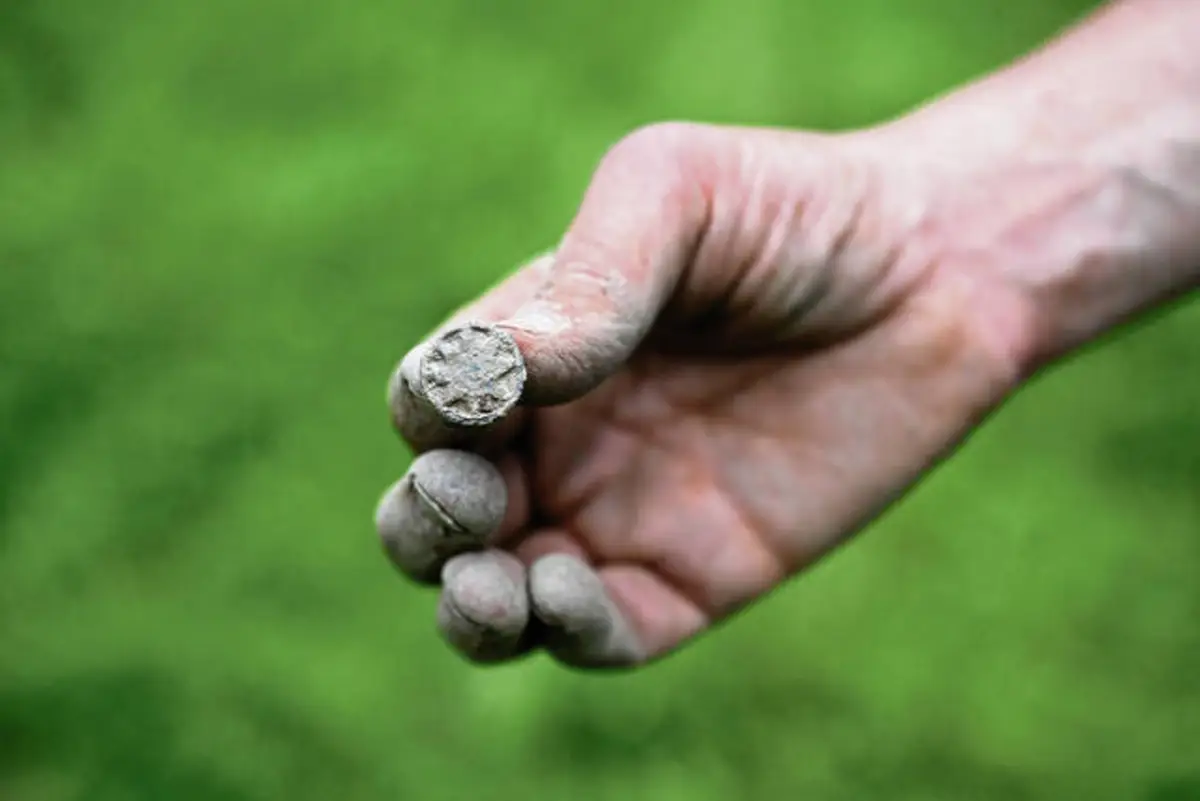
The field where the friendly-fire incident took place is still the final resting place for several of the soldiers who died. Two different cadaver dogs that have worked the site over the years hit in the same location of the field, Donovan said. Isotope testing on musket balls and some of the more than 325 artifacts found has helped confirm it is indeed the site where the skirmish took place. Association officials are not disclosing its exact location, partly because it is private property and partly to ensure it is preserved for future study.
Weeklong archaeological digs over the past five summers, followed by subsequent lab tests, were able to confirm the legends and stories passed down through generations in this part of Westmoreland County.
“We’d heard local stories that survived of this place possibly being a battle site, and families advising not to drink the water from springs in the area because there were bodies buried in the field,” said collections manager Meghan Budinger. “And we heard of local folks using metal detectors who’d hit caches in and around the area.”
Some of those finds are part of the collection on display at the fort’s “Friendly Fire Incident” exhibit in its George Washington Gallery. Washington’s actual writings mentioning the incident are kept in a sealed environment in the basement, under a special light that will not degrade the paper or writing. However, the upstairs exhibit includes lead musket balls, a piece of an old shoe buckle, 18th-century coins, British colonial uniform buttons identifying specific units involved in the incident, and a small key for winding a French pocket watch.
Budinger said Burns and his archaeological team don’t believe they’ve found the edges of the battlefield just yet.
“They keep finding musket balls and other items,” she said. “It really shows us that history isn’t static. It’s always changing, and so is our understanding of it.”